




Victorian Serpentine Settee
These Victorian serpentine settees bring fluid lines and deep comfort into a room, making them a centrepiece for any traditional or eclectic interior.
Victorian Serpentine Settee
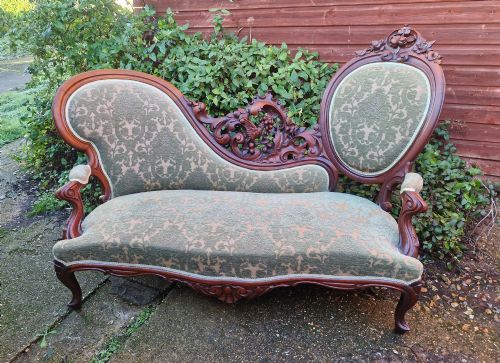
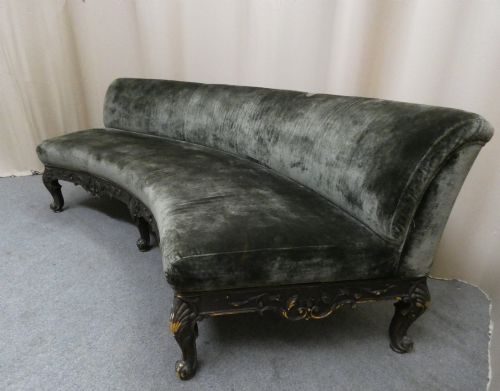
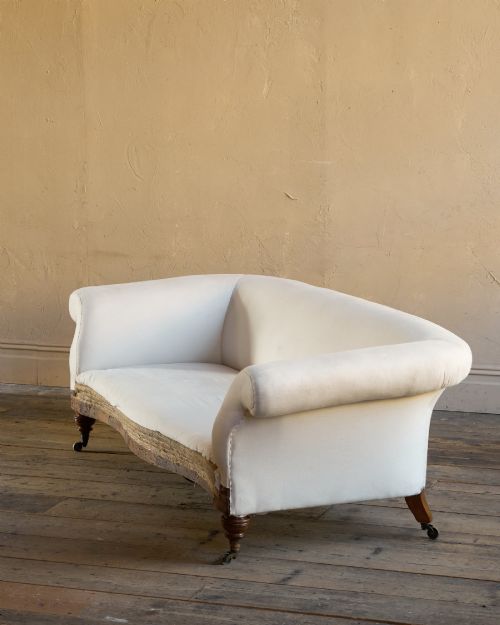
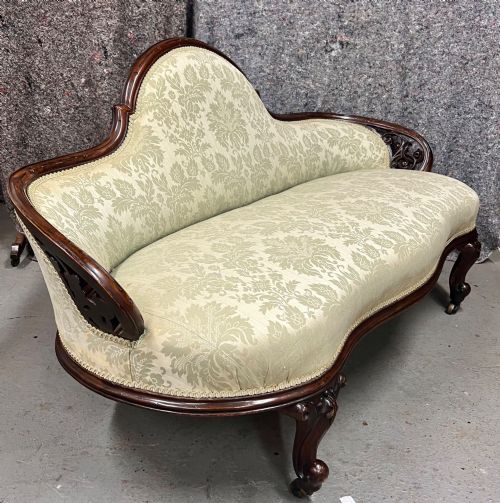
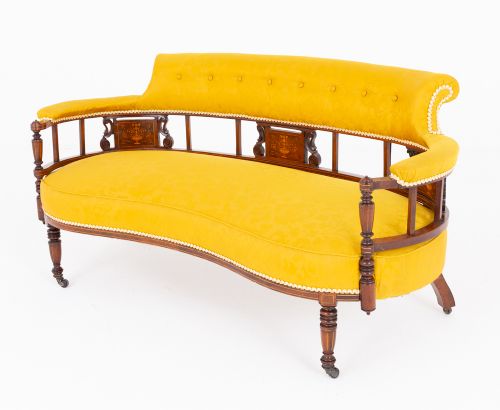
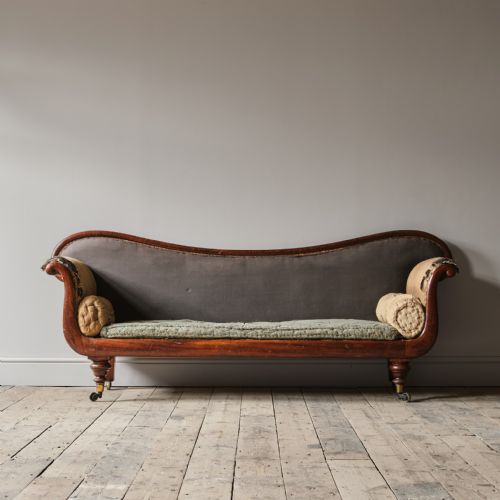
A Victorian serpentine settee is a substantial seating form defined by its undulating, curving front rail and upholstered frame. These pieces emerge primarily from the Victorian period, spanning the nineteenth century down to about eighteen eighty.
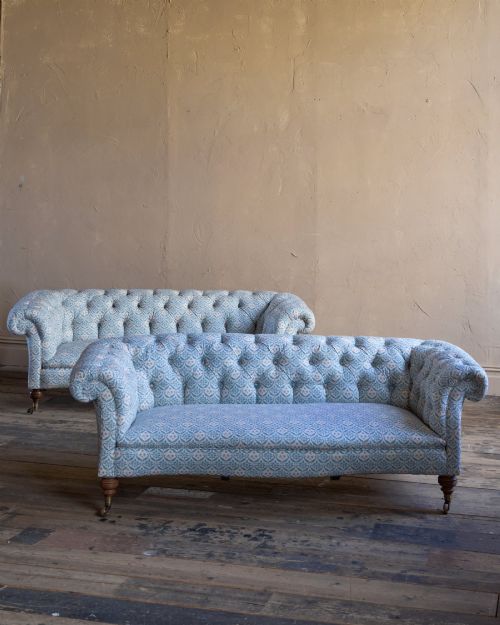
Buyers browsing this selection will encounter varied interpretations of the form, ranging from mahogany framed showwood settees to leather Chesterfield sofas. Many examples incorporate deep button upholstery and curved backs that reflect the craftsmanship of their era.
Origins stretch across English country house styles and continental influences, including Louis XV revival pieces. The forms encompass camel back sofas, double end settees, and large multi-seat variations designed for formal reception rooms.
How They Were Made
The construction of these settees relies on sturdy timber frameworks built from mahogany, rosewood, and general hardwoods. Cabinetmakers shaped the serpentine fronts from solid timber, ensuring the curved rails could support complex internal springing and heavy padding.
Upholstery techniques involved traditional stuffing materials enclosed by diverse coverings such as hand dyed brown leather, cotton damask, and woven textiles. Brass fittings and detailed button tufting frequently secured the fabric to the sprung backs and seats.
Victorian Serpentine Settee Retail Price Guide 2026
Typical asking prices for victorian serpentine settee among the pieces listed under this phrase on Sellingantiques today, from the lower quarter to the upper quarter. They describe what is for sale here now, not the wider market.
Several leather Chesterfields carry the specific aroma of decades spent beside country house library fires.
What Varies in Quality
Quality in a Victorian serpentine settee rests upon the fluidity of the carved wood frame and the integrity of the showwood finish. Superior examples display crisp mahogany or rosewood framing with harmonious proportions along the undulating front rail.
The standard of upholstery and the choice of covering material also distinguish the pieces. Fine items feature carefully executed button work and premium textiles or hand dyed leathers that complement the sweeping lines of the frame.
Howard and Sons
The Victorian Serpentine Settee Glossary
- Serpentine
- A furniture design featuring a front edge that curves inward in the centre and outward at the ends. This flowing shape requires considerable skill in woodworking to achieve correct proportions.
- Showwood
- Timber framing that remains exposed around the upholstered portions of a sofa or settee. It allows the grain and colour of woods like mahogany to contribute to the overall visual impact.
- Button upholstered
- A traditional technique where buttons are pulled deep into the padding to create a geometric pattern of tufts. This method secures the internal stuffing while adding texture to the backrest.
- Camel back
- A sofa style with a distinctive arched backrest that resembles the hump of a camel. The curve rises smoothly from the arms toward the centre before sloping down again.
- Chesterfield
- A large upholstered sofa traditionally featuring rolled arms and deep button tufting. These pieces often utilise leather upholstery and heavy sprung bases.
Victorian Serpentine Settee: Frequently Asked Questions
What is a serpentine settee?
A serpentine settee is a nineteenth century seating form characterised by a front rail that curves gracefully inward and outward. These pieces combine elaborate timber frames with sprung and upholstered seats.
They serve as prominent decorative and functional seating options within large reception rooms and country house interiors.
How do I identify a Victorian piece?
Victorian pieces display specific stylistic markers from the nineteenth century, including rich mahogany or rosewood frames and curved serpentine profiles. The construction methods reflect the handcraftsmanship of the period.
Examining the underlying timber and the style of upholstery helps separate nineteenth century examples from later reproductions.
Where should I place a settee?
These large settees suit spacious living rooms, grand hallways, or studies where their curved profiles can be viewed from multiple angles. They pair well with traditional wooden furniture and patterned textiles.
Ensure adequate floor space surrounds the piece so the undulating front rail remains a clear focal point in the room.
What materials were used?
The frames utilise solid timbers such as mahogany, rosewood, and walnut, often with exposed showwood sections. Brass elements occasionally appear on castors or decorative mounts.
Coverings range from hand dyed brown leather to cotton damask and various woven textiles secured over traditional stuffing and springs.