
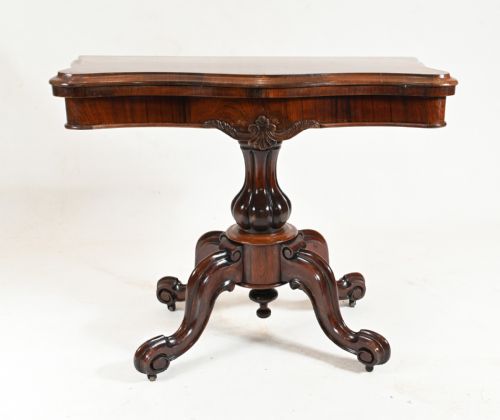
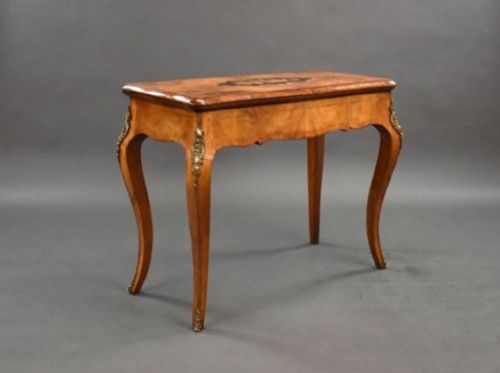


Victorian Serpentine Console
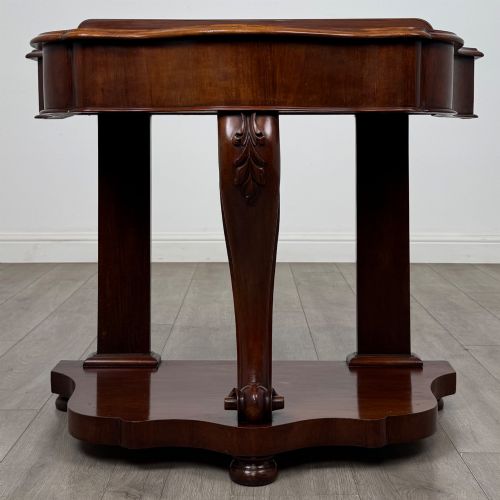
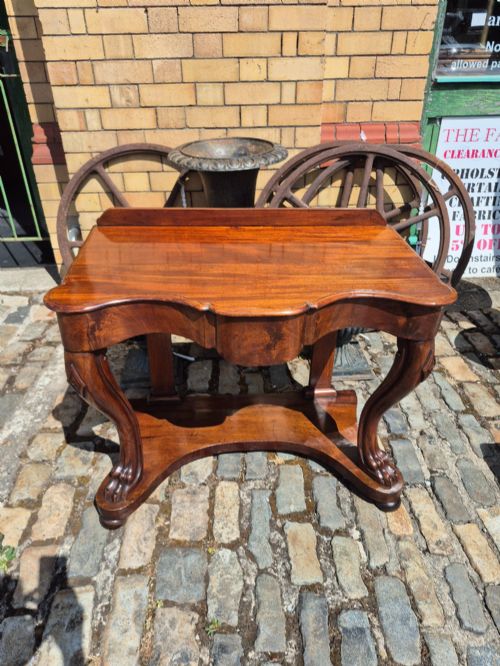
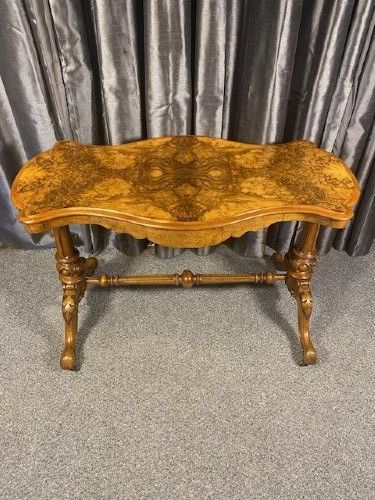
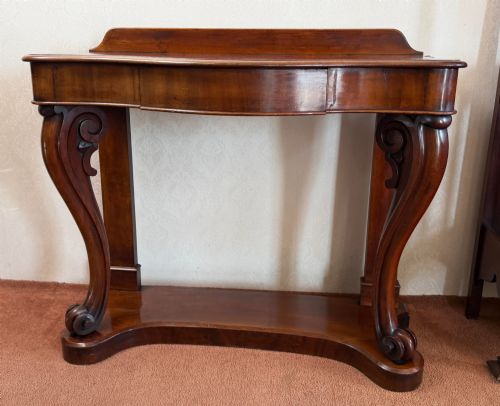
These Victorian serpentine console tables combine undulating fronts with robust nineteenth-century timbers, offering a striking focal point for a hallway or reception room.
Victorian Serpentine Console
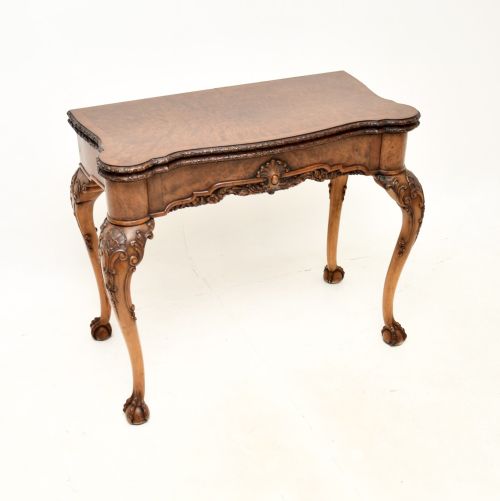
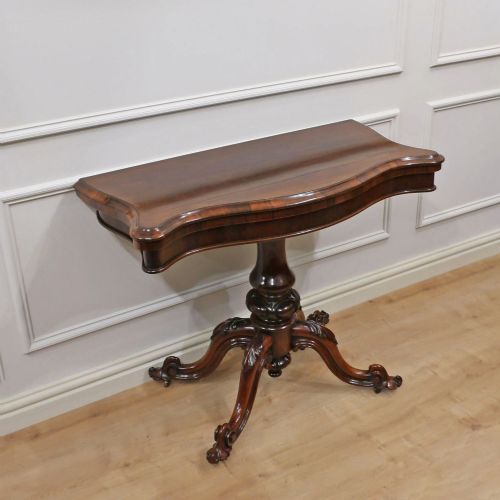
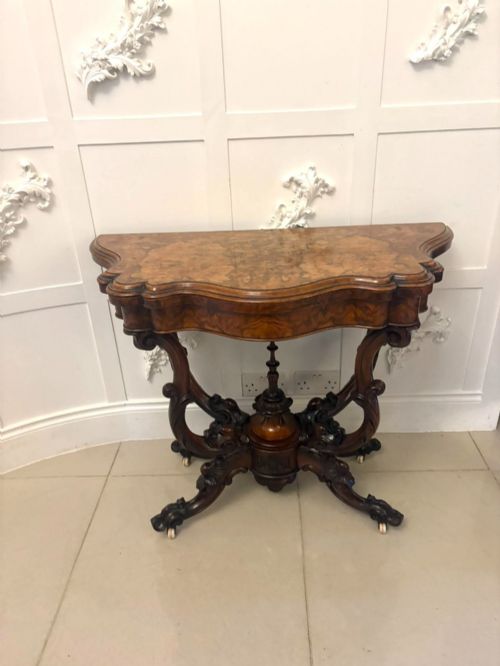
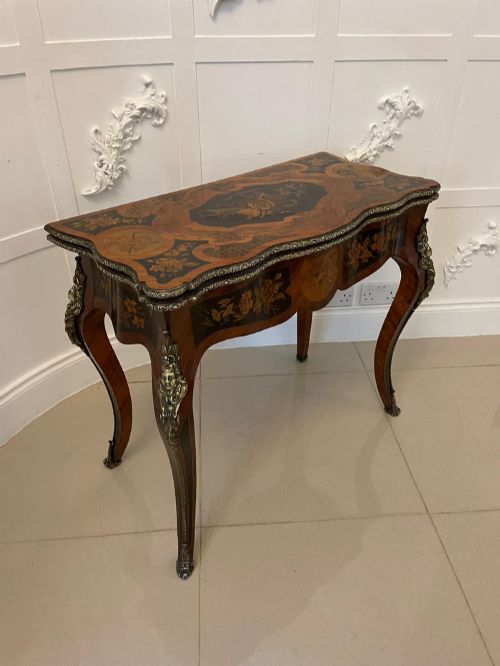
When searching for a victorian serpentine console, a buyer encounters a range of nineteenth-century tables featuring characteristic curved, undulating fronts. The selection on this page encompasses dedicated console tables alongside versatile card, games, and side tables constructed with the same serpentine profile.
The materials span from rich burr walnut and figured mahogany to rosewood and oak, often paired with marble tops. These pieces originate across the Victorian period, frequently displaying influences of Rococo Revival, Louis XV, and Chippendale styles through shaped cabriole legs and marquetry inlay.
How They Were Made
Cabinet makers constructed these pieces using solid timbers like mahogany, oak, and walnut, often applying decorative veneers such as burr walnut and kingwood to curved surfaces. Achieving the distinctive serpentine shape required meticulous sawing and steaming of wood to create the flowing, multi-curved front edge.
Many examples incorporate brass mounts, ormolu detailing, and intricate marquetry or boulle work to enhance the visual weight of the design. Marble tops, frequently utilised on console tables, required precision stone-cutting to match the complex contours of the wooden frame beneath.
Listings feature card tables, side tables, and console tables primarily from the Victorian period, constructed in walnut, mahogany, and rosewood.
What Varies in Quality
The distinction between standard examples and exhibition pieces lies in the choice of timber figure and the complexity of the cabinet work. Superior tables display highly figured burr walnut or meticulously matched kingwood marquetry that follows the difficult curves of the serpentine frame without distortion.
Execution of carved details, such as basket bases or cabriole legs, dictates the refinement of the piece. Master workshops employed heavy bronze ormolu mounts and substantial marble slabs, whereas simpler utilitarian versions relied on straightforward timber mouldings and plain tops.
Edwards & Roberts·Henry Dasson
The Victorian Serpentine Console Glossary
- Serpentine
- A furniture front characterised by a double-curved line, convex at the centre and concave at the sides. This profile demands advanced woodworking skill to shape accurately.
- Ormolu
- Gilded bronze mounts applied to furniture for decorative effect. It gained widespread popularity during the nineteenth-century revival periods.
- Marquetry
- Decorative patterns created by fitting different veneers into a wooden ground. It frequently depicts floral or geometric motifs on table tops.
- Boulle
- A form of marquetry utilising tortoiseshell and brass inlay, popularised in France and revived during the nineteenth century. It adds a reflective, metallic contrast to dark woods.
- Console table
- A table designed to stand against a wall, traditionally fixed with brackets or resting on front legs. These pieces often feature heavy marble tops.
Victorian Serpentine Console: Frequently Asked Questions
What is a serpentine console table?
A serpentine console table is a nineteenth-century wall-mounting or freestanding table featuring a characteristic undulating front edge. These tables were designed to decorate reception rooms and hallways.
The curved profile combines convex and concave lines to create a sense of movement. Many examples also function as fold-over card or games tables.
How do I style a console table?
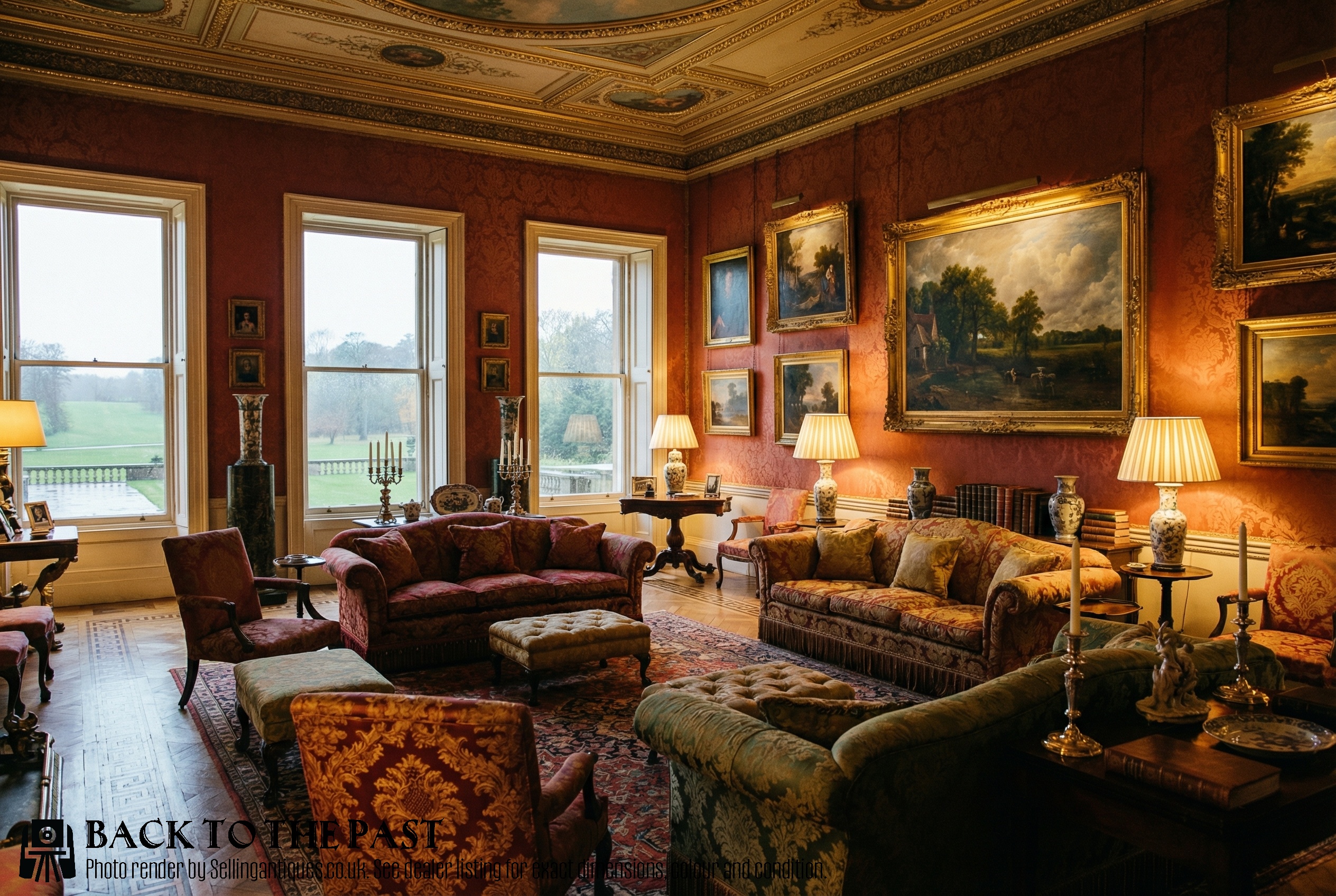
Console tables fit naturally into entrance halls, living rooms, and dining spaces against flat walls. Their shallow depth allows them to sit comfortably in narrow passageways without blocking movement.
Pairing a wooden or marble-topped console with a mirror or lighting above creates a balanced focal point. Fold-over versions can remain closed as side tables or open up when hosting.
Are marble top console tables original?
Many nineteenth-century console tables were manufactured specifically to hold heavy marble slabs. These stone tops provided a durable, decorative surface for displaying ornaments.
When examining marble tops, check that the stone fits the serpentine contours of the wooden base precisely. Different colours of marble, from white to darker shades, reflect the varied tastes of the period.
How do I identify a Victorian table?
Victorian tables display the timber choices, construction methods, and stylistic revivals popular during the nineteenth century. Common woods include walnut, mahogany, and rosewood.
Revival styles such as Louis XV and Rococo strongly influence the carving and leg shapes. Examining the secondary woods and joinery underneath helps confirm the period of manufacture.