






Victorian Sea Landscape Paintings
Victorian sea landscape paintings capture coastal drama, local fishermen and tidal waters across canvas and paper.
Victorian Sea Landscape Paintings
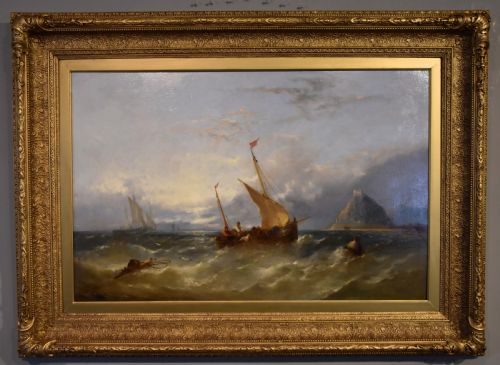
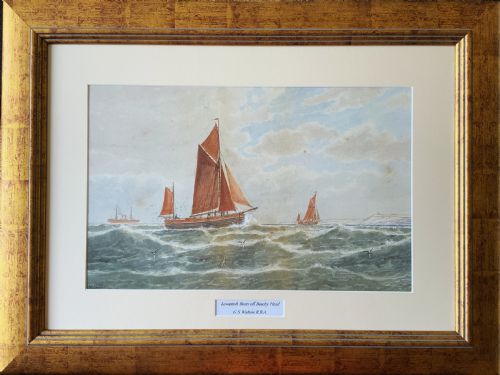
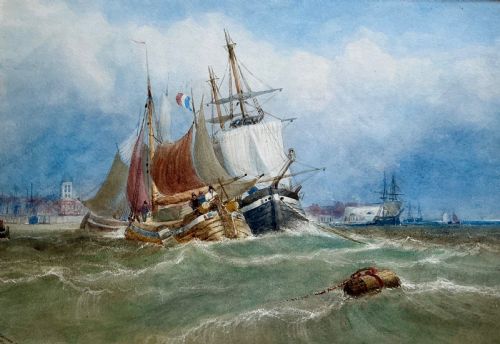
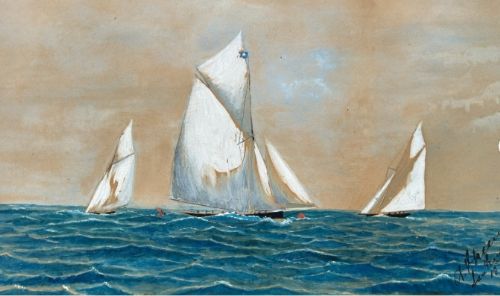
Victorian sea landscape paintings depict British harbours, dramatic shipwrecks and quiet shores through 19th century and Edwardian perspectives. These works range from small, intimate watercolours to large, commanding oils on canvas.
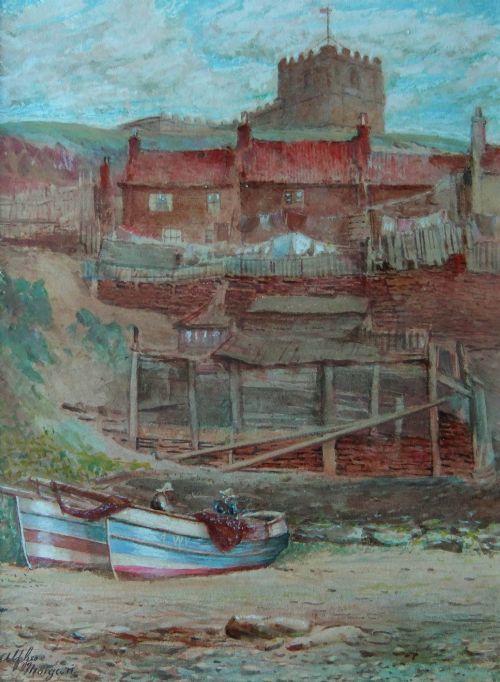
The version most commonly met on this page is the 19th century coastal view, featuring fishing boats, rocky beaches and maritime traffic. Artists frequently captured specific regional locations such as St Ives, Scarborough and the Isle of Man.
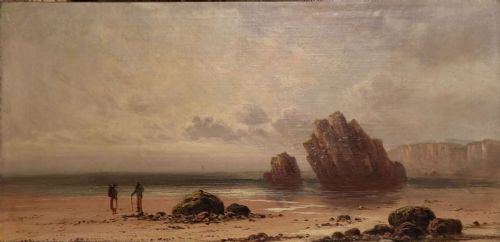
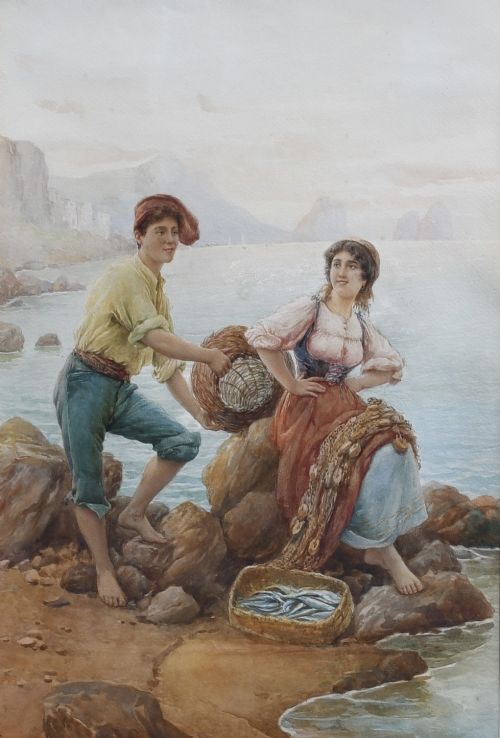
Subjects stretch from calm morning bays to turbulent waters with pounding waves against sea stacks. Figures such as fisherfolk and children appear along the shoreline, giving scale and human context to the vast marine expanses.
Materials and technique
Artists worked primarily in oil on canvas or board, and watercolour on paper, applying pigments to capture shifting coastal light and weather. Oil paint permitted deep, layered depictions of stormy seas, whilst watercolour suited translucent washes for skies and coastal haze.
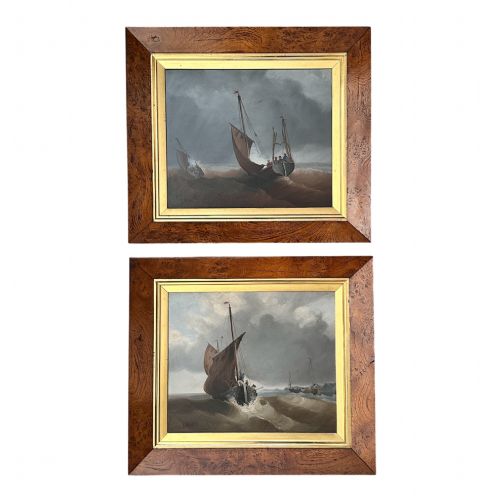
Works often utilised traditional framing in wood and gilded wood, protecting the delicate paper or canvas beneath glass where watercolours were employed. Charcoal served occasionally for stark, monochromatic depictions of wrecks and heavy weather.
Listings feature works spanning the nineteenth century into the Edwardian era, employing both oil and watercolour mediums.
Distinctions in quality
The upper tier of these works demonstrates confident brushwork and accurate handling of marine atmosphere, wind and water movement. Master painters achieved distinct depth and texture, whereas lesser examples rely on flat application and formulaic compositions.
Provenance and signature clarity separate standard anonymous studio pieces from documented works by recognised painters of the period. The integration of human figures and accurate maritime rigging further elevates the accomplishment of the composition.
James Orrock·William Banks Fortescue·Bernard Benedict Hemy·Alfred G Morgan·Carlo Ferranti·John Moore of Ipswich·William Henry Williamson·George Stanfield Walters·John McDougal·Claude Thomas Stanfield Moore·Thomas Rose Miles·Thomas Bush Hardy·Ebeneezer Colls·Gustave de Breanski·James George Bingley·William Langley·Joseph Newington Carter·Robert Farren·Peter Ghent·Herbert James·Edward Fletcher·Daniel Sherrin·Walter Meegan·J De Breanski
The Victorian Sea Landscape Paintings Glossary
- Seascape
- A work of art depicting the sea, coastal views and maritime activity. These pieces focus centrally on the ocean rather than land.
- Watercolour
- A paint consisting of colour pigment suspended in a water-soluble vehicle, applied to paper. It yields transparent washes that suit coastal atmospheres.
- Oil on canvas
- Pigment mixed with drying oil applied to a stretched cloth surface. This technique allows for rich texture and deep tonal variation.
- Gilded wood
- Wood treated with gold leaf or metallic gold paint, commonly utilised for traditional picture frames. It provides a reflective border that enhances the artwork.
- Sea stack
- A geological landform consisting of a steep and often vertical column or columns of rock in the sea. Artists frequently employed them to add dramatic scale to coastal scenes.
Victorian Sea Landscape Paintings: Frequently Asked Questions
What subjects appear in these paintings?
These works feature coastal harbours, sandy beaches, rocky cliffs and dramatic maritime scenes involving shipping vessels.
Artists frequently recorded specific British and European locations, incorporating local figures such as fisherfolk and children beside the tide.
How do I care for watercolour sea paintings?
Watercolour works require framing behind glass to protect the absorbent paper surface from moisture, dust and airborne pollutants.
Display the pieces away from direct sunlight to prevent the fading of delicate pigments and washes over time.
How do oils and watercolours differ?
Oil paintings utilise pigment bound in drying oil applied to canvas or board, offering rich texture and deep colour saturation.
Watercolours employ water-soluble pigments on paper, creating lighter, translucent effects well suited to bright coastal skies.
How do I distinguish regional styles?
Regional variations often emerge through the specific topography depicted, such as Yorkshire cliffs, Cornish harbours or Manx bays.
Artists applied distinct palettes and brush techniques characteristic of their training and the particular coastal light of each location.