
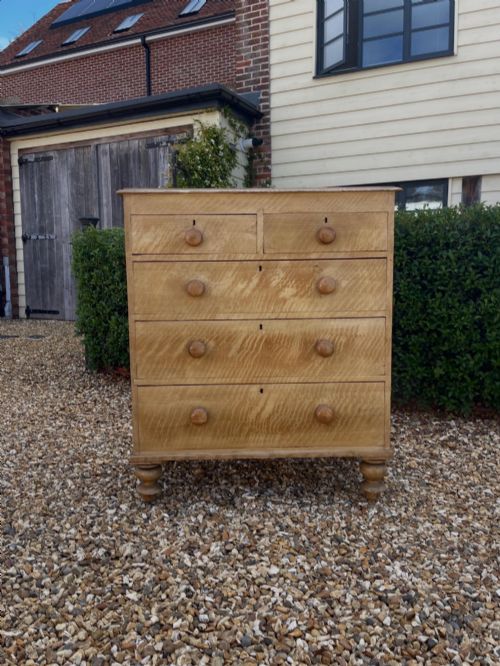
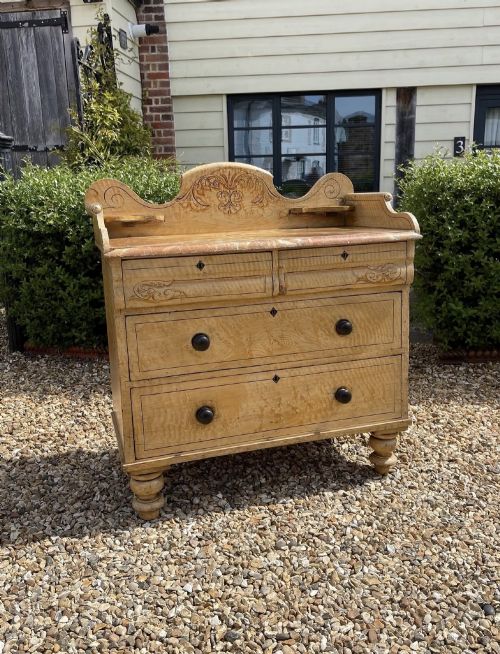

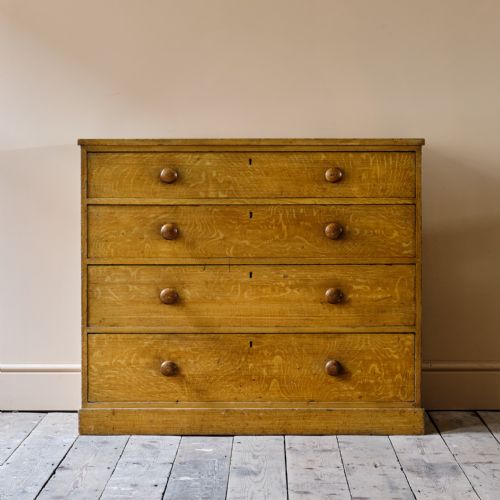


Victorian Scumbled Dresser
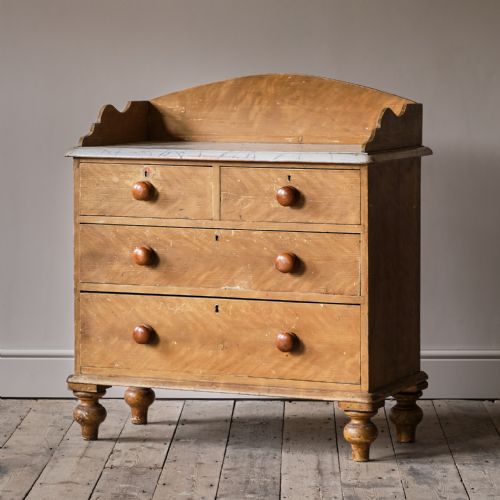
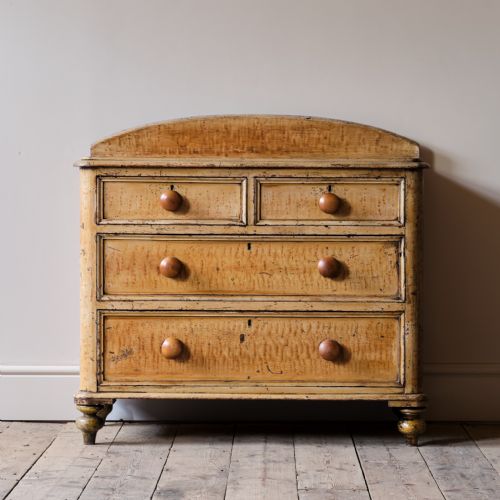
A victorian scumbled dresser brings rustic warmth and tactile history into a room through layered paint effects.

Victorian Scumbled Dresser
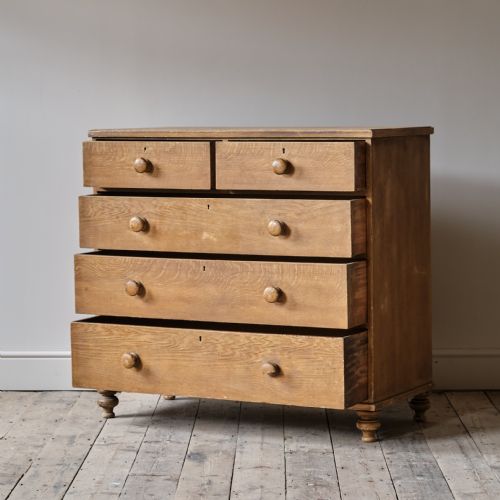
A victorian scumbled dresser is a sturdy piece of storage furniture originating from the nineteenth century, built primarily for practical household use. These items bring robust utility and regional character to domestic spaces.
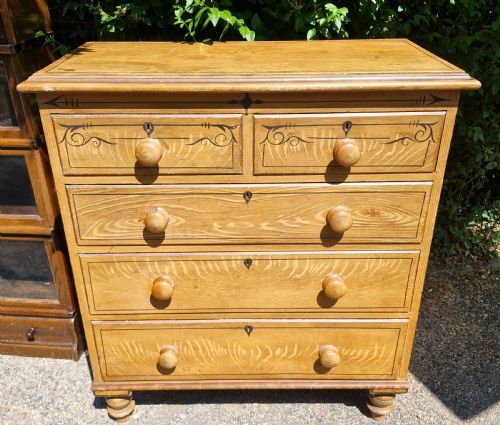
The version most commonly met on this page is a pine chest of drawers or kitchen dresser coated in decorative paint finishes. Regional examples hail from Scottish and West Country workshops.
Makers shaped these utilitarian objects during the 1870s, 1880s, and 1890s using vernacular styles such as rustic country and Victorian folk art. Buyers select them for their honest construction and surface decoration.
How they were made
Makers constructed these pieces using solid pine timber, shaping drawer carcases and cupboard frames with basic woodworking joints. Iron, brass, and glass fixtures frequently completed the functional hardware.
The defining technique is scumbling, where artisans dragged, combed, or wiped translucent glazes over a lighter base coat to imitate the grain of expensive hardwoods. This decorative paint finish was applied by hand to humble pine surfaces.
What varies in quality
Quality rests primarily in the survival and depth of the original painted surface. Pieces retaining untouched scumble paint show superior decorative appeal compared to those stripped or heavily repainted.
The integrity of the structural joinery and regional proportions separates standard items from finer examples. Well-proportioned Scottish and West Country pieces demonstrate careful local craftsmanship.
The Victorian Scumbled Dresser Glossary
- Scumbling
- A decorative painting technique involving a translucent topcoat manipulated over a pale ground to simulate wood grain. Artisans utilised combs, sponges, or rags to create these mottled patterns.
- Pine
- A soft timber extensively utilised in nineteenth-century vernacular furniture. It provided an affordable and readily available canvas for painted finishes.
- Dresser base
- The lower cabinet portion of a kitchen dresser, often featuring cupboards and drawers beneath a solid top surface. These standalone units functioned as central kitchen workhorses.
- Housekeeper cupboard
- A large tall storage cupboard designed for linens, dry goods, and household provisions. These substantial pieces originate from rural country houses.
Victorian Scumbled Dresser: Frequently Asked Questions
What is a scumbled finish?
A scumbled finish involves applying a darker translucent glaze over a pale painted base to mimic the appearance of figured timber. Craftsmen manipulated the wet topcoat using brushes or combs.
This decorative method elevated inexpensive pine furniture into visually rich items suited for domestic interiors.
Where were these pieces used?
These items belonged in domestic kitchens, sculleries, and bedrooms for storing linens, dry goods, and clothing. Their robust construction suited hardworking household environments.
Today they function effectively as living room sideboards, hallway storage units, or kitchen prep surfaces.
How do I date these dressers?
Dating relies on construction methods, timber choice, and stylistic cues from the nineteenth century. Most examples date between the 1870s and the end of the Victorian era.
Examining drawer linings, backboards, and hardware helps narrow down the period of manufacture.
How do I care for original paint?
Original painted surfaces require gentle maintenance using a dry or barely damp microfiber cloth. Avoid harsh chemical cleaners and direct sunlight to preserve the glaze.
Protecting the aged patina ensures the scumbled decoration remains stable for years to come.