
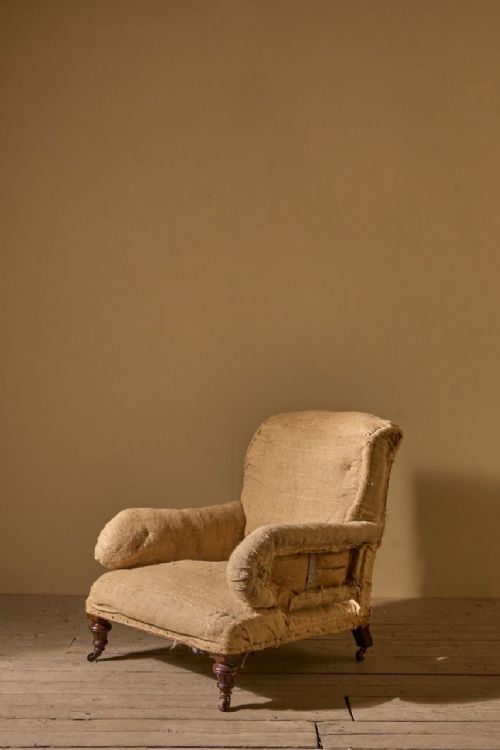
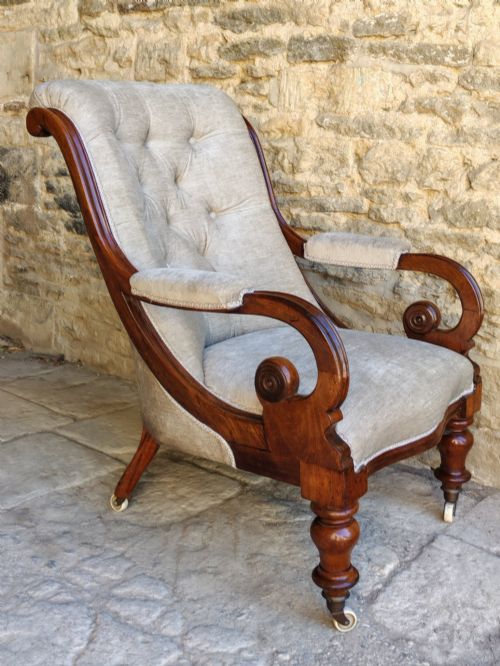
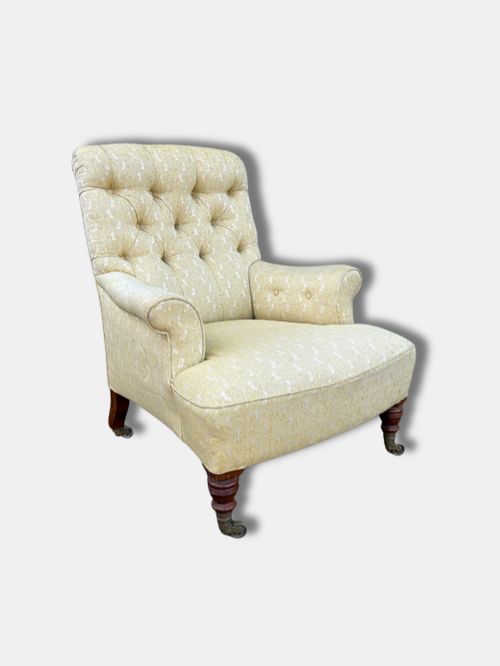
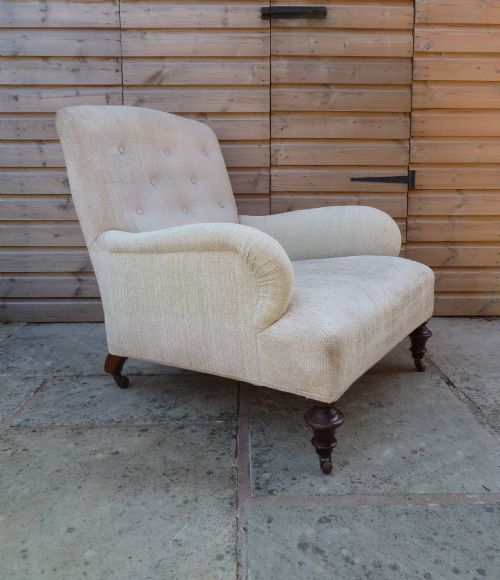
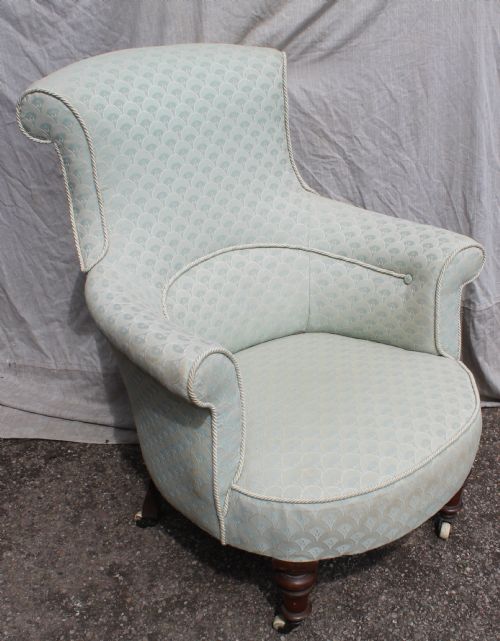
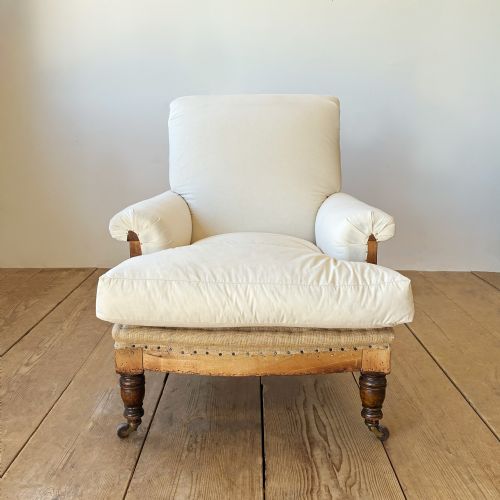


Victorian Scroll Arm Chair
A victorian scroll arm chair brings together rich timber frames and sweeping upholstered curves, offering a comfortable seat shaped by nineteenth-century craftsmanship.
How They Were Made
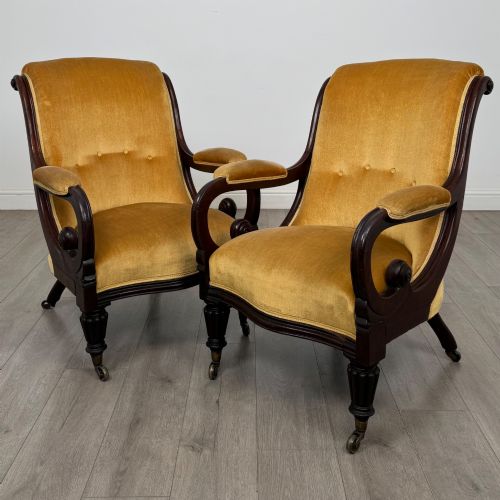
Carpenters shaped frames from dense hardwoods such as mahogany, walnut, oak, and rosewood, often carving scroll details into the arms and forelegs. Show-wood sections were polished to highlight the grain of the timber.
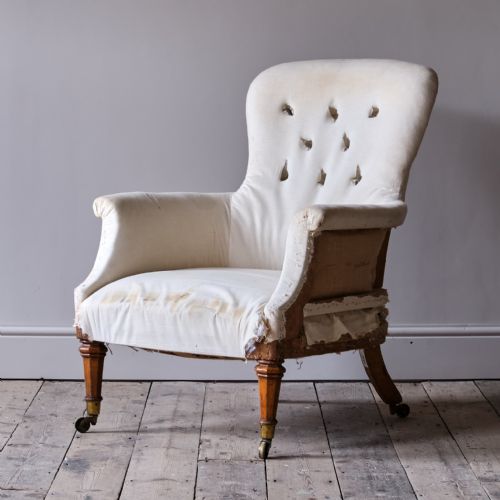
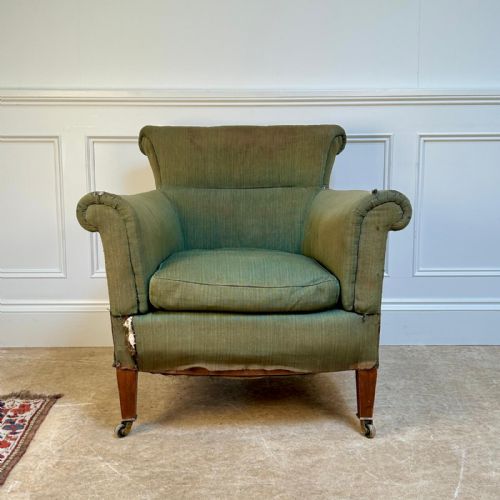
Upholsterers built up deep padding using fabrics like velvet, leather, and various woven textiles, sometimes finishing the edges with brass tacks. Castors were frequently fitted to the legs to allow easier movement across carpets.
What Varies in Quality
The distinction between ordinary and superior pieces rests on the crispness of the timber carving and the architectural balance of the scroll arms. Finer examples retain their original show-wood frames without excessive restoration.
Quality also shows in the depth and resilience of the original upholstery work and the integrity of the underlying hardwood structure. Pieces associated with notable makers or specific institutionalprovenances command greater attention from collectors.
Victorian Scroll Arm Chair Retail Price Guide 2026
Typical asking prices for victorian scroll arm chair among the pieces listed under this phrase on Sellingantiques today, from the lower quarter to the upper quarter. They describe what is for sale here now, not the wider market.
Listings feature items built from mahogany, walnut, oak, rosewood, and ash, alongside upholstered fabrics in velvet, leather, and damask.
Howard and Sons·Trollope and Sons·Hampton and Sons
The Victorian Scroll Arm Chair Glossary
- Scroll Arm
- A rolled timber or upholstered armrest shaped in a spiral curve. This design offers ergonomic support while defining the aesthetic of nineteenth-century seating.
- Show-Wood
- Exposed polished wooden framing around an upholstered piece. It displays the grain and carved details of materials like mahogany or walnut.
- Carver Chair
- An armchair designed with open sides, traditionally placed at the head of a dining table or used as a parlour seat.
- Button Back
- An upholstery technique where buttons are pulled deep into the padding to create a quilted, diamond-patterned surface.
- Castor
- A small wheel attached to the base of furniture legs. These enabled heavy chairs to move smoothly across heavy carpets and wooden floors.
Victorian Scroll Arm Chair: Frequently Asked Questions
How do I identify a Victorian armchair?
Look for dense timber frames made of mahogany or walnut, paired with scrolled armrests and turned legs that often feature small metal castors. Button-backed upholstery and deep springing are also common hallmarks of this era.
Compare the proportions and wood finish against pieces from the same period to understand the distinct craftsmanship of nineteenth-century workshops.
Were these chairs used in libraries?
Yes, larger upholstered versions were specifically built for reading rooms and libraries, offering deep seats and supportive armrests for extended periods of sitting. Mahogany library chairs often included wide arms and sturdy wooden frames.
Such seating was designed to withstand heavy daily use in formal rooms across large English country houses.
What is show-wood construction?
Show-wood refers to the polished wooden framework left visible around the upholstered sections of a chair. This technique allowed makers to display carved details on the arms, legs, and back rails.
Mahogany and rosewood were frequently utilised for this purpose to provide a striking contrast against the fabric.
Can I use these chairs daily?
These nineteenth-century seats were constructed from solid hardwoods and robust joints intended for regular household use. Their sturdy frames continue to handle everyday sitting when the internal webbing remains sound.
Placing them in a study or living room allows you to enjoy traditional seating alongside modern interiors.