


Victorian Scientific Apparatus
Victorian scientific apparatus encompasses precise instruments of brass and mahogany designed to measure, test, and demonstrate physical laws.
Victorian Scientific Apparatus
When you search for victorian scientific apparatus, you are looking at instruments built for laboratory research, industrial testing, and educational demonstration during the nineteenth century and into the early twentieth century. These objects include electrostatic machines, microscopes, hygrometers, anemometers, and testing devices built for specific trades like silk and thread manufacturing. Most examples on this page date from the mid-nineteenth century through to 1900, with a few spanning slightly earlier or later.
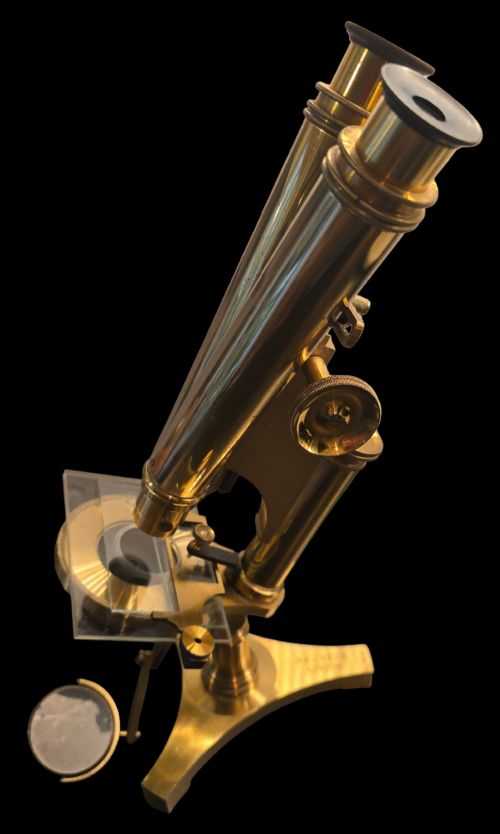
The forms range from large benchtop machines housed in wooden frames to pocket-sized galvanometers in fitted leather cases. You encounter items such as Wimshurst machines, induction coils, and binocular microscopes bearing the stamps of prominent instrument makers. The materials reflect the technological priorities of the period, combining functional metals with polished hardwoods.
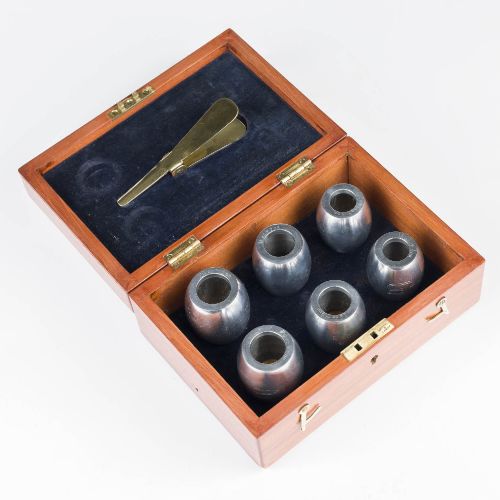
Many of these instruments survive in their original fitted mahogany or leather cases, complete with velvet linings and delicate glass components. Whether designed for meteorological observation, electrical generation, or material testing, each piece represents a specific branch of Victorian scientific enquiry. The selection reflects both laboratory utility and the era's fascination with physical demonstration.
What varies in quality
Quality in victorian scientific apparatus rests on the precision of the engineering and the survival of original components. Instruments with crisp hand-engraved maker signatures and complex, smooth-operating gear trains or electrical drives sit at the upper end of the range. The presence of matching original mahogany cases and intact velvet linings significantly elevates an object's integrity.
Simpler educational demonstration pieces or items lacking maker signatures represent a different tier of production. The thickness of the brass, the clarity of the glass scales, and the stability of the wooden housing all indicate the level of craftsmanship invested in the original piece. Complete survival of delicate glass tubes and electrostatic plates without modern replacement parts dictates the overall standard.
Listings feature periods spanning from 1850 to 1940, with a strong representation of nineteenth-century craftsmanship in brass and mahogany.
De Grave Short and Co·R and J Beck·Poulenc Freres·Alfred Apps·Negretti and Zambra·Goodbrands·Heinrich Daniel Ruhmkorff·William Ladd
The Victorian Scientific Apparatus Glossary
- Hygrometer
- A device utilised for measuring humidity in the atmosphere. The Saussure hair hygrometer uses human hair to register changes in moisture levels.
- Anemometer
- A gauge designed to measure wind speed and pressure. Lind's pattern examples measure velocity through the displacement of liquid in a glass tube.
- Induction coil
- An electrical device that produces high-voltage alternating current from a low-voltage direct current source. Ruhmkorff coils are notable early examples of this technology.
- Geissler tube
- A sealed glass tube used to demonstrate electrical discharge in gases. The cross vacuum scale version allows the observation of varying pressure levels.
Victorian Scientific Apparatus: Frequently Asked Questions
What is a Wimshurst machine?
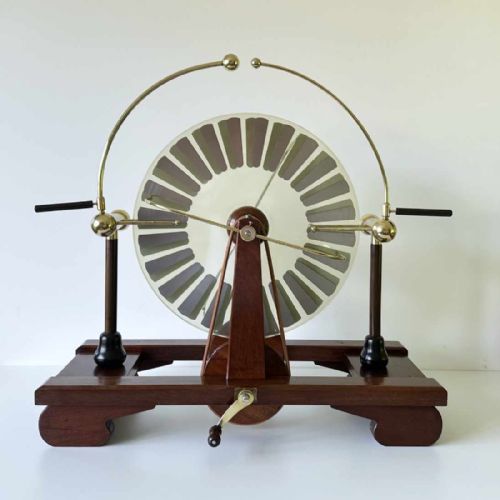
A Wimshurst machine is an electrostatic generator designed to produce high voltages using two counter-rotating glass or ebonite discs. It was commonly used in laboratories and demonstrations to generate static electricity.
These machines feature complex brass combs, neutralizing rods, and Leyden jars for storing the electrical charge. They showcase the Victorian interest in high-voltage experimentation.
How do I identify instrument makers?
Makers typically engraved their names, firm titles, and addresses directly onto the brass plates, dials, or wooden bases of the apparatus. Documents such as trade labels inside fitted mahogany cases also provide attribution.
Researching the specific address or partnership dates stamped on the instrument helps narrow down the exact decade of manufacture.
Are these instruments still functional?
Many mechanical and optical instruments remain operational, though delicate glass components and electrical insulation require careful handling. Electrostatic machines and induction coils require expert assessment before any attempt to generate high voltage.
Most buyers display them as historical scientific objects rather than active laboratory equipment due to their age and fragility.
Why are mahogany cases important?
Original mahogany cases protected delicate scientific instruments from dust, humidity, and physical damage during storage and transport. They were custom-built for each apparatus, often featuring fitted velvet or baize recesses.
Finding an instrument with its matching original case preserves the complete historical context and protects vulnerable components.