






Victorian School Portraits
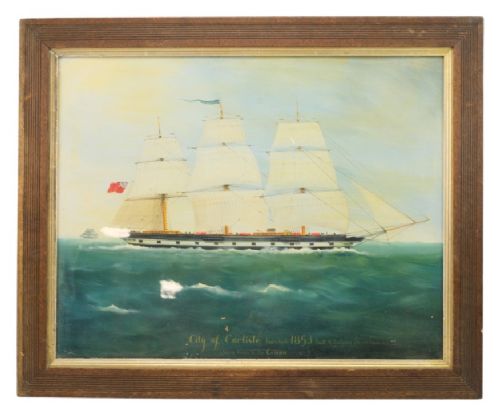
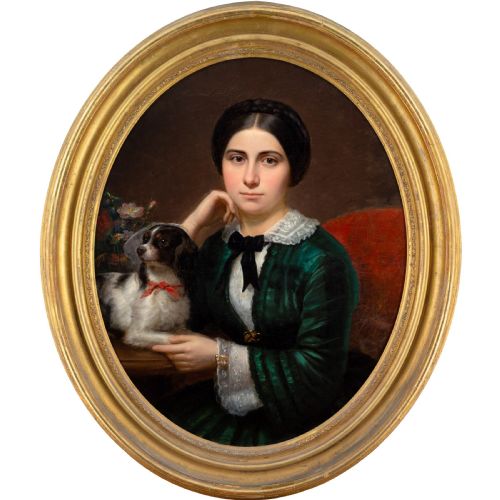
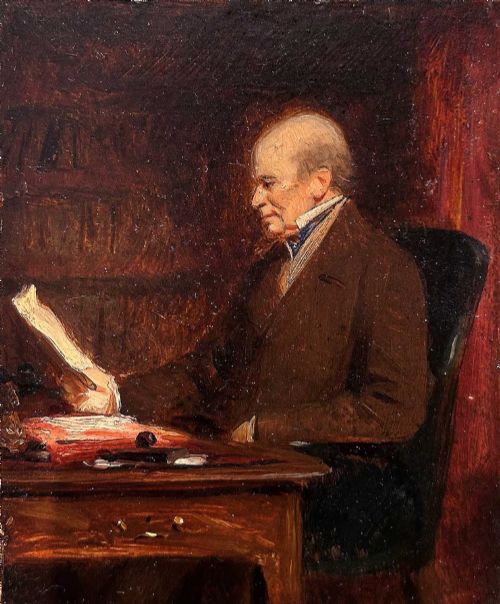
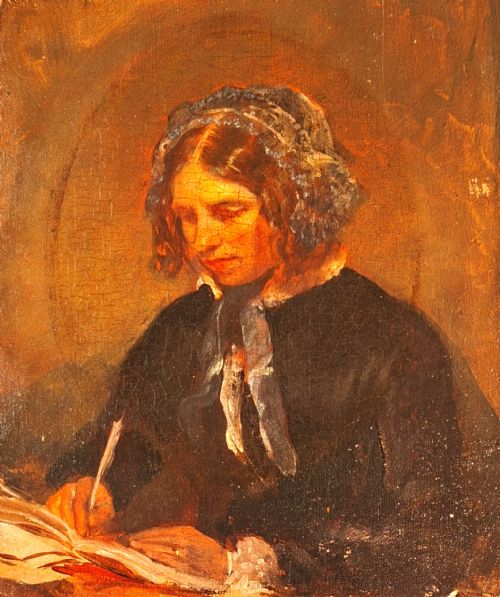
These Victorian school portraits capture the likenesses of people, animals and scenes from the nineteenth century painted by regional and academic hands.
Victorian School Portraits
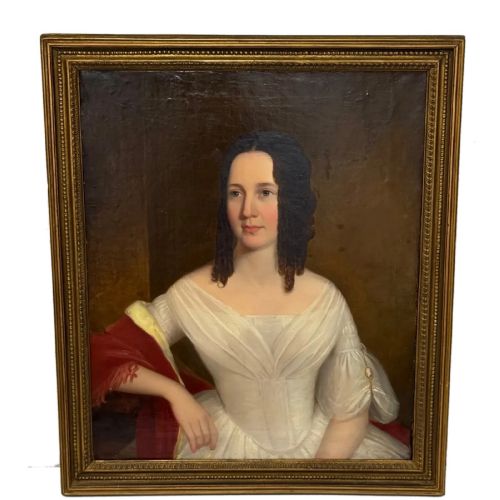
Victorian school portraits encompass oil paintings and watercolours produced by various British and continental schools during the nineteenth century. Buyers searching for victorian school portraits encounter depictions of society ladies, gentlemen, children and animals executed in provincial or academic manners.
The selection ranges from naive depictions of dogs and horses to formal likenesses of architects, geologists and military officers. Many pieces originate from regional traditions such as the English Naive School or the Newlyn School.
Works appear on canvas, paper and wood panels, often housed in period giltwood frames. The subjects span domestic pets, family silhouettes and historical figures from the eighteen-fifties onwards.
Materials and methods
Artists painted primarily with oil on canvas or applied watercolour and gouache on paper, supported by wooden stretchers and boards. Pigments were mixed with oils or water binders, sometimes supplemented by charcoal for preliminary sketching.
Framing typically involved ornate giltwood surrounds that protected the edges of the canvas or paper. Canvases received priming layers before the application of brushwork, while watercolours were mounted behind protective glazing.
Victorian School Portraits Retail Price Guide 2026
Typical asking prices for victorian school portraits among the pieces listed under this phrase on Sellingantiques today, from the lower quarter to the upper quarter. They describe what is for sale here now, not the wider market.
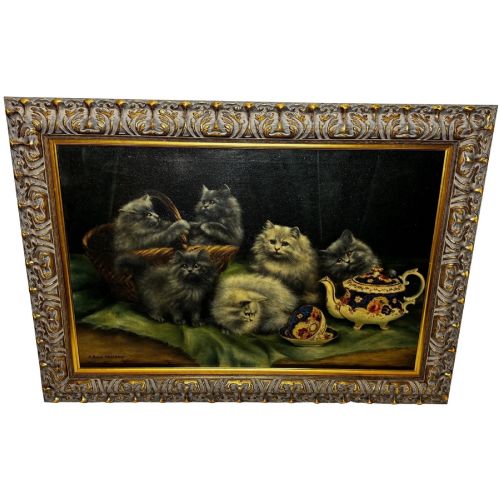
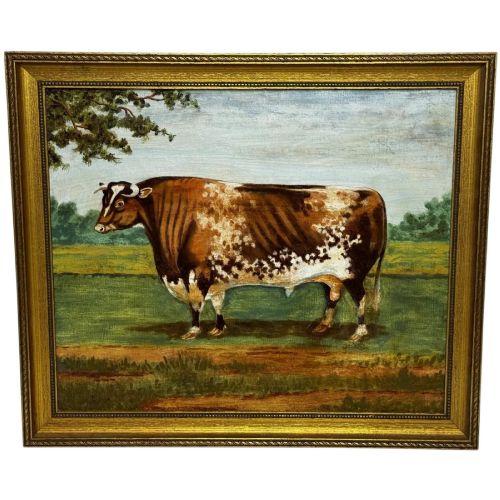
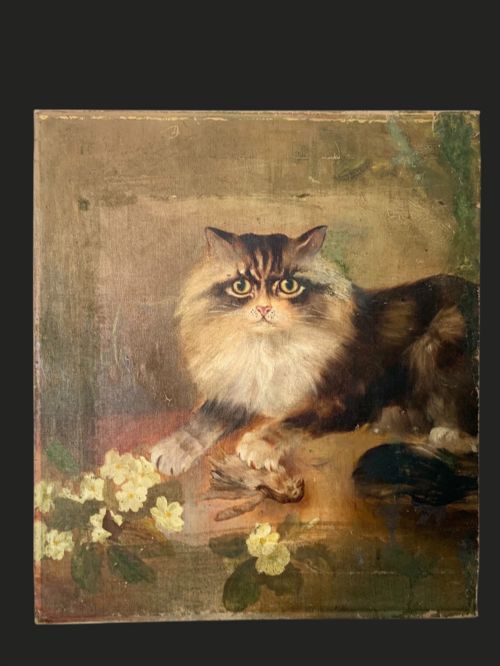
Several portraits star prized shorthorn bulls, border collies and Persian kittens rather than humans.
Evaluating the works
The survival of the original surface and the condition of the pigment layer influence the visual impact. Works retaining their period giltwood frames maintain a more complete historical context.
Agnes Augusta Talboys·C R Breytle·William Henry Knight·Vincenzo Irolli·Ralph Todd·Federico Andreotti
The Victorian School Portraits Glossary
- School
- A group of artists working in a similar style, period or region, often sharing technical approaches without forming a formal academy.
- Naive school
- An art movement characterised by a childlike simplicity of perspective and line, frequently produced by self-taught painters.
- Giltwood
- Wood that has been coated with a thin layer of gold leaf or gold paint, standard for nineteenth-century picture frames.
- Portrait miniature
- A small-scale painting intended for intimate viewing, executed with fine detail on materials such as paper or ivory.
Victorian School Portraits: Frequently Asked Questions
What defines a school portrait?
A school portrait refers to a painting executed within the stylistic conventions of a particular regional group or teaching tradition. These works reflect the shared techniques and subjects popular during the nineteenth century.
Such pieces range from formal academic commissions to simpler provincial depictions created by local artists.
How should I display these paintings?
These artworks suit traditional interiors, especially when hung on neutral walls that complement the tones of the original oil or watercolour. Maintaining stable indoor humidity protects both the canvas and the giltwood frame.
Direct sunlight should be avoided to prevent fading in watercolour pigments and discolouration in varnishes.
Can I identify the sitter?
Some portraits feature inscriptions on the reverse or contemporary documentation naming the subject, such as military officers, geologists or family members. Other works depict anonymous sitters whose identities remain lost to time.
Researching the artist or the regional school often provides context regarding the social standing of the portrayed individuals.
Why do framing styles differ?
Frames were chosen to reflect the fashion of the period and the status of the commission, ranging from simple wooden mouldings to ornate giltwood designs. Many nineteenth-century works retain their original surrounds, which contribute to the historical integrity of the piece.
Replacement frames from the same era are also common where earlier surrounds suffered damage.