



Victorian Scenery Oil Painting
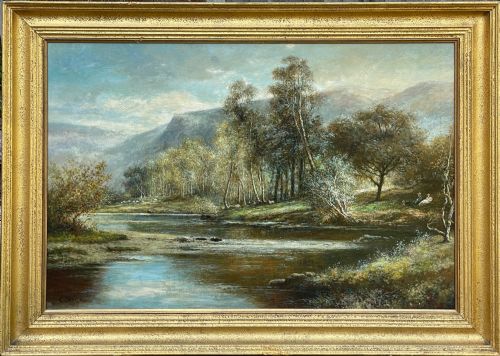
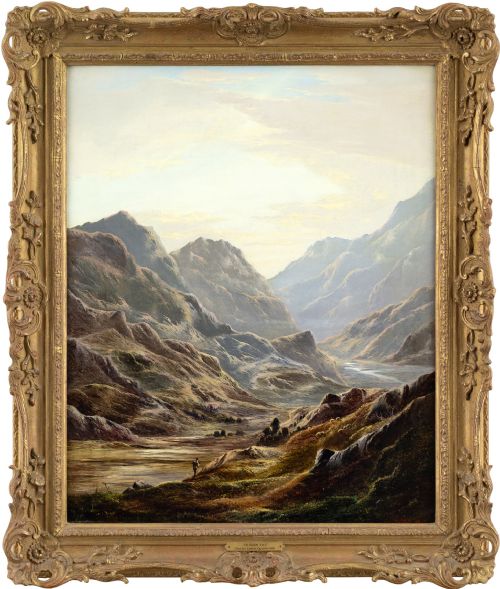
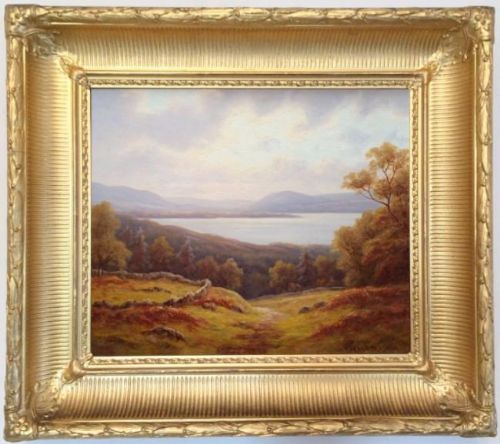
These Victorian scenery oil paintings capture mountains, lakes and rural life across Britain and Europe on canvas and wood panel.
Victorian Scenery Oil Painting
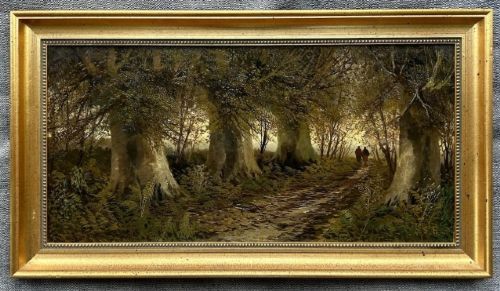
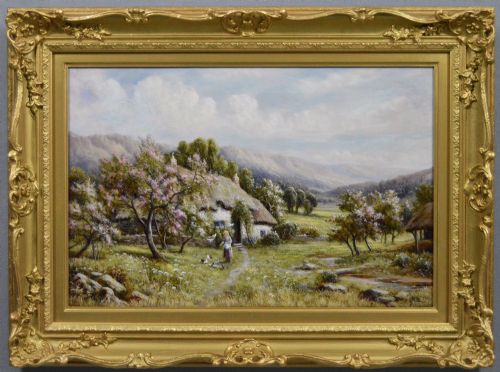
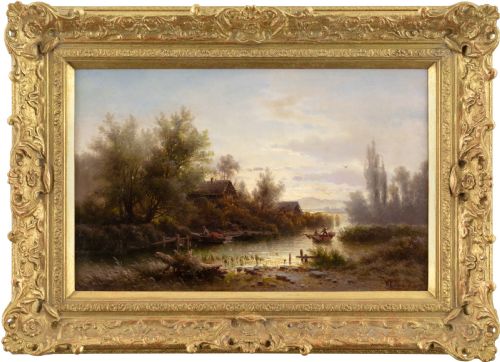
A Victorian scenery oil painting depicts landscapes, rivers, mountains and coastal views produced during the nineteenth century and around the turn of the twentieth century. These works range from intimate studies of woodlands and farmsteads to large views of Scottish highlands, Welsh peaks and Bavarian castles.
The pieces on this page are predominantly oil paintings executed on canvas or wood panel, often housed in original giltwood and gesso frames. Buyers encounter named artists such as Alfred de Breanski, William Watson Jnr and Robert John Hammond alongside works by lesser-known hands.
How They Were Made
Artists applied oil paint using brushes and palette knives onto prepared canvas or wood panels, building up layers of pigment to render light, water and foliage. These supports provided a stable surface for detailed brushwork and varied impasto textures.
Finished works were mounted in decorative frames formed from carved wood, plaster gesso and gold leaf. These frames frequently carry gilt finishes that complement the natural tones of the landscape scenes.
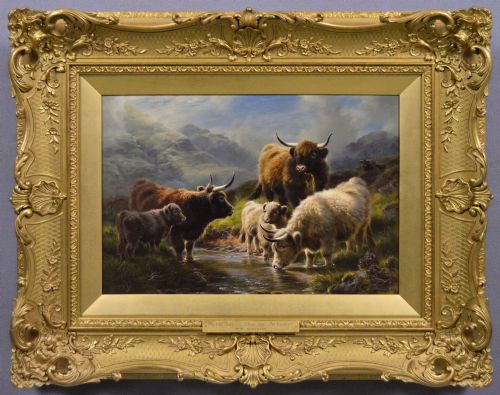
Highland cattle occasionally wander into the scenery, watching the painter from the riverbank.
What Varies in Quality
Quality depends upon the skill of the painter in handling perspective, atmospheric light and natural detail within the scenery. Works by established exhibited artists display finer control over colour harmony and composition than anonymous studio pieces.
The preservation of the original paint surface and the condition of the accompanying giltwood and gesso frame influence the integrity of the piece. Intricate framing matching the period of the painting enhances the overall presentation.
Edward Mills·Thomas W Lascelles·Robert John Hammond·Albert Rieger·William Watson Jnr·Charles Leslie·Everett Watson Mellor·John Grenville Fennell·Sidney Richard Percy·William Mellor·Karl Herrle·Harry Pennell·John Falconar Slater·Stephen Enoch Hogley·Alfred de Breanski·Alexis De Leeuw·Frederick Golden Short·Alfred de Breanski Snr·Arthur Walker Redgate·John B MacDonald·James Poole·Thomas E Francis·Hubert Sattler·Daniel Sherrin·John W Morris
The Victorian Scenery Oil Painting Glossary
- Oil on Canvas
- Pigment mixed with drying oil applied to a woven fabric stretched across a wooden frame. This combination allows for flexible application and enduring colour.
- Giltwood
- Carved wood treated with gold leaf or metallic powder to produce a golden surface. It forms the primary material for many nineteenth-century picture frames.
- Gesso
- A paint mixture consisting of a binder mixed with chalk, gypsum or pigment. Applied to wood frames beneath gold leaf, it provides a smooth base for ornamentation.
- Impasto
- Paint laid thickly on canvas so that it stands out from the surface. Artists utilise this technique to render textured elements such as water highlights or foliage.
Victorian Scenery Oil Painting: Frequently Asked Questions
What subjects appear in these paintings?
The compositions show British and European landscapes including Scottish highlands, Welsh mountains, lakes, rivers, farmsteads and coastal views. Figures, cattle and boats frequently populate the foregrounds.
Scenes often depict specific locations such as Loch Lomond, Glen Tilt or the Bavarian Alps, reflecting nineteenth-century interest in picturesque geography.
How do I date a painting?
Dating relies on artist biographical records, signatures, dates inscribed on the canvas or stretcher, and stylistic markers of nineteenth-century realism and romanticism. Frame styles also offer clues to the period.
Most works date from the Victorian era through to the early twentieth century, spanning from eighteen seventy to nineteen twenty.
Are the frames original?
Many pieces retain their period giltwood and gesso frames, which were designed specifically to complement the oil paintings. Surviving frames show appropriate signs of age and wear consistent with the nineteenth century.
Replacement frames do occur, so examining the fit and materials helps determine whether the frame is contemporary with the canvas.