
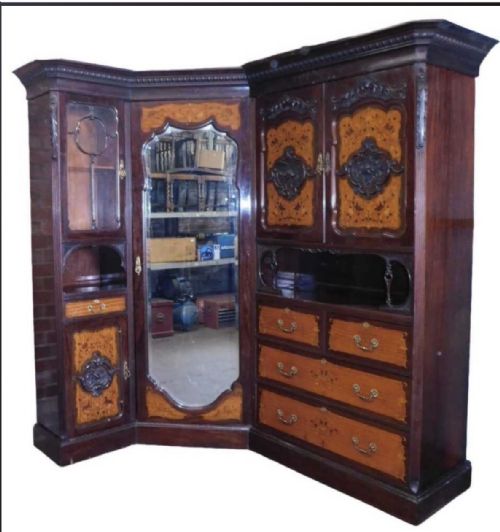


Victorian Satinwood Mirror
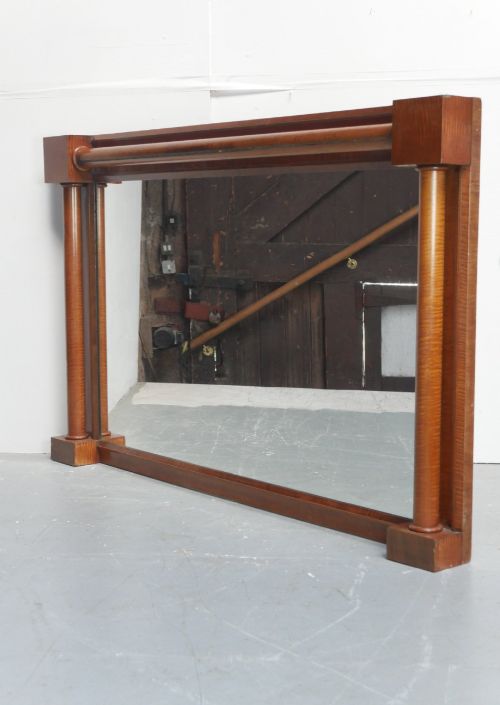
A victorian satinwood mirror brings a luminous golden grain and crisp reflection into a room, drawn largely from the dressing table mirrors and cheval glasses of the nineteenth century.
Victorian Satinwood Mirror
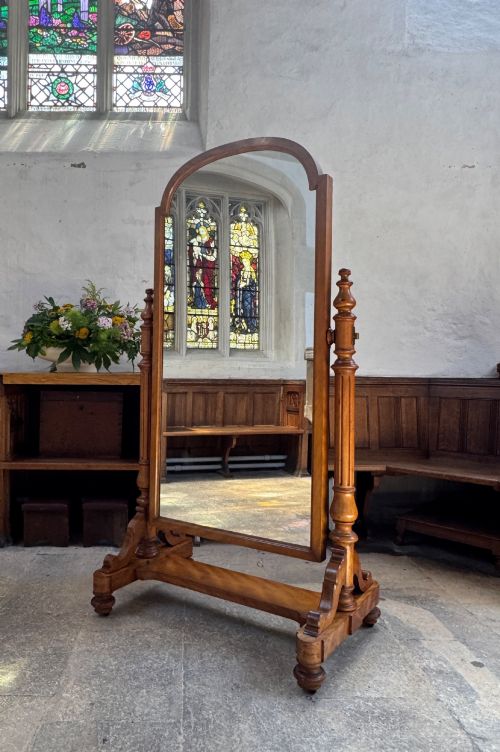
A victorian satinwood mirror typically takes the form of a dressing table glass or a tall cheval mirror, capturing the light with a pale timber ground. These pieces emerge across the nineteenth century, spanning the mid-Victorian era, the Aesthetic Movement and later revival phases.
The materials paired with the central timber often include mahogany, rosewood or brass, while the forms stretch from vanity table swing frames to large freestanding mirrors. You will encounter them most frequently as table-top dressing glasses or wardrobe door attachments within bedroom suites.
How they were made
Cabinet makers utilised dense satinwood veneers laid over a secondary timber core, often accented with marquetry inlay or contrasting banding. Glass was cut and bevelled to fit the wooden frames, sometimes supported by brass pivots or turned uprights.
Structural elements incorporated mahogany, satin birch or walnut for stability, while decorative surfaces received hand-polished finishes to enhance the natural sheen of the wood.
Makers occasionally hid small velvet-lined compartments inside dressing table mirrors for secret trinkets.
What varies in quality
The standard of a piece rests on the selection of the timber figure, the crispness of the marquetry inlay and the depth of the hand-applied polish. Superior examples display carefully matched grain patterns across the frame and refined brass mounts.
Construction methods also separate standard production from exhibition pieces, evident in the precision of the joinery, the quality of the bevelled mirror glass and the integrity of the secondary woods.
Edwards and Roberts·Waring and Gillows·Gillows·John Taylor of Edinburgh·Donald Ross
The Victorian Satinwood Mirror Glossary
- Satinwood
- A lustrous hardwood native to tropical regions, prized for its pale yellow colour and chatoyant grain. It forms the primary visible surface on fine nineteenth-century cabinet work.
- Cheval mirror
- A large freestanding floor mirror suspended on a swivelling frame between four vertical posts. This form allows the glass to tilt for full-length viewing.
- Dressing table mirror
- A smaller tabletop glass mounted on side uprights above miniature drawers. These pieces sat atop vanity chests during the Victorian period.
- Aesthetic Movement
- A late nineteenth-century design style focusing on artistic visual qualities rather than narrative content. Pieces from this period often incorporate simplified geometric lines and contrasting inlays.
- Marquetry
- The art of applying decorative pieces of veneer to a structure to form intricate floral or geometric patterns. Makers utilised different coloured woods to create pictorial depth.
Victorian Satinwood Mirror: Frequently Asked Questions
How do I date a satinwood mirror?
Dating relies on stylistic clues, construction methods, and the specific bevel or silvering of the glass plate. Mid-Victorian pieces often display simpler frames, while late-nineteenth-century examples lean towards Aesthetic or Sheraton Revival motifs.
Secondary timbers like mahogany or satin birch provide additional context for the workshop's era of production.
Where should I place a cheval mirror?
A freestanding cheval glass requires a stable floor space with sufficient clearance to tilt the frame safely. Bedrooms and dressing rooms remain the traditional locations for full-length reflection.
Placing the glass opposite a light source maximises the brightness brought into the interior by the pale timber.
Are these mirrors usually part of a larger set?
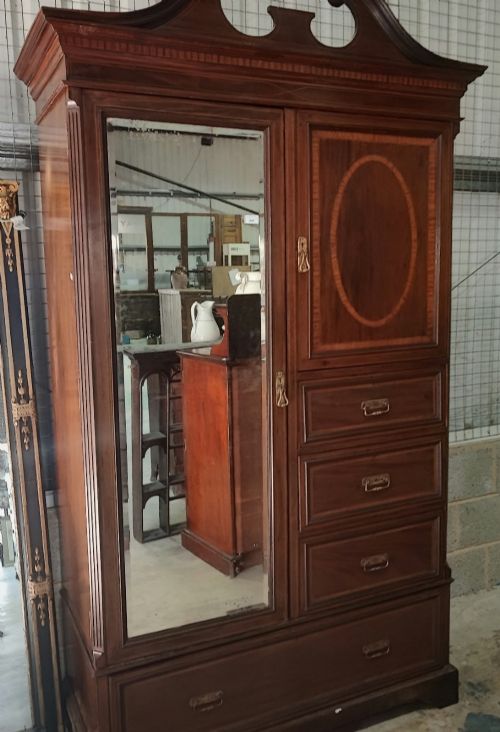
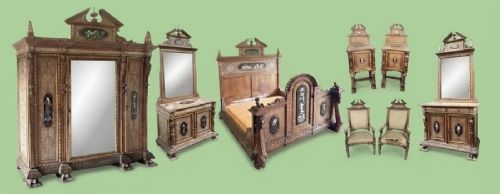
Many dressing table glasses and cheval mirrors were originally manufactured as components of larger bedroom suites, compactum wardrobes or vanity dressing tables. Surviving pieces sometimes retain mounting brackets or matching timber characteristics from their parent suite.
Individual mirrors were also produced independently for hallway and salon use.