




Victorian Sapphire Band
A victorian sapphire band brings deep blue and bright sparkle to the finger in cluster, gypsy, and boat forms.
Victorian Sapphire Band
When you search for a victorian sapphire band, you find rings that span the Victorian era, the Edwardian period, and into the twentieth century. These pieces combine blue sapphires with diamonds or split pearls set into gold.
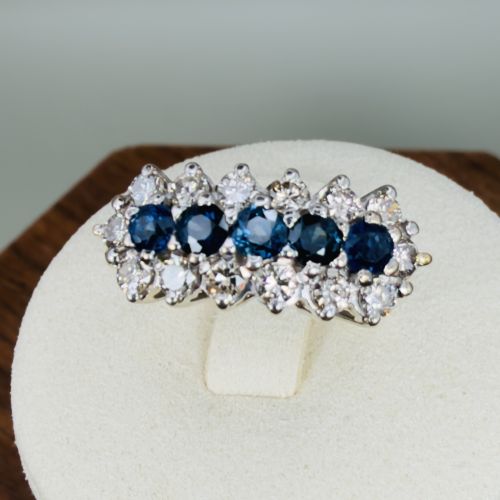
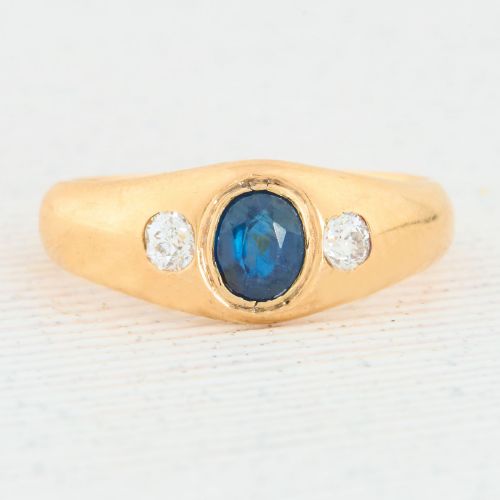
The most common form on this page is the 18ct gold ring, frequently featuring configurations such as the boat ring, the gypsy ring, or the five stone half hoop. Yellow gold provides the warm traditional mounting for the stones.
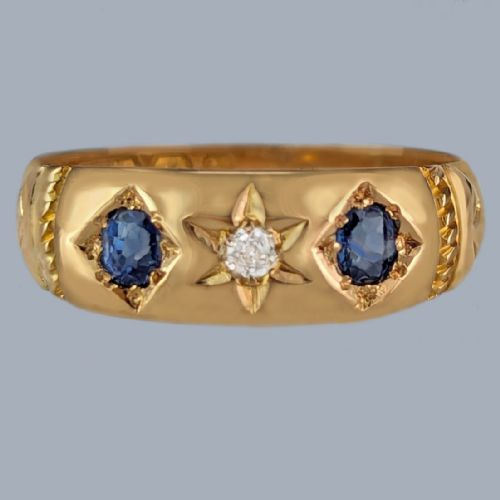
Originating across the nineteenth and early twentieth centuries, these rings reflect the styles of their makers, from starburst gypsy designs to snake rings bearing town hallmarks.
How they were made
These rings are constructed primarily from 18ct yellow gold and 9ct gold, providing sturdy mounts for the gems. Jewellers shaped the metal into boat profiles, flat gypsy bands, and coiled serpent bodies.
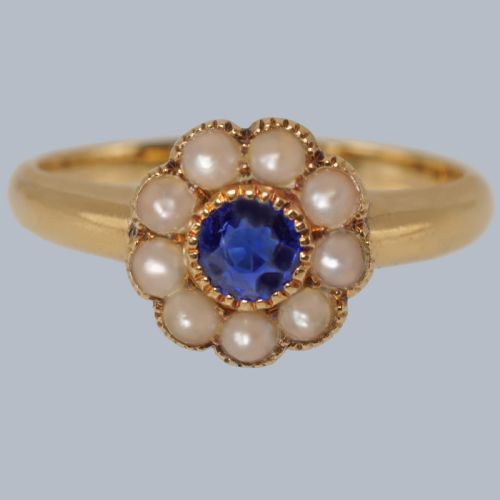
Stones including deep blue sapphires, natural Burmese sapphires, basaltic sapphires, and white sapphires are paired with old cut diamonds and split pearls. Gemstones are secured using claw settings, star settings flush with the band, or boat-shaped clusters.
Double serpent rings coil around the finger, holding sapphire and diamond heads together in eternal Victorian embrace.
What varies in quality
The distinction between tiers of these rings lies in the weight and origin of the stones, such as natural Burmese sapphires versus standard material. Diamond carat weight and the precision of old cut stones also elevate the work.
Hallmarks and assay office stamps from locations like Chester, London, and Birmingham mark higher degrees of documented provenance. The complexity of the mount, from simple bands to detailed double serpent forms, influences the character of the piece.
The Victorian Sapphire Band Glossary
- Gypsy ring
- A style where stones are set flush into a thick band of gold that tapers towards the back. This setting style protects the edges of the gems.
- Boat ring
- A navette-shaped cluster mounting that curves gently across the finger. This elongated form sits flat and showcases multiple stones.
- Trilogy ring
- A ring featuring three principal stones set in a row, representing a past, present, and future motif. Diamonds and sapphires frequently alternate in this arrangement.
- Split pearl
- A small pearl cut in half and glued or pegged into a closed setting. These pearls provide a soft white contrast to bright blue sapphires.
- Old cut diamond
- A hand-faceted diamond shape predating modern brilliant cuts, characterised by a smaller table and larger culet. These stones catch candlelight with a distinct warm glow.
Victorian Sapphire Band: Frequently Asked Questions
How do I wear a gypsy ring?
Gypsy rings sit flush against the finger, making them practical for everyday wear without catching on clothing.
Their smooth tapered bands pair easily alongside other stacking rings or wedding bands.
What gold purity is common?
Most rings in this selection utilise 18ct gold or 9ct gold for the band and settings.
Yellow gold dominates the material record, providing a rich traditional hue that complements deep blue sapphires.
How do I spot an antique ring?
Look for town hallmarks stamped inside the band, alongside characteristics like hand-cut diamonds and specific nineteenth century cluster formations.
Assay office marks from locations such as Birmingham and Chester help confirm the period of manufacture.