


Edwardian Sapphire Band Ring
An edwardian sapphire band ring combines deep blue gemstones with bright gold and diamonds, offering a piece of early twentieth-century jewellery history to wear daily.
Edwardian Sapphire Band Ring
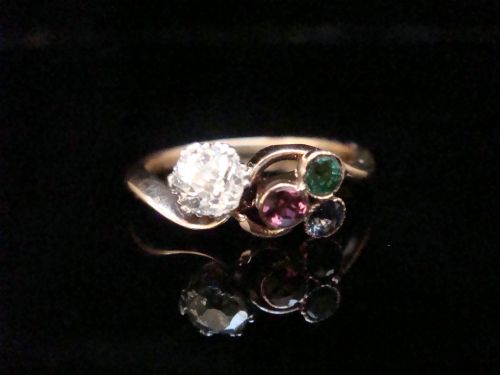
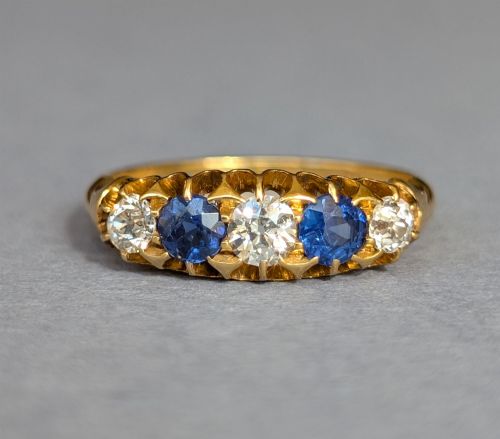
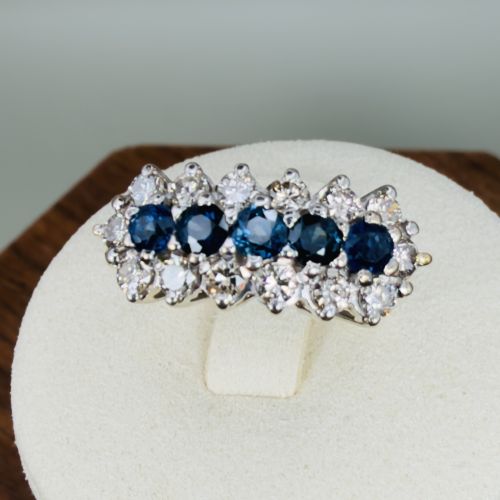
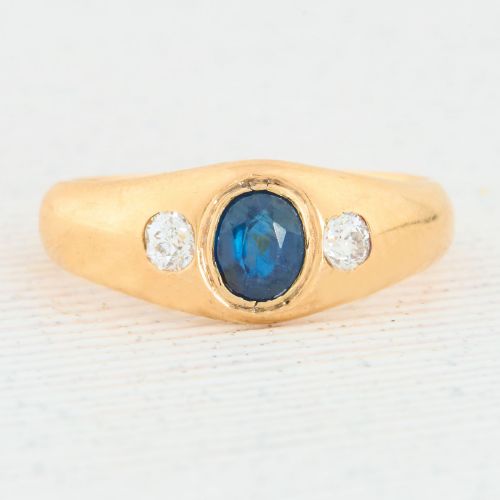
An edwardian sapphire band ring is a piece of antique finger ornament most commonly found in eighteen-carat yellow, rose, or white gold, often paired alongside diamonds. The selections here include various configurations such as five-stone mounts, boat settings, gypsy designs, and multi-row harem bands spanning the late nineteenth to the mid-twentieth centuries.
Buyers seeking an edwardian sapphire band ring will encounter pieces bearing hallmarks from assay offices like London, Birmingham, and Chester. While the core of the selection adheres to the Edwardian period and the surrounding early nineteen-hundreds, variations incorporate Victorian origins and later mid-century decades.
Materials and Techniques
These rings rely primarily on eighteen-carat gold and platinum for their structural bands and settings, combined with natural sapphires and old-cut diamonds. Goldsmiths utilised traditional hand-fabrication methods, securing stones in boat, gypsy, cluster, and multi-row configurations.
The integration of precious metals with gemstones involved precise claw, rubover, and flush settings designed to protect the stones during daily wear. Hallmarks stamped directly into the gold provide official records of assay origins and date years.
Materials recorded across the inventory include eighteen-carat yellow, rose, and white gold, platinum, sapphires, emeralds, and diamonds.
Assessing Quality
Quality in these rings rests on the origin and saturation of the sapphire, the cut and brilliance of the accompanying diamonds, and the integrity of the gold work. Stones originating from specific regions like Kashmir or Burma elevate a piece, while well-matched stone sizes across five-stone or multi-row bands show superior planning.
The crispness of original hallmarks and the minimal wear to the gold shanks and settings distinguish finer survivals. Master goldsmiths achieved balanced proportions and secure mountings that have endured through decades of handling.
The Edwardian Sapphire Band Ring Glossary
- Gypsy ring
- A style where stones are flush-set directly into a thick, tapered gold band. This mounting style gained widespread popularity during the late Victorian and Edwardian eras for everyday durability.
- Boat ring
- A curved, navette-shaped setting resembling the hull of a boat, typically holding a row of graduated gemstones. Goldsmiths designed this configuration to sit flat across the finger.
- Old-cut diamond
- A hand-faceted diamond cut before modern machine standards were established, characterised by a smaller table, higher crown, and open culet. These stones display a softer, candlelit sparkle under low light.
- Hallmark
- A series of official marks stamped into precious metal indicating purity, the assay office, and the date of manufacture. British gold pieces frequently carry these stamps inside the shank.
- Trilogy ring
- A ring featuring three primary gemstones set in a row, traditionally symbolising the past, present, and future. Sapphires flanked by diamonds form a common variation of this layout.
Edwardian Sapphire Band Ring: Frequently Asked Questions
How do I care for my ring?
Clean your jewellery gently using warm soapy water and a soft brush, avoiding harsh chemical ultrasonic cleaners. Take the ring off before manual work or swimming to protect the gold settings.
Store the piece separately in a fabric-lined box to prevent the diamonds from scratching softer gold surfaces or adjacent gems.
Can antique rings be resized?
Most gold bands can be adjusted by a skilled jeweller who can add or remove metal from the shank. Care must be taken near stamped hallmarks and delicate stone settings.
Consult a professional to determine whether the specific mounting style allows for alterations without compromising the structural integrity.
What defines Edwardian jewellery?
The Edwardian period spans from nineteen hundred to nineteen ten, known for delicate openwork and the pairing of diamonds with yellow or rose gold. Platinum also emerged during this era for fine millegrain detailing.
Pieces from this time reflect a lighter, more graceful aesthetic following the heavier styles of the Victorian decades.
Are the sapphires natural?
The listings include natural sapphires originating from various global sources, sometimes accompanied by specific geographic attributions. These stones formed in the earth rather than being manufactured in a laboratory.
Examining the internal inclusions under magnification reveals the natural origin of each gemstone.