




Late Victorian Cluster Ring
A late victorian cluster ring offers the concentrated brilliance of multi-stone gem setting from the late nineteenth century.
Late Victorian Cluster Ring
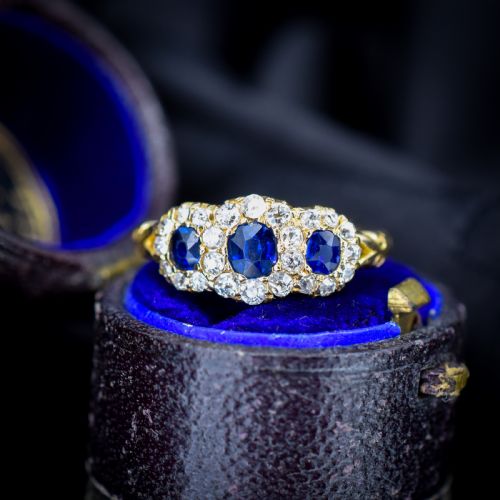
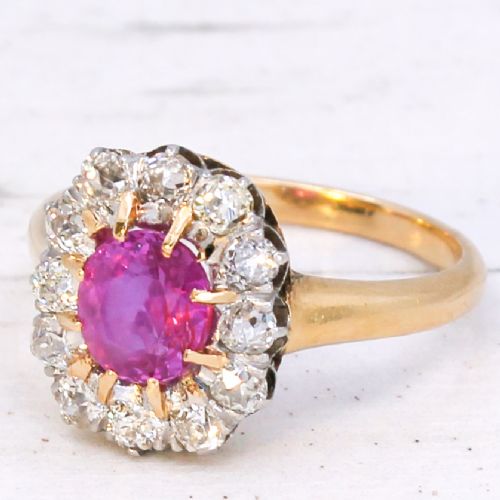
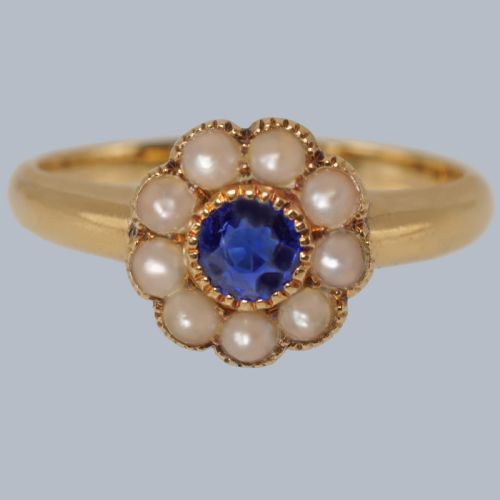
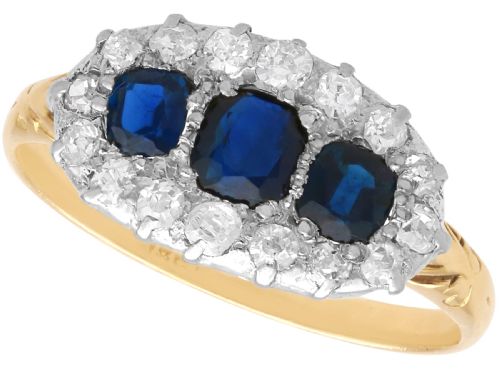
A late victorian cluster ring centres on a prominent arrangement of gemstones, bringing together diamonds, sapphires, rubies, and pearls in tight geometric configurations. These pieces emerge from the late nineteenth century, spanning the Victorian and Edwardian periods.
The layout frequently takes the form of a central stone surrounded by a halo of smaller gems, alongside navette or marquise outlines that sit flat along the finger. Buyers encounter these cluster formations fashioned in 18ct yellow gold, 18ct rose gold, and occasionally platinum or silver settings.
How They Were Made
Goldsmiths of the era utilised 18ct gold and 15ct gold for the shanks and mounts, often combining yellow and rose hues within the same piece. Settings for the smaller surrounding stones frequently incorporate silver mounted over gold to enhance the whiteness and sparkle of old cut diamonds.
Gemstones are secured using meticulous claw settings or low-profile bezels that keep the stones flush to the finger. Jewellers incorporated split pearls, turquoise, amethyst, and opals alongside heat-treated sapphires and unheated Burmese rubies.
Listings feature yellow gold, rose gold, silver, and platinum combined with diamonds, sapphires, rubies, pearls, opals, and turquoise.
What Varies in Quality
Quality rests in the proportional balance of the cluster head and the matching of the calibre or old cut stones. Superior examples display uniformity in the surrounding gems and tight, precise claw work that secures each stone without crowding.
The integrity of the original gold shank and the clarity of any accompanying hallmarks, such as town marks and date letters, elevate the standing of a piece. The choice of central material, from Burmese rubies to high carat diamonds, dictates the finer tiers of the range.
The Late Victorian Cluster Ring Glossary
- Cluster ring
- A ring design featuring a central gemstone encircled by a group of smaller stones. This arrangement maximises visual impact and light reflection.
- Old cut diamond
- A hand-cut diamond shape typical of the nineteenth century, characterised by a small table, high crown, and large culet facet. These stones produce a warm, candlelit sparkle.
- Navette
- A boat-shaped or marquise setting that tapers to points at either end. It sits lengthwise along the finger, creating an elongated silhouette.
- Split pearl
- A small pearl that has been sliced in half and adhered to a backing for use in flush jewellery settings. They were favoured in Victorian mourning and sentimental jewellery.
- Hallmark
- An official stamp applied to precious metals indicating purity and origin. British pieces often show assay office symbols and date ciphers.
Late Victorian Cluster Ring: Frequently Asked Questions
What defines a late victorian cluster ring?
These rings feature a central stone surrounded by a geometric halo of smaller gems, dating from the late nineteenth century.
They showcase characteristic period cuts like old European diamonds alongside coloured stones such as sapphires and rubies set in gold.
How do I care for antique pearl rings?
Pearls are organic and sensitive to moisture, cosmetics, and perfumes. Put your ring on last when dressing and wipe it clean with a soft cloth.
Avoid submerging pearl rings in liquid jewellery cleaners or exposing them to ultrasonic baths.
Can I wear my cluster ring daily?
While durable, these antique pieces require mindful wear due to their age and delicate claw settings. Removing the ring during heavy manual tasks prevents damage.
Regular checks by a jeweller ensure the tiny claws holding the cluster stones remain secure.
How do I know a ring is Victorian?
Dating relies on stylistic clues like navette shapes, old cut stones, and specific metal alloys such as 15ct gold. Hallmarks stamped inside the band also provide specific assay office letters and dates.
Consulting the specific design motifs helps distinguish Victorian work from later Edwardian revivals.