




Victorian Safety Pin Brooch
These victorian safety pin brooch pieces combine practical fastenings with fine gemstone settings, offering a neat piece of wearable history for everyday wear.
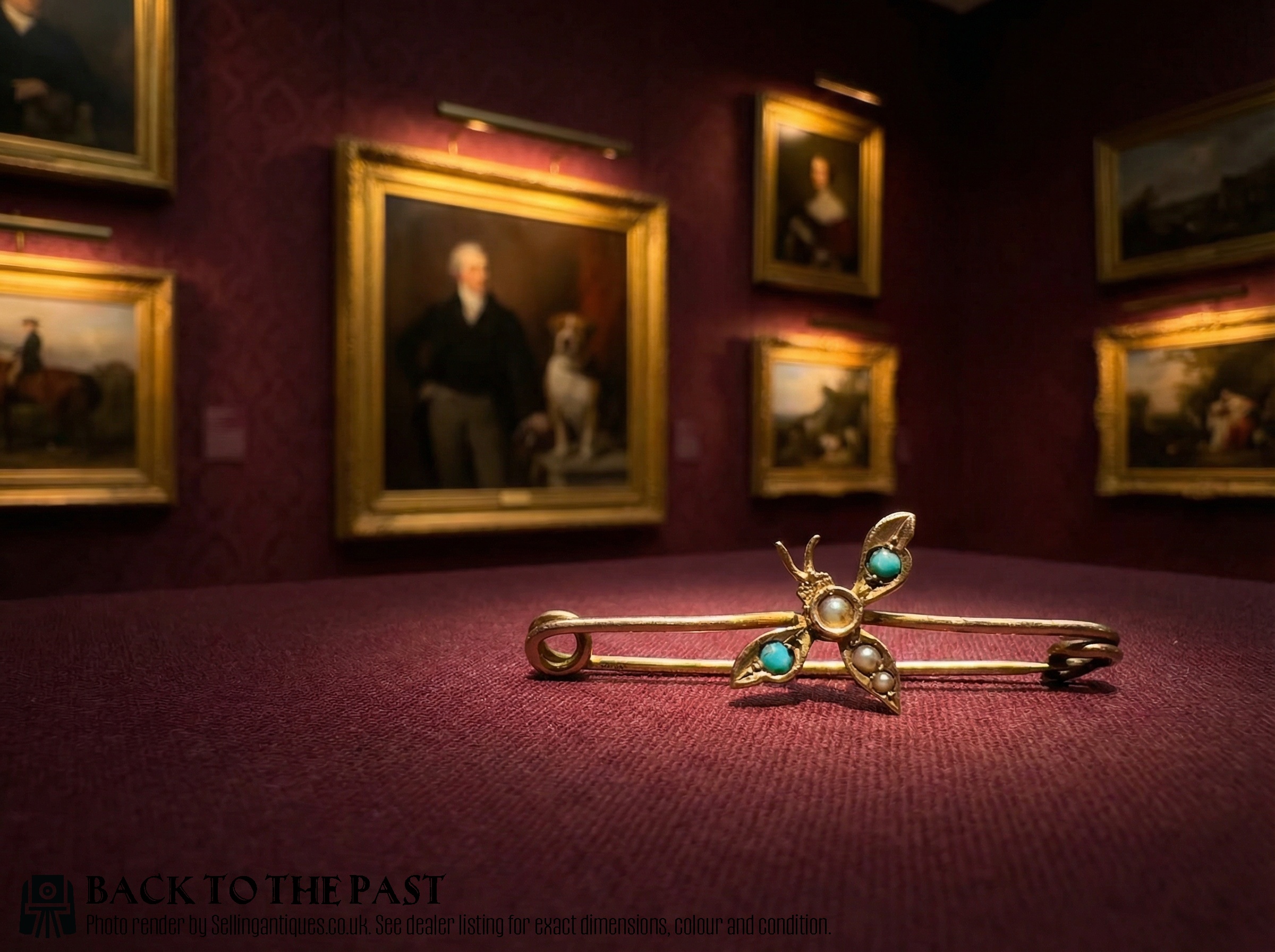
Victorian Safety Pin Brooch
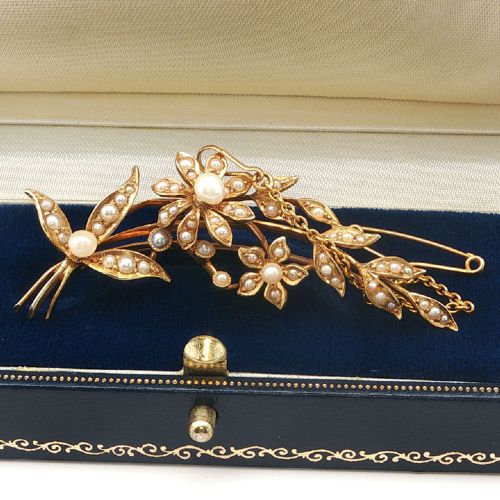
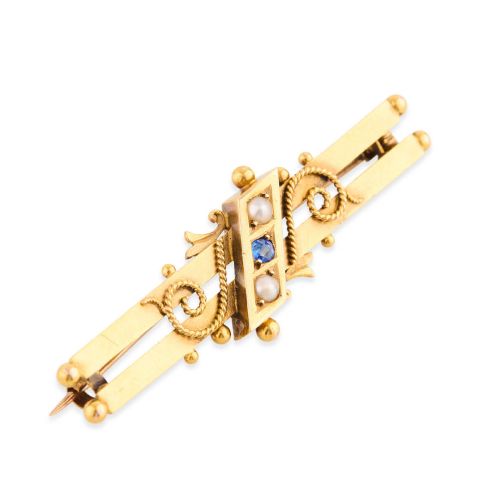
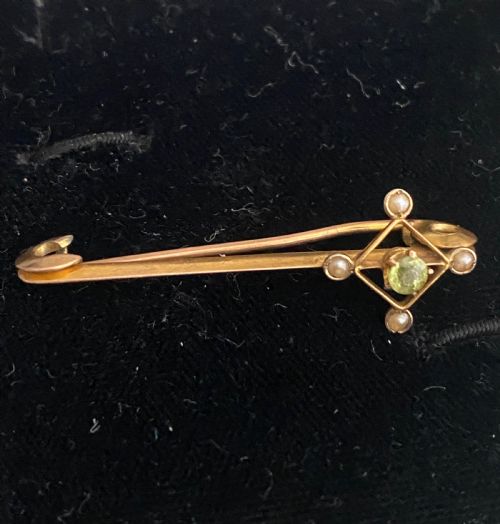
A victorian safety pin brooch is a functional garment pin adapted into an ornamental jewel, often taking the form of bar brooches, swallows, hearts, and floral sprays. Most examples originate from the Victorian and Edwardian periods, though pieces spanning the 1920s and 1930s also appear.
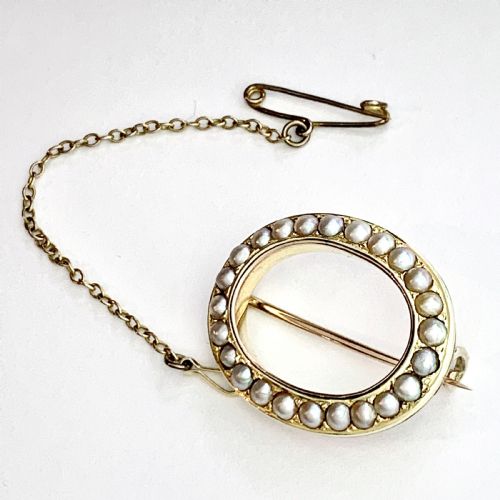
The designs range from simple gold bars set with pearls and turquoise to more elaborate figural motifs like dragonflies, butterflies, and swords. Many incorporate a safety chain alongside the pin mechanism, ensuring the jewel stays secure when fastened to a lapel or scarf.
How they were made
Jewellers constructed these brooches using high-karat yellow gold, predominantly 15ct and 9ct, alongside silver-topped elements and occasional 14k or 18 carat gold variants. Metalsmiths employed techniques such as cannetille wirework to build delicate surface texture and volume around the settings.
Listings feature yellow gold standards including 9ct and 15ct alongside pearls, turquoise, diamonds, and sapphires across Victorian to 1930s periods.
What varies in quality
The distinction between standard production and superior work lies in the choice of materials and the fineness of the metal smithing. Pieces featuring well-matched natural stones, such as graduated split pearls or bright old-cut diamonds, display a higher grade of craftsmanship.
Structural refinement also dictates quality, seen in the clean integration of the safety mechanism and the precision of decorative wirework. Maker choices and stone selection elevate certain bar and figural pins above simpler mass-produced variants.
The Victorian Safety Pin Brooch Glossary
- Cannetille
- A surface decoration technique using fine gold wires and tiny metal beads to resemble lace embroidery. This ornamental metalwork is typical of mid-nineteenth-century jewellery design.
- Jabot pin
- A long pin originally designed to secure a Jabot neck frill on garments. These pieces often feature an ornate decorative terminal at one end.
- Old-cut diamond
- A diamond cut by hand before modern machinery, characterised by a small table, high crown, and open culet. These stones have a softer, candlelit sparkle compared to brilliant cuts.
- Seed pearl
- A very small natural or cultured pearl, often drilled and threaded onto wire or set in clustered groups. They provide delicate white accents in Victorian floral and halo designs.
- Split pearl
- A pearl that has been sawn in half to sit flat against a metal backing. This method allows pearls to be neatly mounted in low-profile brooch settings.
Victorian Safety Pin Brooch: Frequently Asked Questions
How do I wear a antique brooch safely?
Fasten the pin securely through tightly woven fabric, ensuring the safety catch or chain is properly engaged to prevent loss during movement.
Heavier bar and stone-set pieces sit best on sturdy coat lapels, thick wool scarves, or structured jacket fabrics rather than delicate silks.
What is a safety chain on a brooch?
A safety chain is a short length of metal chain attached to the back of the brooch with a secondary pin or clasp that anchors to the garment separately.
This backup tether ensures that if the primary pin fastening fails while worn, the brooch remains secured to your clothing instead of falling to the floor.
How do I tell Victorian from Edwardian brooches?
Victorian pieces often display heavier gold weights, warmer yellow hues, and romantic or naturalistic motifs like swallows, hearts, and detailed cannetille wirework.
Edwardian jewellery typically shifts towards lighter, airier platinum and high-karat gold settings with pearls and diamonds, reflecting a more delicate aesthetic.
Are these brooches made of solid gold?
Many period pieces are fabricated from solid 9ct or 15ct gold, reflecting the standard fineness used by jewellers during the nineteenth and early twentieth centuries.
Selected items also combine silver-topped sections with gold reverse structures, a traditional method used to enhance the whiteness around diamond settings.