
Victorian Rural Painting
A victorian rural painting brings the quiet business of farmsteads, harvest fields and country lanes directly onto the wall.
Victorian Rural Painting
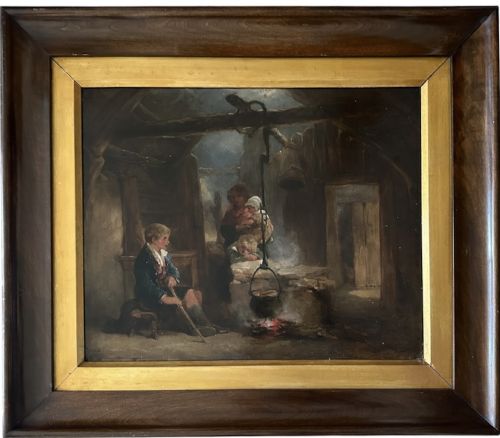
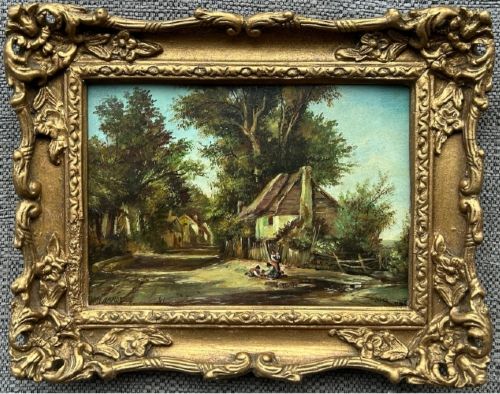
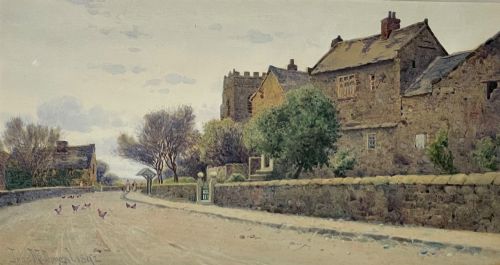
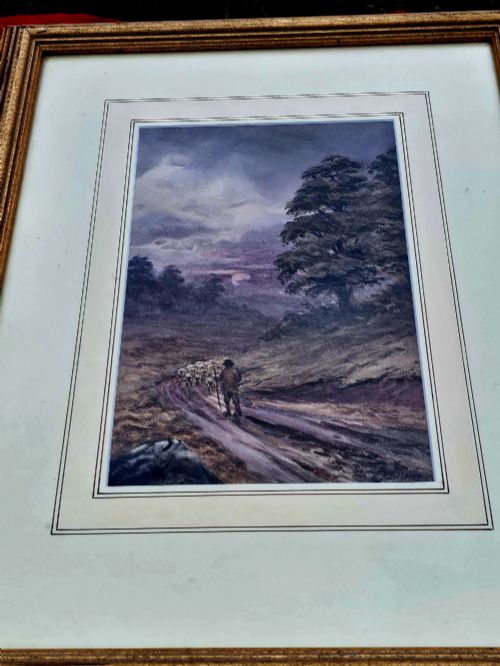
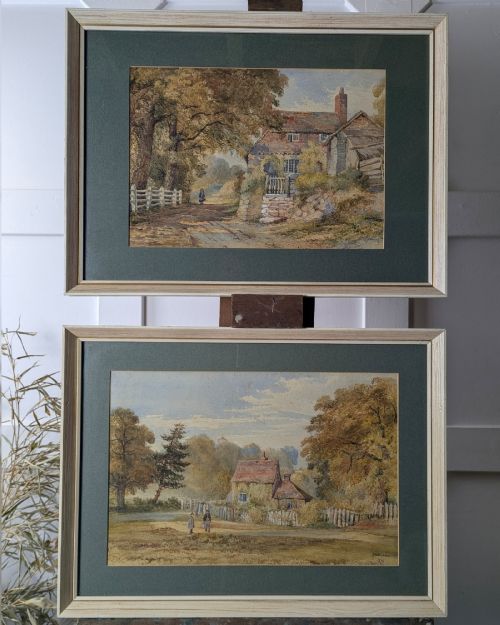
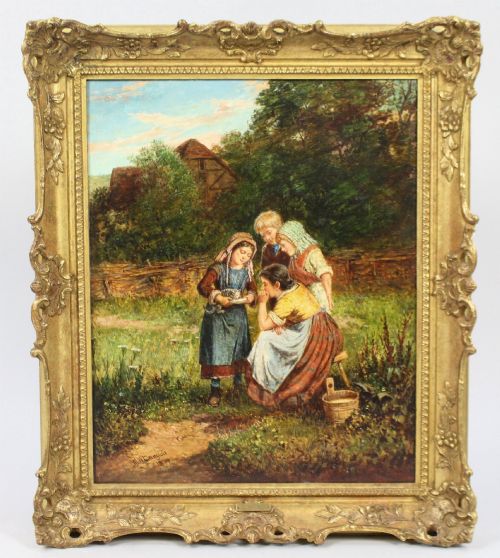
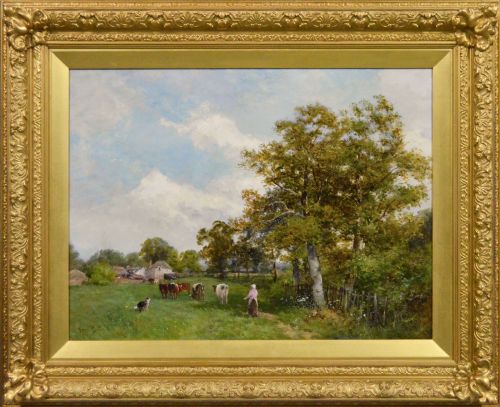
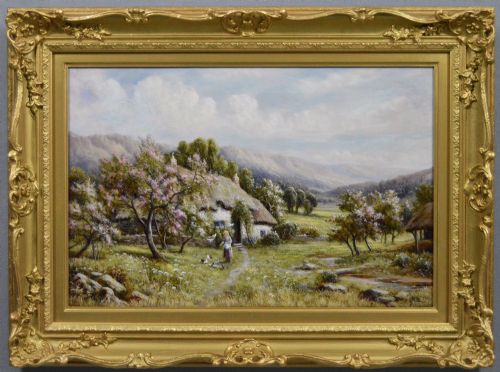
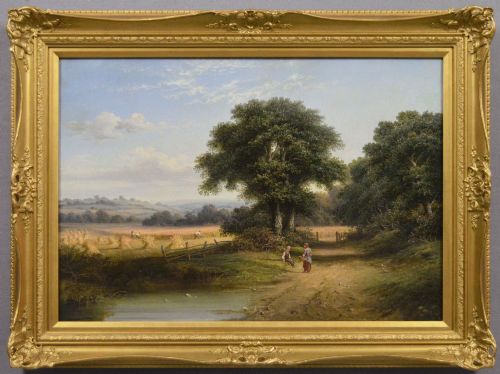
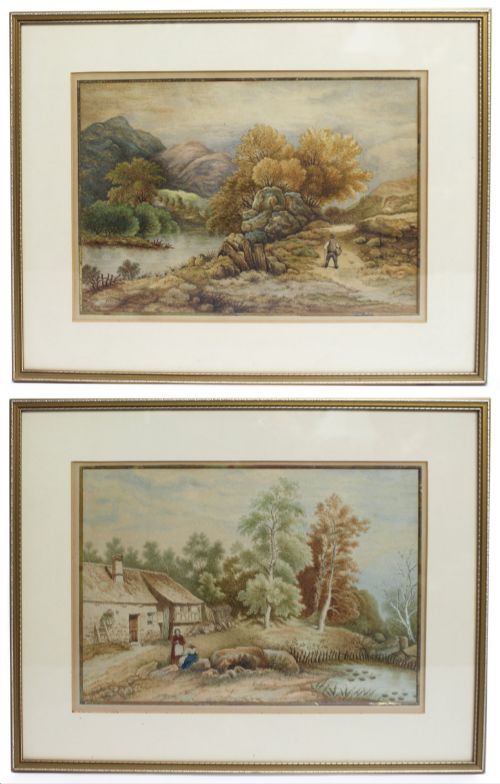
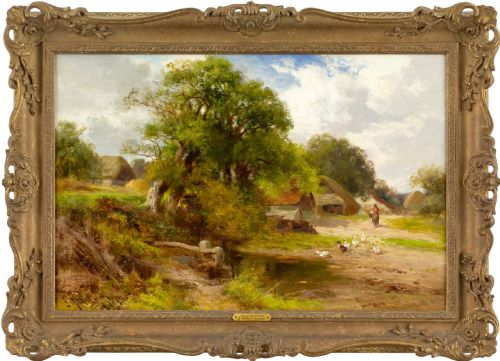
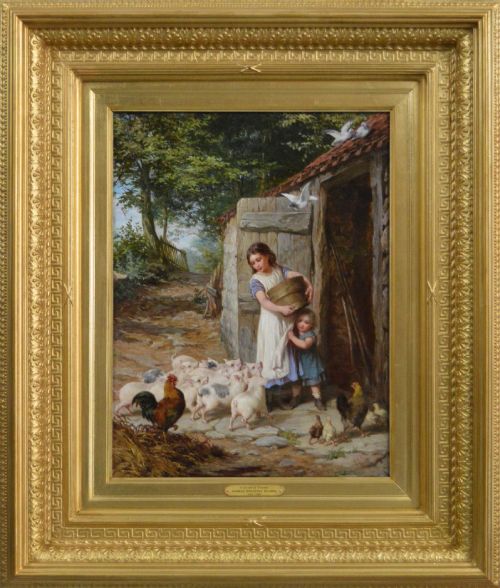
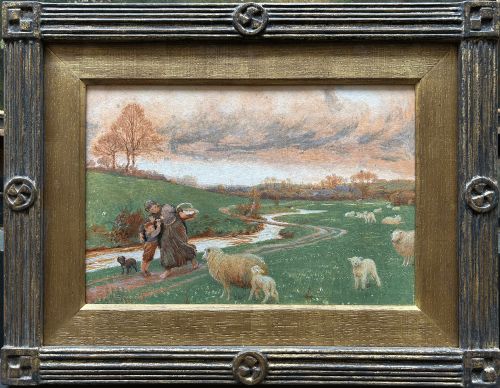
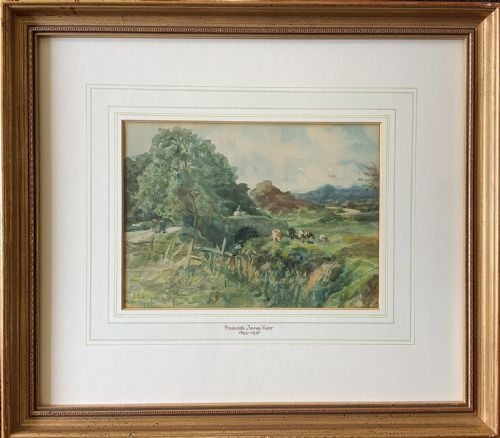
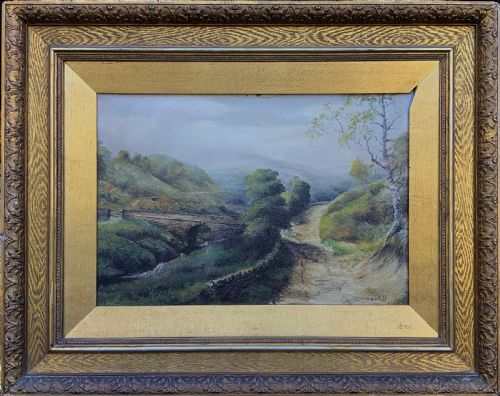
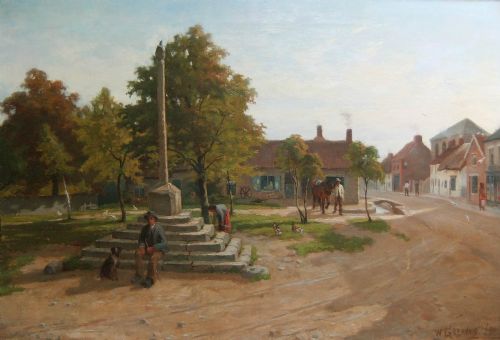
A victorian rural painting captures the pastoral life of the nineteenth century through scenes of agriculture, farm animals and village cottages. The works span oil on canvas, oil on panel, and delicate watercolours on paper, often housed in period giltwood and gesso frames. Landscapes featuring sheep, cattle herding, and harvest scenes dominate the selection.
Most pieces date from the Victorian era and the decades immediately surrounding the turn of the twentieth century, reflecting a strong British School influence. Buyers frequently encounter representations of daily countryside routines, such as figures feeding poultry, hauling hay, or walking near streams and rural homesteads.
The compositions range from intimate watercolours to large oil paintings signed by named artists or attributed to the British School. These artworks document specific regional localities, from Yorkshire and Kent to Sussex and Wales, preserving historical views of farming and rural architecture.
How they were made
Artists painted primarily with oil on canvas or oil on panel, building up rich textures for fields, livestock, and foliage, while watercolours on paper allowed for lighter, more fluid depictions of skies and streams. Support materials typically consisted of prepared canvas stretched over wooden frames or sturdy wooden panels.
Many works retain their original or period frames fashioned from wood adorned with gesso and giltwood details, which protected the edges and complemented the tonal palette of the canvas. Pigments were applied with varying brushwork, from the tight realism of genre scenes to looser, atmospheric strokes influenced by the Barbizon school.
Materials recorded in the archive include oil on canvas, watercolour on paper, and wooden panels fitted into giltwood and gesso frames.
What varies in quality
The skill in rendering anatomical details of livestock, such as cattle and sheep, and the natural posture of human figures distinguishes the more accomplished works from simpler regional depictions. Stronger paintings demonstrate a deliberate handling of natural light and atmospheric perspective across harvest fields and riverbanks.
The preservation of the original paint surface and the condition of the accompanying giltwood and gesso frame influence the overall integrity of the piece. Works by documented Victorian and Edwardian painters typically exhibit greater refinement in composition and colour harmony compared to unsigned or generic school pieces.
William Howard Hardy·John McDougal·EJ Letheren·Robert A Nottingham·Mark William Langlois·David Bates·Robert John Hammond·Walter Heath Williams·Th Thibault·John Horace Hooper·George Augustus Holmes·Frederick Walker·Frederick James Kerr·William Greaves·Miles Birkett Foster·Charles Henry Slater·Herman S Melville·Charles Edward Wilson·Frederick Hines·Johannes de Haas·Sydney Yates Johnson·William Henry Mander·Thomas Sidney Cooper·James Kyd·James William Booth
The Victorian Rural Painting Glossary
- Oil on Canvas
- Pigments bound in a drying oil applied to a stretched woven fabric support. This combination allowed artists to work with rich textures and blend colours over extended periods.
- Watercolour
- A painting method where fine pigment is suspended in a water-based, translucent solution applied to paper. It produces luminous washes that capture delicate atmospheric effects in rural landscapes.
- Giltwood
- Wood carved and coated with a thin layer of gold leaf or metallic powder. It was widely utilised for decorative period picture frames.
- Gesso
- A paint mixture consisting of a white pigment, binder, and chalk used to prepare wooden panels and carve details on frames before gilding. This ground layer provides a smooth surface for finishing touches.
- Genre Painting
- Artworks depicting scenes from ordinary daily life, commonly featuring farm workers, domestic animals, and cottage interiors. These pieces focus on narrative and human activity within a rural setting.
Victorian Rural Painting: Frequently Asked Questions
What subjects appear in these paintings?
The compositions focus on traditional nineteenth-century farming life, including shepherds tending flocks, cattle grazing in pastures, and workers harvesting crops. Figures outside cottages and near village streams also feature prominently.
These pastoral themes reflect the Victorian fascination with rural tranquility and agricultural labour, documenting the countryside before mechanisation altered the landscape.
How do I identify the period of a painting?
Dating relies on artist signatures, biographical records, and stylistic clues such as clothing fashions and farming equipment. Nineteenth-century works often bear signatures or exhibition labels on the reverse.
Materials also provide context, as older canvases and handmade gesso frames display distinct ageing characteristics that separate Victorian pieces from later Edwardian reproductions.
Are these paintings executed on canvas or panel?
Artists utilised both woven canvas and solid wooden panels as supports for oil paintings, while watercolours were executed exclusively on paper. Canvas allowed for larger landscape formats with textured brushwork.
Panels provided a rigid, smooth surface favoured by artists capturing fine detail in smaller rural scenes and animal portraits.
How should I care for a period frame?
Giltwood and gesso frames require stable indoor humidity and protection from direct sunlight to prevent the decorative moulding from cracking or flaking. Dusting should be performed gently with a dry, soft brush.
Avoid using liquid cleaners or polishes on antique frames, as moisture can damage the delicate gold leaf and historical gesso layers beneath.