


Victorian Rural Landscape
These Victorian rural landscape works capture agricultural life, pastoral views, and open countryside through traditional painting and etching.
Victorian Rural Landscape
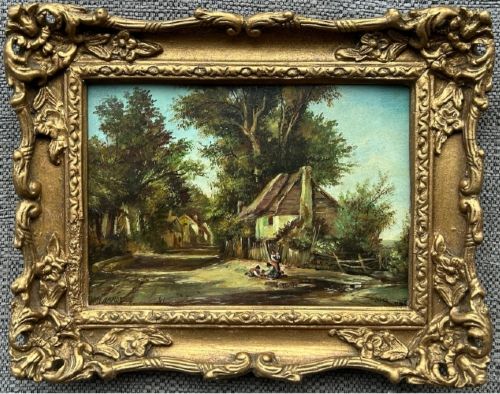
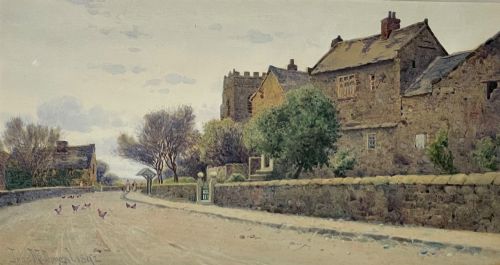
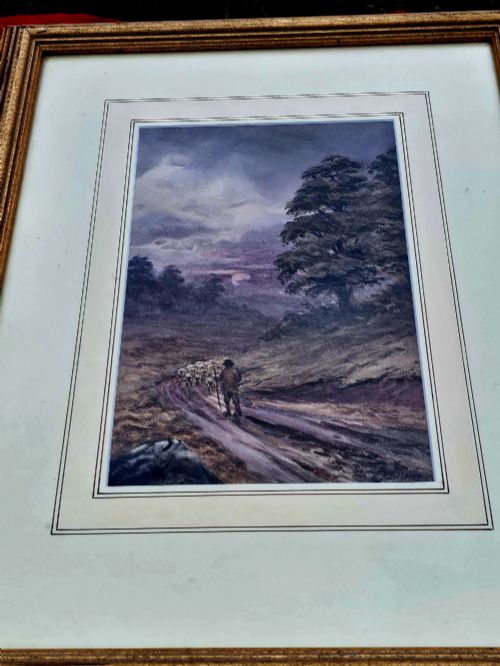
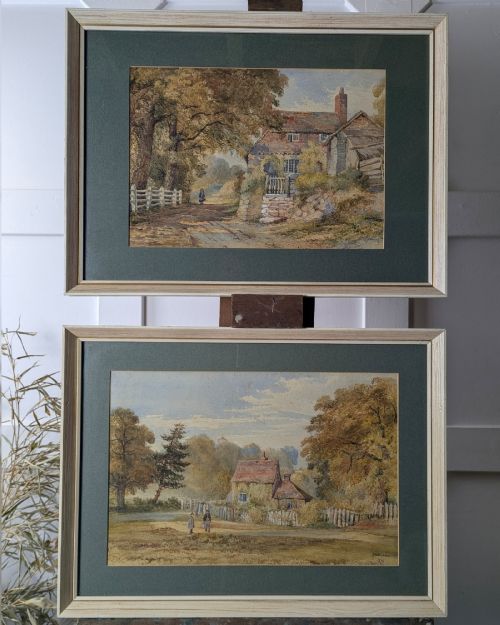
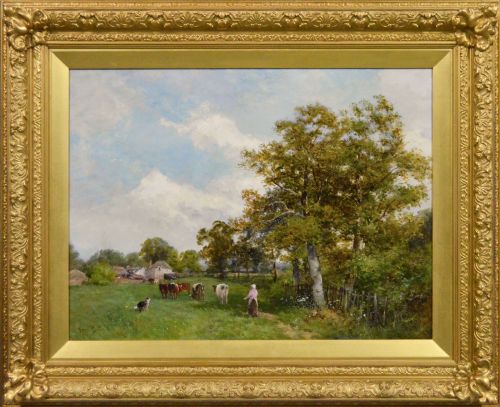
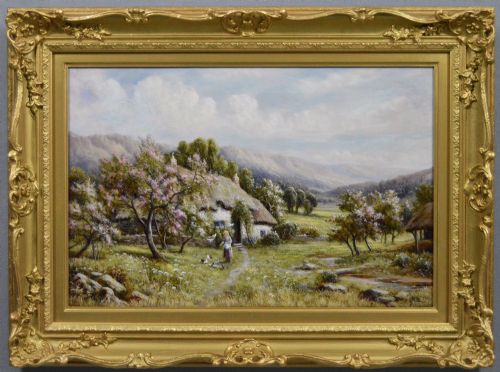
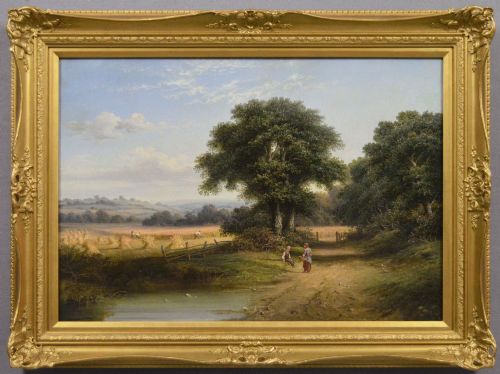
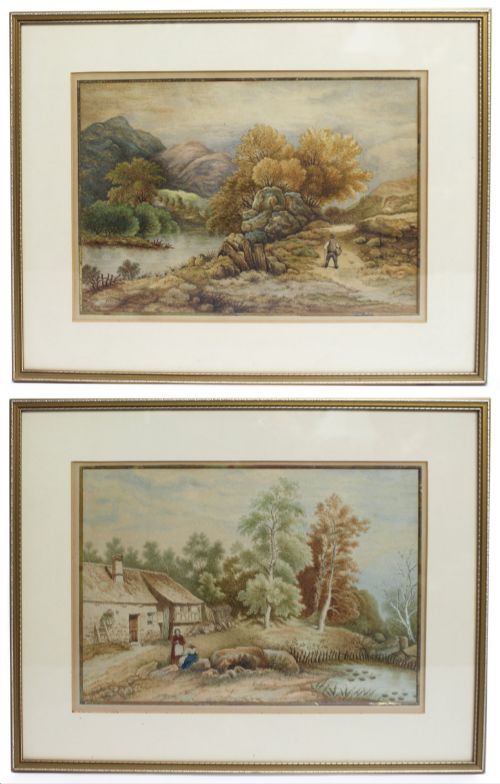
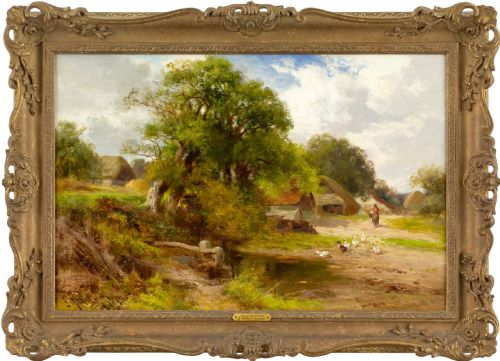
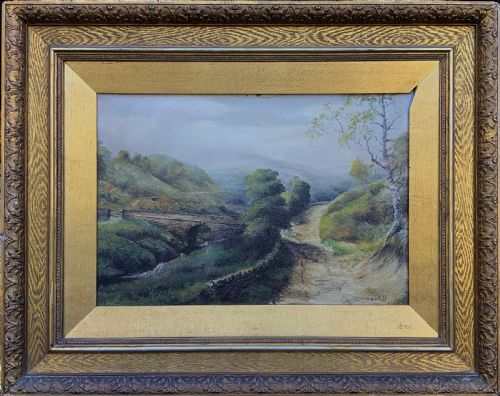
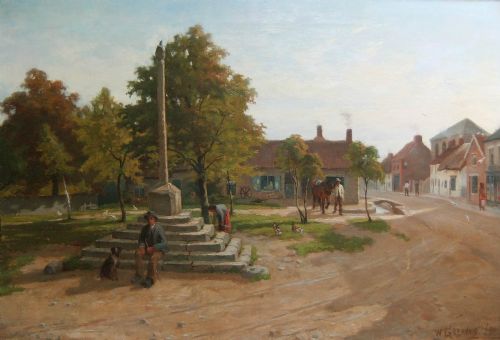
A Victorian rural landscape depicts open countryside, farmland, cottages, and agricultural labour set in nineteenth and early twentieth-century Britain. These pieces record pastoral scenes including harvest fields, river views, and livestock herding.
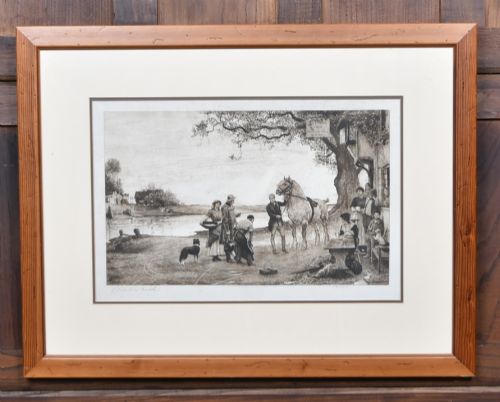
The works appear in several forms such as oil on canvas, oil on panel, watercolour paintings, and original etchings. Framed art pieces often utilise traditional wood and giltwood frames.
Makers and artists range from named Victorian painters to broader entries assigned to the British School and 19th Century Realism. Examples feature styles identified with Victorian Pastoral and the Victorian Idyllic School.
Materials and Technique
Artists produced these works using oil on canvas, oil on panel, and watercolour on paper, alongside etching techniques. Canvases and panels receive pigment applied to capture light and atmosphere across rural scenes.
Finished works are housed within wood, giltwood, and gesso frames that complement the period aesthetic. Support materials vary between stretched canvas, wooden boards, and paper sheets.
Listings feature works spanning the nineteenth century through the early twentieth century, utilising oil, watercolour, and etching techniques.
Evaluating Quality
Quality rests upon the skill of the brushwork, the handling of light, and the precision with which figures and animals integrate into the natural surroundings. Stronger examples demonstrate confident draughtsmanship and compositional balance.
The condition of the paint surface, paper integrity, and the preservation of the original framing elements influence the overall presentation. Signed works by documented artists carry distinct archival documentation.
William Howard Hardy·John McDougal·EJ Letheren·Robert A Nottingham·David Bates·Robert John Hammond·Walter Heath Williams·Robert W Macbeth·Th Thibault·John Horace Hooper·Frederick Walker·Frederick James Kerr·William Greaves·Miles Birkett Foster·Herman S Melville·Frederick Hines·Johannes de Haas·Sydney Yates Johnson·Herbert Dicksee·William Henry Mander·Thomas Sidney Cooper·James William Booth·Henry John Yeend King·William Sydney Cooper·Samuel Joseph Clark
The Victorian Rural Landscape Glossary
- Oil on Canvas
- Pigment mixed with drying oil applied to a stretched cloth support. This medium allowed artists to build rich textures and deep colour tones.
- Watercolour
- Water-soluble pigment paint applied to paper. It produces translucent washes and delicate atmospheric effects.
- Giltwood
- Wood carved and coated with a thin layer of gold leaf. It provides a reflective, ornate border for traditional framed artwork.
- Etching
- A printmaking process where acid cuts into unprotected parts of a metal plate to hold ink. The inked design transfers onto paper under pressure.
- Gesso
- A paint mixture consisting of a binder mixed with chalk, gypsum, or pigment. It prepares rigid surfaces and decorative frames before gilding or painting.
Victorian Rural Landscape: Frequently Asked Questions
What subjects appear in these scenes?
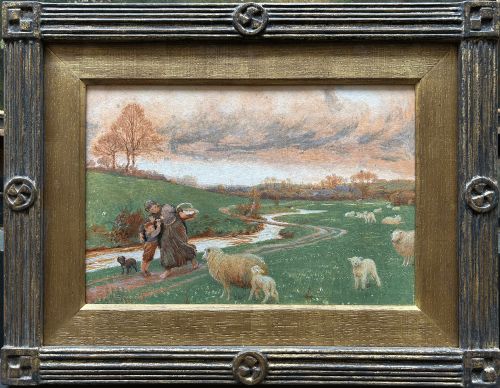
These artworks depict agricultural scenes, farming fields, rivers, and coastal villages. Common motifs include livestock herding, harvest workers, cottages, and figures walking through open country.
The compositions reflect everyday rural life across Britain during the nineteenth century. Artists focused on recording working farms, grazing cattle, and quiet pastoral views.
How do I care for antique watercolours?
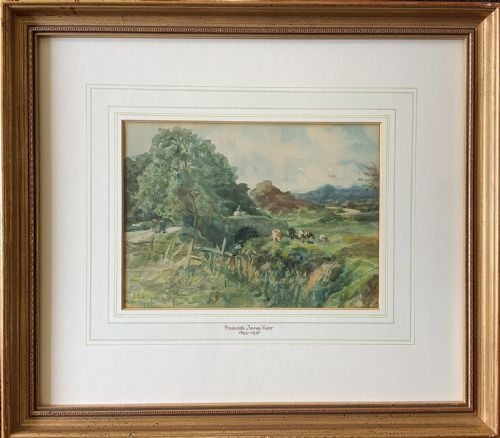
Watercolour paintings require protection from direct sunlight to prevent fading of the pigments and paper. Display them away from damp environments and extreme temperature fluctuations.
Keep pieces behind protective glass with acid-free mounts. Proper framing preserves both the paper support and the delicate media.
Are these works signed by the artists?
Many examples feature artist signatures, initials, or inscriptions indicating specific locations and dates. Signed pieces provide direct attribution to nineteenth-century painters and printmakers.
Unsigned works often originate from contemporary British schools or regional artists. Attribution for unsigned pieces relies on stylistic comparison, materials, and period characteristics.
How can I tell oils apart from watercolours?
Oil paintings utilise thick pigments on canvas or wooden panels, creating textured surfaces with visible brushstrokes. Watercolours feature thin, translucent washes applied to paper supports.
Oils generally hang without glass protection, whereas watercolours require glazing to protect the paper. The underlying support and surface sheen instantly reveal the medium used.