




Victorian Rummers
Victorian rummers are robust drinking glasses designed for punch, ale, and wine, offering tactile weight and historic charm for daily use or display.
Victorian Rummers
Victorian rummers are traditional drinking glasses that developed from earlier Georgian forms, serving hearty portions of punch, ale, and wine at the table. These substantial vessels were produced throughout the nineteenth century, reflecting the social drinking habits of the period.
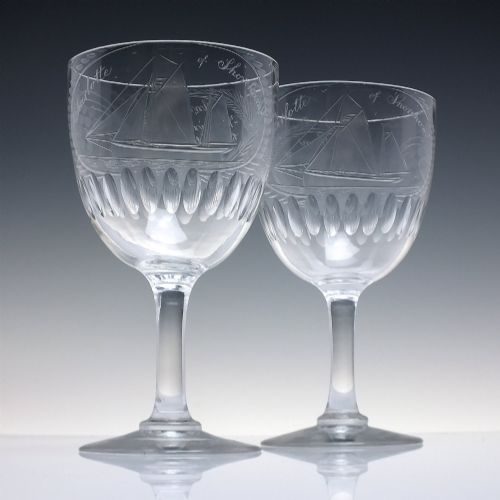
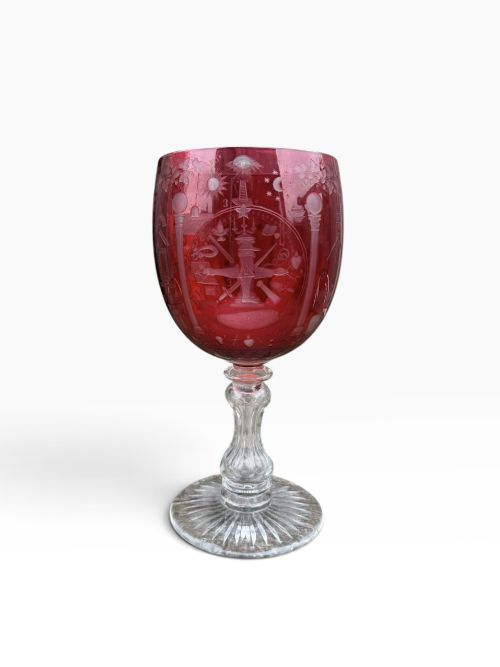
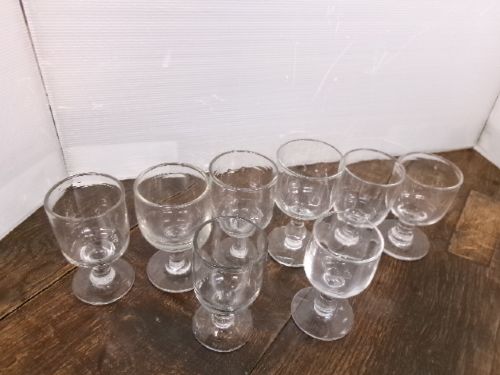
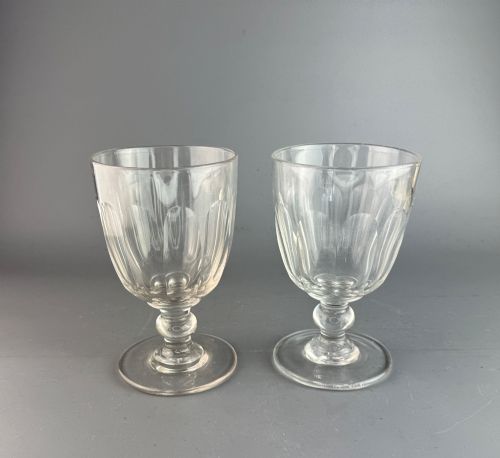
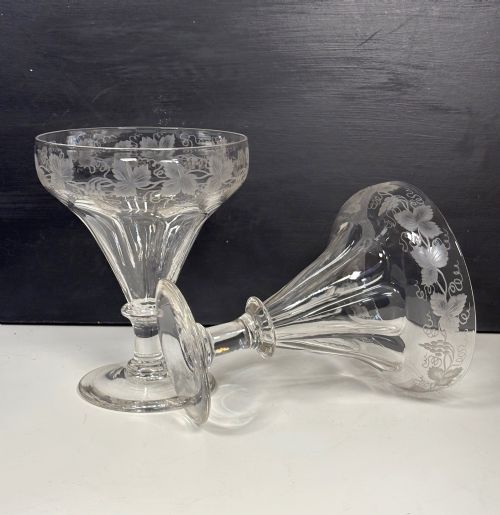
On this page, a buyer is most likely to encounter clear lead crystal, flint glass, and coloured variations such as cranberry and pale green glass. Forms range from heavy tavern glasses to wide-bowled drinking glasses and large pairs with baluster stems.
The origins span English workshops alongside French and Bohemian production, encompassing engraved, etched, and gilded surfaces. Pieces assigned to the Victorian era sit alongside nineteenth-century examples and transitional items bearing Georgian characteristics.
How they were made
These drinking glasses were shaped through hand-blowing and lead crystal production, resulting in the heavy substance characteristic of the period. Skilled glassmakers utilised moulds for certain forms before finishing individual pieces by hand.
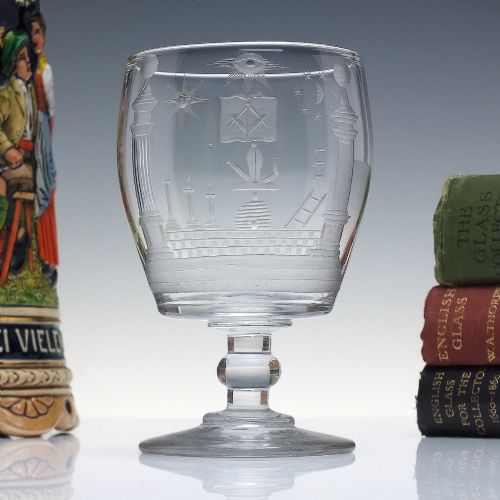
Decoration relied heavily on wheel engraving and etching to produce Masonic emblems, floral motifs, and geometric patterns. Artisans also applied gold leaf detailing and opalescent finishes to French and Bohemian examples.
Victorian Rummers Retail Price Guide 2026
Typical asking prices for victorian rummers among the pieces listed under this phrase on Sellingantiques today, from the lower quarter to the upper quarter. They describe what is for sale here now, not the wider market.
Some nineteenth-century drinkers apparently possessed mighty thirsts, judging by the sheer heft of these wide-bowled vessels.
What varies in quality
The clarity and weight of the glass set individual examples apart, with heavy lead crystal and flint glass offering superior brilliance compared to simpler tavern metals. Hand-blown pieces often display subtle irregularities that indicate individual manufacture rather than uniform machine output.
The precision and depth of the wheel engraving or etching dictate the refinement of the surface decoration. Crisp, well-defined cutting on stems and bowls separates standard utility pieces from exhibition-quality glassware.
The Victorian Rummers Glossary
- Rummer
- A large drinking glass used for wine, punch, or ale during the eighteenth and nineteenth centuries. These vessels typically feature a deep bowl and a sturdy stem.
- Lead crystal
- Glass containing lead oxide, which increases the weight, refractive index, and clarity of the material. This composition allows for deep, sharp cutting.
- Roemer
- A continental European drinking glass, particularly associated with Germany and Bohemia, often featuring a spherical bowl on a studded stem. They frequently appear in green or amber glass.
- Baluster stem
- A thick, turned stem resembling an architectural baluster, commonly found on heavier drinking glasses. It provides a secure grip and lowers the centre of gravity.
- Flint glass
- An early term for clear glass with high brilliance, later associated with lead glass formulations. It provides a bright, resonant quality when struck.
Victorian Rummers: Frequently Asked Questions
What were rummers used for?
These large vessels were primarily utilised for serving punch, ale, and hearty wines during social gatherings. Their generous capacity suited communal drinking customs before smaller, specialised wine glasses became standard.
Over the course of the nineteenth century, their role shifted slightly as dining rituals evolved, though they remained popular for casual entertaining and everyday household use.
How do you tell Victorian rummers from Georgian ones?
Distinguishing between these periods relies on observing shifts in weight, bowl shape, and cutting techniques. Earlier Georgian examples often display thicker metal and simpler, robust proportions.
Victorian pieces frequently incorporate more refined optical effects, varied stem designs, and elaborate wheel-engraved or etched decoration, though transitional overlap remains common.
Can you use antique rummers every day?
These sturdy nineteenth-century drinking glasses were built for practical use and handle regular dining well. Hand washing in warm water keeps the glass safe from thermal shock and preserves the surface.
Their robust lead crystal or flint glass construction makes them considerably more durable than delicate modern stemware, though care should still be taken with heavy pairs.
Why do some rummers have coloured glass?
Coloured glass became fashionable during the Victorian period, with cranberry, pale green, and amber shades frequently produced in Bohemia, France, and England. These hues were achieved by adding specific metallic oxides to the molten batch.
Coloured and flashed vessels added visual variety to the nineteenth-century dining table, often paired with gilding or surface engraving.