



Victorian Ruby Dress Ring
A Victorian ruby dress ring brings together rich red stones and period goldsmithing in a hand-crafted band made for daily wear.
Victorian Ruby Dress Ring
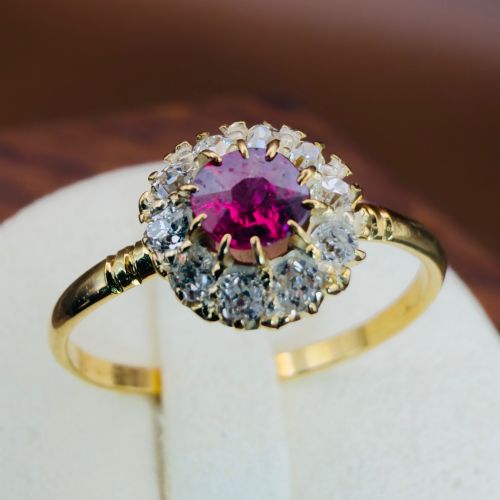
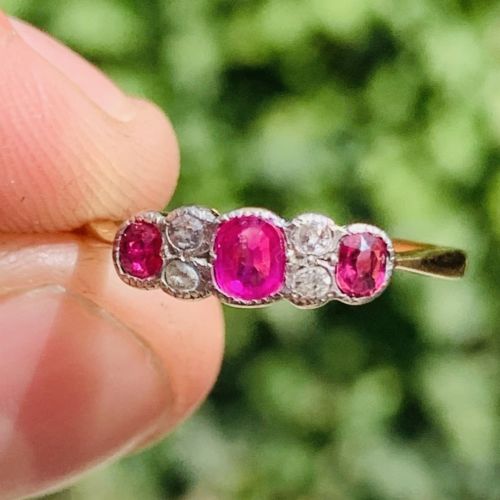
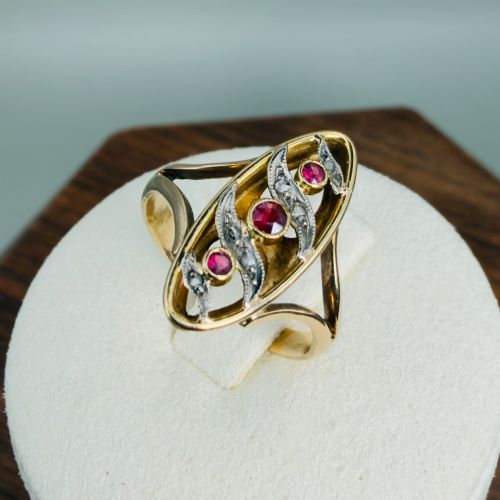
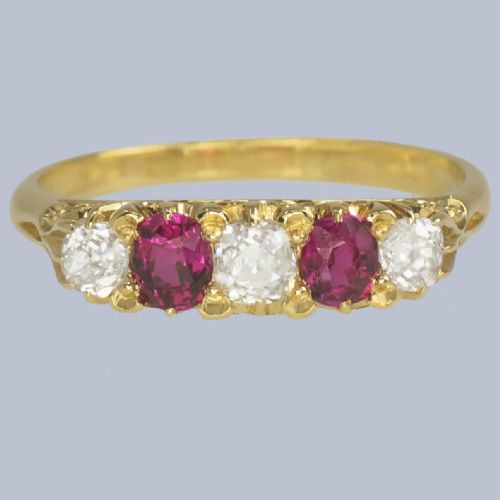
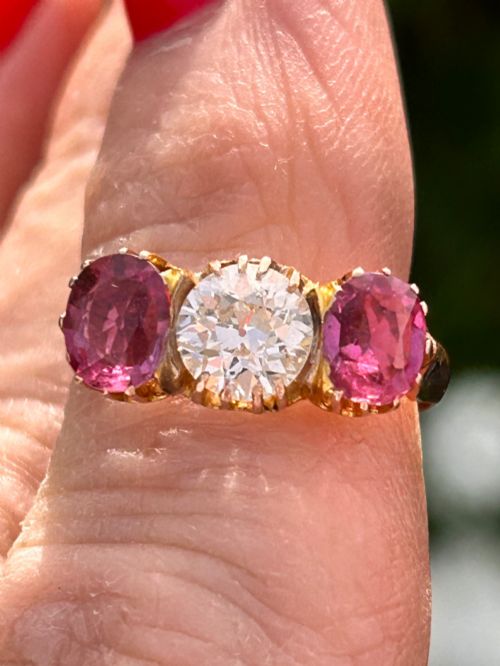
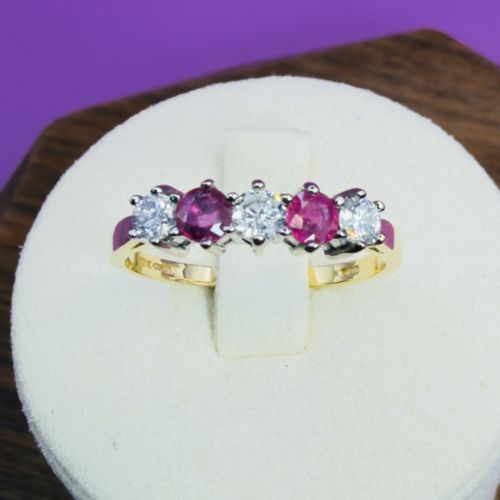
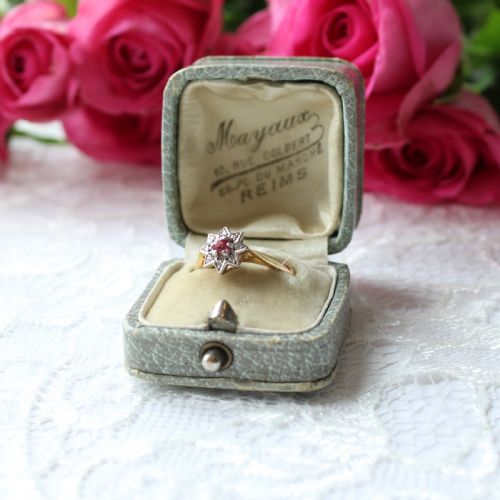
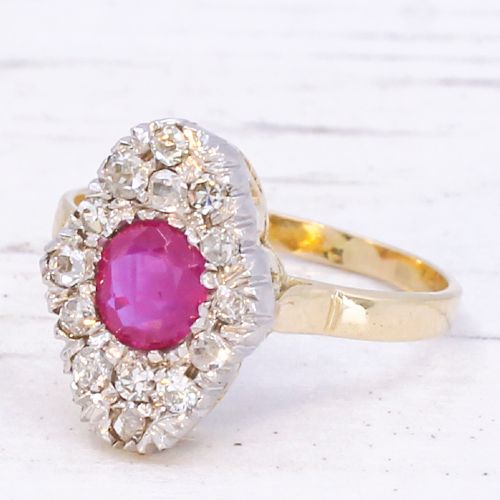
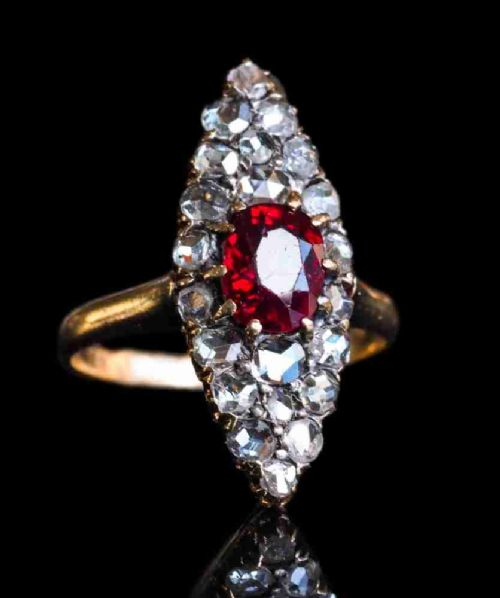
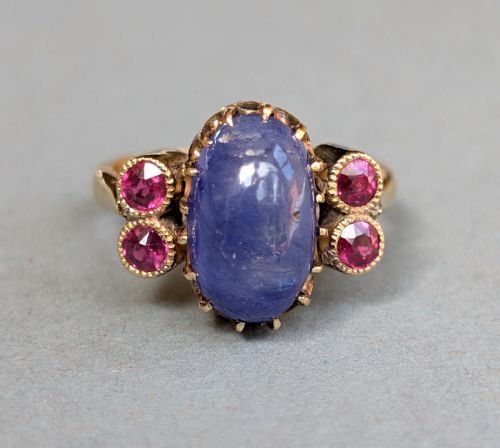
A Victorian ruby dress ring is a finger ornament featuring red corundum set alongside diamonds, pearls, or turquoise in precious metal bands. These pieces range from simple five-stone rows and gypsy settings to elaborate cluster and navette configurations.
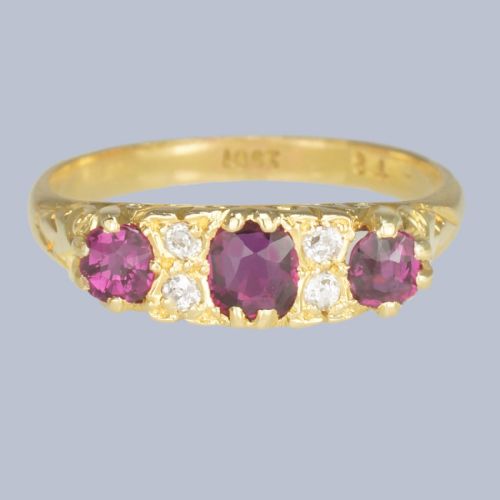
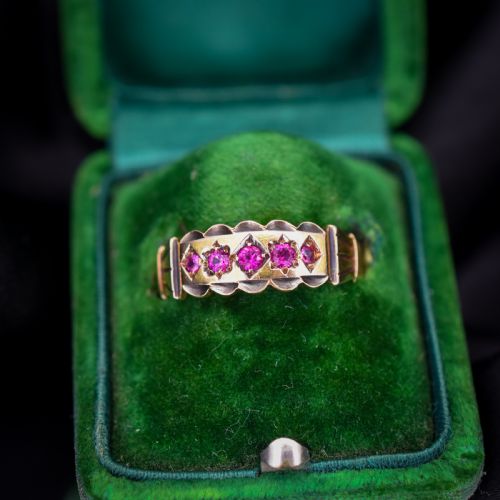
Most examples found here date from the nineteenth century into the Edwardian era, constructed in high-carat yellow gold or platinum-topped gold. The forms reflect traditional Victorian and Edwardian design aesthetics, including starburst motifs, trilogy arrangements, and carved half-hoop profiles.
How they were made
Goldsmiths utilised 18ct yellow gold, 15ct gold, and platinum to fabricate the bands and settings, often incorporating chased patterns or solid cast shanks. Stones were secured using claw, flush gypsy, or bezel settings designed to hold old-cut diamonds and rubies safely in place.
Gemstones such as natural Burmese rubies, old mine-cut diamonds, and seed pearls were hand-selected and integrated into navette, cluster, and crossover layouts. Hallmarks stamped inside the bands frequently record the assay office and date of manufacture.
Listings feature 18ct yellow gold, 15ct gold, and platinum materials paired with rubies, old-cut diamonds, sapphires, pearls, and garnets.
What varies in quality
The standard of a Victorian ruby dress ring depends upon the origin and optical characteristics of the central ruby, particularly colour saturation and natural heat treatment. Finely matched diamond entourages and substantial gold weight elevate the stature of a piece.
Execution of the hand-carved details, precision of the stone setting, and clarity of the original hallmarks dictate the overall refinement of the construction. Pieces retaining intact original shanks and uncompromised gemstone facets represent the upper tier of surviving examples.
The Victorian Ruby Dress Ring Glossary
- Navette
- A boat-shaped gemstone setting that tapers to points at either end. This elongated silhouette sits horizontally across the finger.
- Old Cut
- A diamond facet style cut by hand before the advent of modern machinery. These stones feature smaller tables and larger culets that produce a softer candlelit sparkle.
- Gypsy Ring
- A band where the gemstones are flush-set directly into the thick metal surface. The metal is hammered around the stone to secure it.
- Trilogy
- A ring featuring three principal stones arranged in a row. This configuration traditionally represents the past, present, and future.
- Half Hoop
- A ring design where gemstones span the upper portion of the band in a uniform row. They are often carved with scrollwork along the sides.
Victorian Ruby Dress Ring: Frequently Asked Questions
How do I wear a Victorian ruby dress ring daily?
These antique rings require mindful care during robust physical tasks to protect the softer gold bands and natural stones. Regular checks by a jeweller ensure the claw and flush settings remain secure.
Pairing them with plain stacking bands should be done with caution to prevent metal friction against antique claws. Gentle cleaning with warm soapy water maintains the brilliance of the gold and gemstones.
What is a Burmese ruby?
A Burmese ruby originates from the Mogok region in Myanmar and is prized for a deep natural fluorescence and vivid red hue. These stones frequently appear in high-quality nineteenth-century cluster and navette configurations.
Gemological reports often accompany these specific rubies to confirm their geographical origin and lack of thermal enhancement. Their presence distinguishes exceptional examples within the wider category.
How do I identify the date of a ring?
British hallmarks stamped inside the shank provide definitive clues regarding the year of manufacture and assay office location. Letters correspond to specific assay years, while anchor, leopard head, or crown symbols indicate the testing city.
Stylistic elements like starburst engraving, navette silhouettes, and gypsy settings also point toward distinct Victorian or Edwardian decades. Comparing the shank construction helps separate nineteenth-century originals from later revival pieces.
What is an 18ct gold band?
An 18ct gold band contains seventy-five percent pure gold alloyed with other metals to provide durability for everyday jewellery. This higher gold purity yields a rich, warm yellow tone characteristic of Victorian craft.
Over decades of wear, this metal develops a soft patina that marks its age without compromising structural integrity. It provides a robust yet pliable base for securing claw-set diamonds and rubies.