


Victorian Royal Ceramic Figures
Victorian royal ceramic figures capture monarchs, royalty, and sculptural ideals in porcelain and earthenware.
Victorian Royal Ceramic Figures
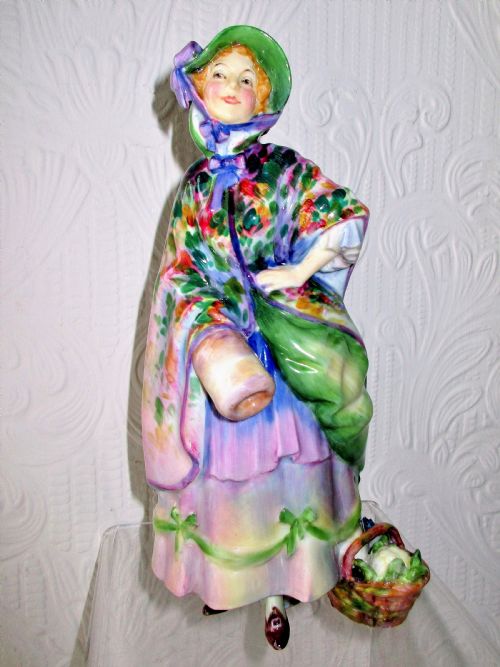
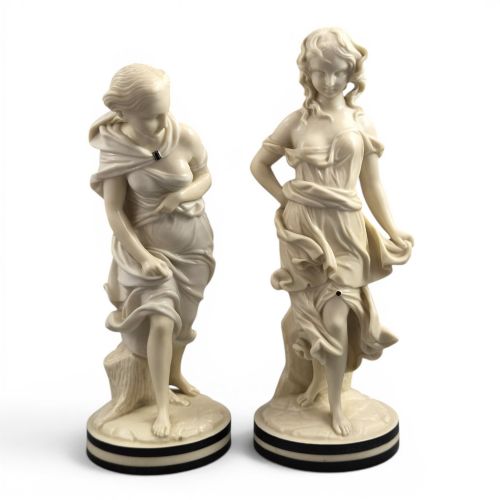
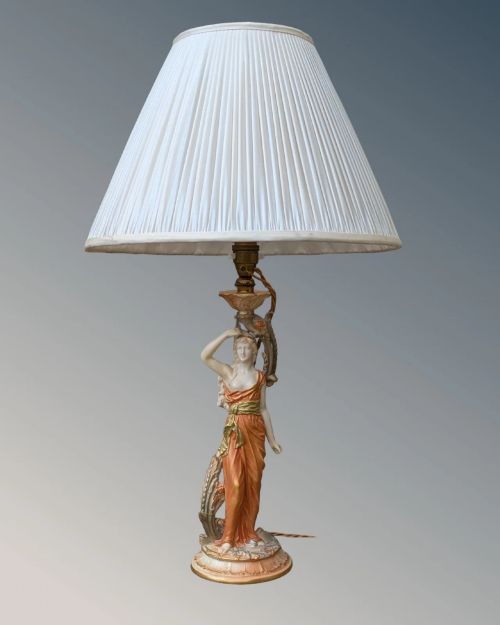
When you search for victorian royal ceramic figures, you examine portraits, flatbacks, and decorative groups depicting sovereigns, princes, and cultural subjects. The selection draws heavily from Staffordshire potteries and Royal Worcester, showing monarchs like Queen Victoria, Prince Albert, and Napoleon III alongside classical maidens and water carriers.
Most examples originate from the nineteenth century, spanning figures on horseback, portrait groups, candlesticks, and candle snuffers. These objects served as domestic ornaments and patriotic displays in Victorian homes, modelled with distinct glazes, colours, and gilt detailing.
The assortment includes Parian ware busts, majolica figures, and hand-painted porcelain jugs from various continental and English workshops. Buyers encounter both robust earthenware Staffordshire models and delicate, intricately painted porcelain works.
How They Were Made
Specialised finishes such as Patent Metallic and hand-painted overglaze pigments defined the output of factories like Royal Worcester under modellers including James Hadley. Staffordshire potters relied on slip-casting and earthenware bodies, finished with cobalt blue and vibrant enamel colours on flatback supports.
Listings feature Victorian figures in porcelain, earthenware, and Parian ware, spanning the nineteenth and early twentieth centuries.
What Varies in Quality
The nuance of hand-painting and the crispness of the moulded detail distinguish finer pieces from standard production. Artisans who executed delicate facial expressions, precise costume patterns, and subtle shading produced works of higher visual distinction.
The choice of body material and glaze complexity also mark the grade of an object. Porcelains with detailed gilding and patent metallic finishes represent a different tier of craftsmanship compared to utilitarian earthenware portrait groups.
Royal Worcester·Royal Doulton·Royal Dux·Royal Vienna·Staffordshire
The Victorian Royal Ceramic Figures Glossary
- Flatback
- A figure moulded with a finished front and a plain, unmodelled rear intended to sit against a wall or mantelpiece. This method was standard for Staffordshire portrait groups.
- Parian ware
- A fine-grained, unglazed porcelain resembling white marble, developed during the nineteenth century for sculptural busts and figures. It captures classical drapery and facial contours cleanly.
- Majolica
- A colourful lead-glazed earthenware characterised by rich, vibrant tones applied over an opaque tin glaze. It appeared on mid-century decorative figures and child subjects.
- Gilt
- A thin layer of gold applied to ceramic surfaces for decorative emphasis. It highlights borders, crowns, and garment trims.
- Candle snuffer
- A small functional figure with a hollow interior designed to extinguish candle flames. These pieces often take the form of animals or human characters.
Victorian Royal Ceramic Figures: Frequently Asked Questions
What are flatback figures?
Flatbacks are ceramic pieces moulded with a detailed front and a flat, unpainted back. They were designed specifically for display on mantels against walls.
Pots used this method extensively for portrait groups of Queen Victoria and other royals during the nineteenth century.
How do I identify Parian ware?
Parian ware has a matte, white appearance that resembles carved marble rather than glossy porcelain. It lacks standard glaze on the body.
Potters used it for sculptural busts and figures to give a classical appearance.
Who was James Hadley?
James Hadley was a prominent designer and modeller working with Royal Worcester during the nineteenth century. His work includes sculptural figures and water carriers.
Pieces bearing his design often feature distinct stylistic forms and patent metallic finishes.
Where were Staffordshire figures made?
Staffordshire figures were produced in the pottery districts of England, particularly Stoke-on-Trent, during the Victorian era. Local potteries manufactured them for the domestic market.
They typically depict royalty, historical events, and popular personalities in earthenware.