

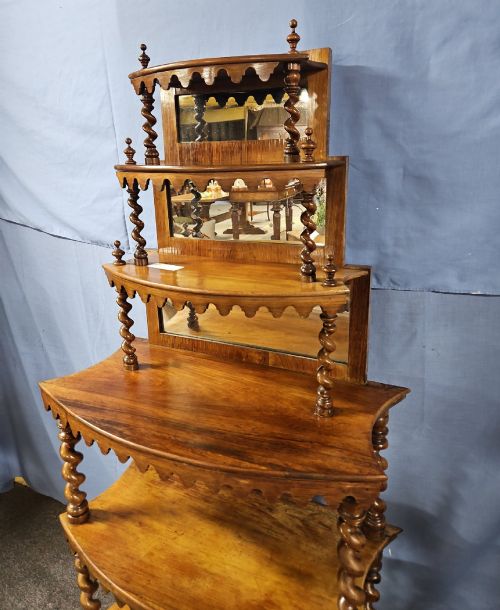


Victorian Rosewood Shelf Mirror
These Victorian rosewood shelf mirror examples combine functional display space with reflective glass, offering the ideal hanging furniture for a period hallway or bedroom.
Victorian Rosewood Shelf Mirror
A victorian rosewood shelf mirror brings together a timber frame, display shelving, and a reflective glass plate, originating primarily from the Victorian period and the wider nineteenth century. Buyers searching for this phrase encounter wall-mounted shelves, overmantel mirrors, and compact display units designed to hold small decorative items while brightening a room.
The form bridges the gap between utilitarian furniture and decorative wall art, often featuring integrated brackets or small ledges beneath or beside the mirror glass. Examples span from early nineteenth-century interpretations up to pieces dated around nineteen hundred, reflecting changing domestic tastes in display and storage.
How they were made
Cabinetmakers utilised rich rosewood and palisander timbers for the primary structures, frequently selecting stock with pronounced grain patterns and deep natural tones. Boxwood inlay adds delicate contrasting detail to the wooden surfaces of many items.
Glass plates, sometimes with beveled edges, sit securely within rebated wooden frames alongside occasional brass fixtures or ormolu mounts. Construction relies on traditional joinery techniques suitable for hanging or standing furniture subject to daily domestic use.
Victorian Rosewood Shelf Mirror Retail Price Guide 2026
Typical asking prices for victorian rosewood shelf mirror among the pieces listed under this phrase on Sellingantiques today, from the lower quarter to the upper quarter. They describe what is for sale here now, not the wider market.
Listings for this phrase feature pieces dated from the nineteenth century up to nineteen hundred, constructed primarily in rosewood, palisander, and mahogany with boxwood inlay.
What varies in quality
The refinement of the boxwood inlay and the crispness of the timber carving separate standard utility pieces from finer cabinet work. Superior examples demonstrate careful grain matching across the rosewood frame and harmonious proportions between the shelf depth and the mirror plate.
The integration of secondary materials, such as porcelain mounts or cast brass elements, indicates the original ambition of the piece. Better preserved specimens retain their original mirror glass and structural rigidity without heavy timber shrinkage or replacement brackets.
The Victorian Rosewood Shelf Mirror Glossary
- Rosewood
- A dense, heavy timber prized for its dark purple-brown colour and contrasting black figuring. It polishes to a high lustre and forms the primary carcass material for these mirrors.
- Palisander
- A term frequently applied to heavy tropical rosewoods displaying strong grain contrast. It appears across nineteenth-century cabinetwork.
- Boxwood Inlay
- Contrasting pale wood inserted into shallow recesses carved into the darker rosewood surface. This technique creates geometric or floral decorative patterns.
- Beveled Edge
- A glass mirror plate whose outer perimeter is cut and polished at an oblique angle. This detail catches the light and frames the reflection.
- Overmantel Mirror
- A large mirror designed to hang specifically above a fireplace mantelpiece. These often incorporate architectural framing and integrated display ledges.
Victorian Rosewood Shelf Mirror: Frequently Asked Questions
Can I place items on the display shelves?
The small ledges and shelves are intended for lightweight decorative objects such as small ceramics, pocket watches, or framed photographs. Placing excessively heavy items on the brackets can stress the antique glue and wood joints.
Ensure that any displayed items have smooth bases to avoid scratching the polished rosewood surface. Felt pads beneath ornaments help protect the timber finish.
How do I clean antique rosewood and mirror glass?
Dust the rosewood frame regularly with a soft, dry lint-free cloth to prevent particulate buildup on the polished surface. Avoid commercial silicon-based polishes that leave a residue, preferring traditional beeswax applied sparingly when the timber appears dry.
Clean the glass plate using a mild glass cleaner applied to the cloth rather than directly sprayed onto the mirror. This prevents moisture from seeping behind the glass and damaging the silvered backing or the surrounding wood.
How do I distinguish a Victorian mirror from later copies?
Examine the construction methods visible on the reverse of the frame, including hand-cut screws, older types of joinery, and the oxidation patterns on the mirror glass. Nineteenth-century rosewood often exhibits a deeper patina and tighter grain structure than twentieth-century reproductions.
Look for signs of age-appropriate wear to the timber finish and minor foxing within the glass plate. Consistent stylistic details matching the nineteenth-century period further confirm authenticity.