



Victorian Rosewood Server
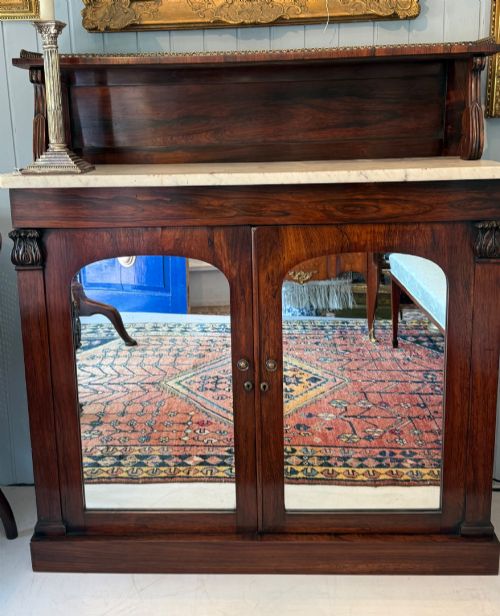
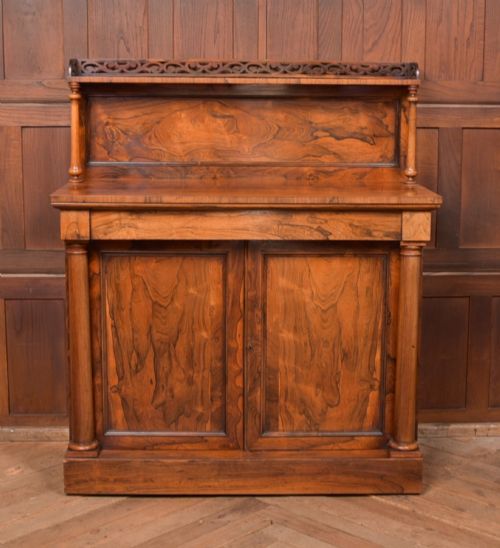
A Victorian rosewood server brings rich grain and practical storage to a room, drawing the eye with dark timber and polished surfaces.
Victorian Rosewood Server
A Victorian rosewood server typically takes the form of a chiffonier, side cabinet, or sideboard, representing the domestic storage furniture of the nineteenth century. These items appear across periods from the Regency era through to nineteen hundred, reflecting shifting tastes in home organisation and display.
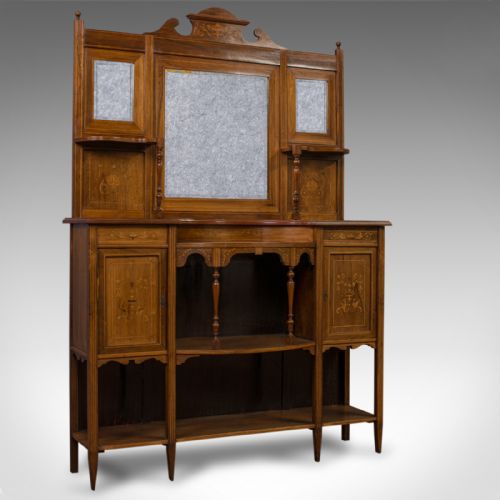
Buyers frequently encounter rosewood chiffoniers and sideboards fitted with mirror glass or marble, alongside related forms such as library tables and console tables. Anglo-Indian variants also feature in this selection, demonstrating regional craftsmanship and carved detail applied to dense hardwoods.
The primary function of these pieces involves surface display and enclosed storage, combining cupboards with raised backs or shelving. They serve as focal points in dining rooms and living spaces, anchoring an interior with deep brown and reddish timber tones.
How they were made
Construction relies heavily on rosewood, palisander, and padouk, often supported by secondary hardwoods and detailed with boxwood inlay. Cabinetmakers selected these dense, heavy timbers for their rich natural figures and durability under daily use.
Makers integrated brass hardware, mirrored glass panels, and marble tops into the carcase construction, combining structural carpentry with decorative surface elements. Carving appears on specific Anglo-Indian pieces, showing intricate hand-chiseled motifs across the solid timber.
Secret drawers often hide beneath the marble tops of these servers, guarding forgotten paperclips from the eighteen-fifties.
What varies in quality
Quality reveals itself in the precision of the timber selection and the depth of the grain, where finer pieces display continuous, highly figured rosewood across the primary doors and panels. The integration of boxwood inlay and the crispness of any carved decoration further distinguish standard production from exhibition-grade work.
Structural integrity and the preservation of original components, such as glass plates, brass fittings, and marble surfaces, set individual examples apart. Superior execution involves seamless joinery and balanced proportions that maintain their stability and presence over centuries.
The Victorian Rosewood Server Glossary
- Chiffonier
- A low sideboard or cabinet featuring enclosed cupboards below, frequently surmounted by a mirrored back or a shelf. This form became a staple of nineteenth-century domestic interiors.
- Palisander
- A term frequently applied to various dense, heavily figured rosewoods prized by cabinetmakers. It provides a distinctively dark, oily grain with rich colour variation.
- Boxwood inlay
- Contrasting pale wood inserted into dark timber surfaces to create geometric or floral patterns. This technique demands high precision from the maker.
- Anglo-Indian
- A descriptive term for furniture made in India under British influence, often combining traditional local carving with European cabinet forms.
Victorian Rosewood Server: Frequently Asked Questions
What is a Victorian rosewood server used for?
These pieces function as sideboards, chiffoniers, or cabinets designed for storing dining ware, linens, and household items. The flat top surface also serves to display decorative objects, lamps, or serving dishes.
In period homes, they anchored the dining room or reception room, providing both concealed storage and a decorative focal point against the wall.
How do I identify a Victorian rosewood piece?
Rosewood is characterised by a heavy weight, a dense grain, and deep brown or reddish tones often marked with dark streaks. Examining the interior construction and secondary timbers helps confirm the period.
Pieces from this era frequently exhibit specific stylistic traits such as scroll brackets, mirrored backs, or boxwood stringing typical of nineteenth-century cabinetmaking.
What is the difference between a chiffonier and a sideboard?
A chiffonier is generally smaller and more compact than a full sideboard, often featuring a raised shelf or a mirrored back supported by small columns. Sideboards are typically longer, heavier, and built primarily for the dining room.
Both forms utilise rosewood and similar hardwoods, but their proportions and upper superstructures cater to different spatial requirements within a room.
How do I care for antique rosewood furniture?
Maintain rosewood furniture by keeping it away from direct sunlight and sudden temperature shifts, which can dry out and split the dense timber. Dust regularly with a dry cloth and occasionally apply appropriate wax polish to nourish the surface.
Avoid placing damp items directly onto the wood or marble tops to prevent water rings and permanent staining of the polished finish.