
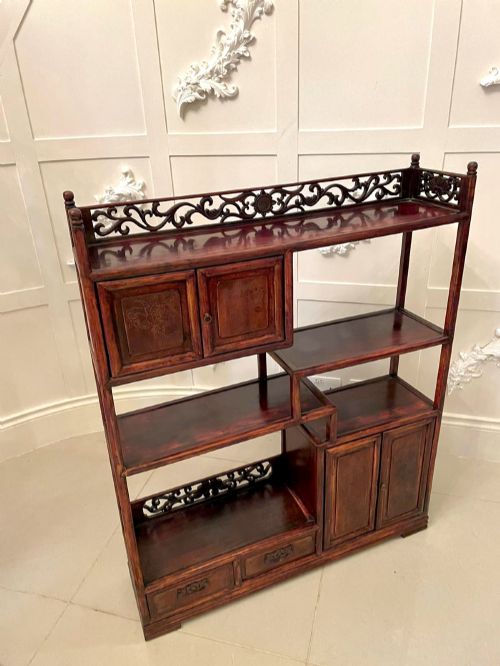
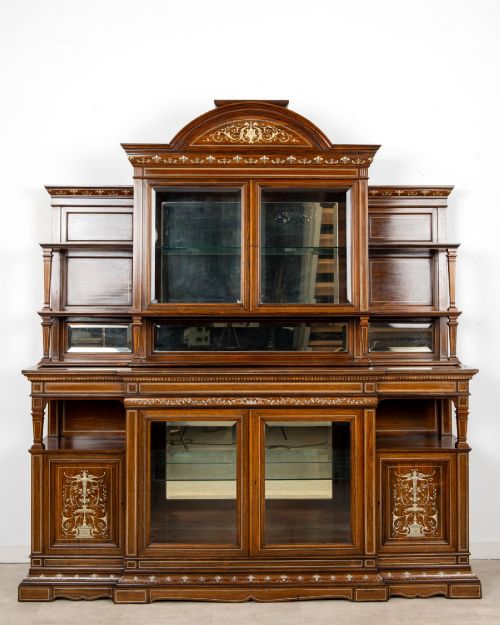
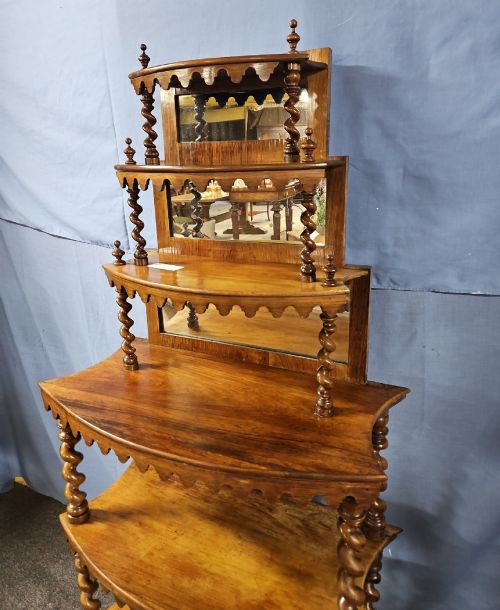
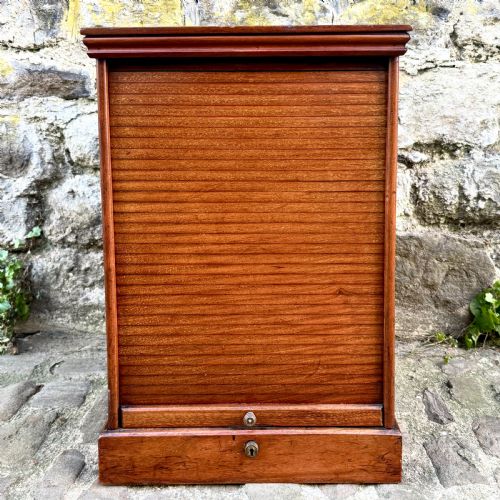



Dark Brown Rosewood Cabinet
A dark brown rosewood cabinet brings deep timber grain and rich colour into a room, offering both display and storage across styles from Regency to Victorian.
Dark Brown Rosewood Cabinet
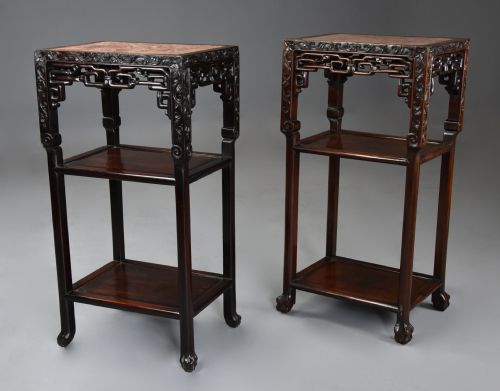
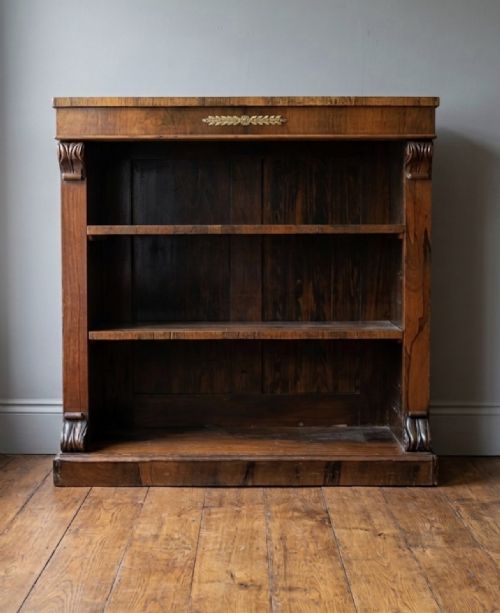
A dark brown rosewood cabinet encompasses various forms designed for storage and display, most frequently appearing in this selection as nineteenth-century side cabinets, chiffoniers, and display pieces. Buyers searching for a dark brown rosewood cabinet encounter items spanning the Regency and Victorian eras, alongside Chinese hardwood examples and pieces finished in simulated rosewood paint.
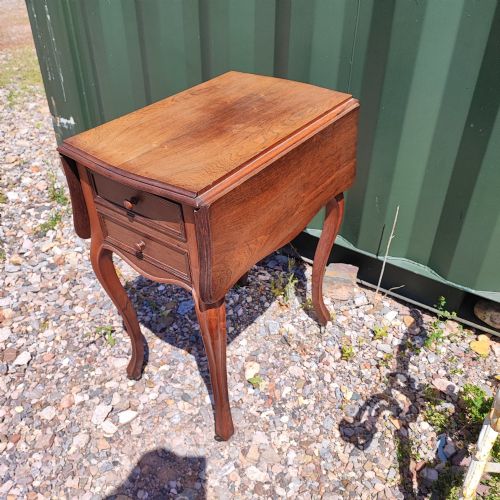
The objects take diverse shapes, ranging from small bedside tables and slide-top Davenports to large breakfront cabinet sideboards and bookcases. Makers and workshops from different periods utilised the dense timber to build functional furniture that served tea, held books, or showcased precious objects.
Materials and Construction Techniques
Construction relies heavily on solid rosewood and rosewood veneers applied to secondary woods, supported by brass mounts, glass doors, and marble tops. Cabinet makers of the nineteenth century selected dense hardwoods for durability and rich figuring, occasionally employing pine treated with simulated rosewood paint to mimic the costly grain.
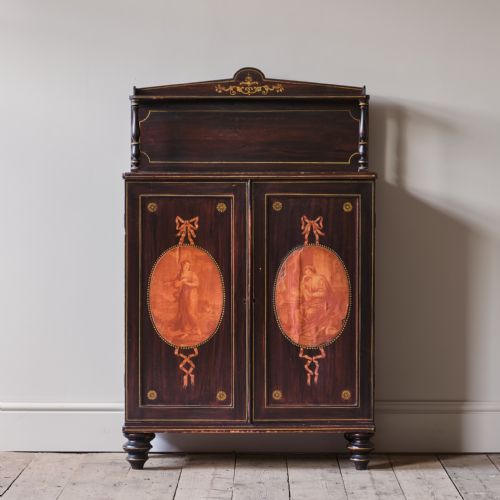
Joinery methods include precise framing for glass display doors, fitted drawers for writing desks, and structural mounts in brass to secure corners and edges. Artisans combined timber selection with delicate inlay, painted details, or carved panels depending on whether the piece followed Regency, Victorian, or Chinese styles.
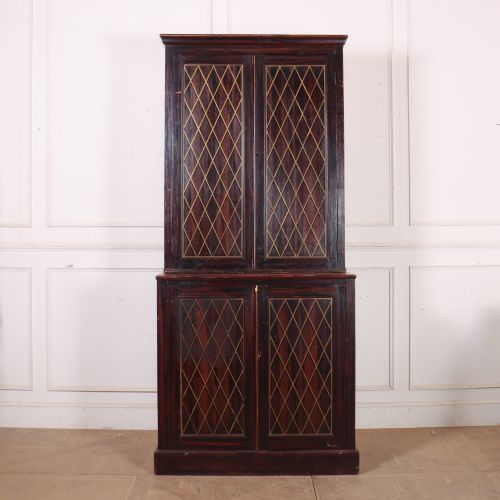
Several pieces arrive in disguise, constructed from humble pine painted meticulously by hand to masquerade as expensive rosewood.
Distinctions in Quality
Quality rests upon the selection of timber figure, the precision of the veneer work, and the integration of secondary materials such as marble and brass. Higher-grade examples display seamless grain matching across doors and panels, alongside refined carving or attribution to known makers.
The execution of brass mounts, the smoothness of drawer operations, and the structural integrity of internal shelving separate standard utility items from finer parlour furniture. Pieces finished in simulated paint rely instead on the skill of the brushwork to replicate the depth of genuine rosewood.
Collinson & Lock·William Trotter
The Dark Brown Rosewood Cabinet Glossary
- Chiffonier
- A low sideboard or cabinet featuring a combination of shelves, drawers, and enclosed cupboards. These pieces became popular during the Regency and Victorian periods for dining rooms and parlours.
- Davenport
- A small desk with a sloped writing surface above a pedestal of drawers. They frequently incorporate rosewood veneers and slide tops.
- Breakfront
- A cabinet design where the central section projects forward from the flanking sides. This configuration creates architectural depth in large sideboards and bookcases.
- Gonçalo Alves
- A dense exotic hardwood with striking figuring, often utilised in high-end Regency side cabinets. It shares similar weight and tonal qualities with dark rosewood.
- Shodana
- A traditional Japanese display cabinet featuring asymmetrical shelving and compartments. These items arrived in European homes during the Meiji period.
Dark Brown Rosewood Cabinet: Frequently Asked Questions
What is a chiffonier used for?
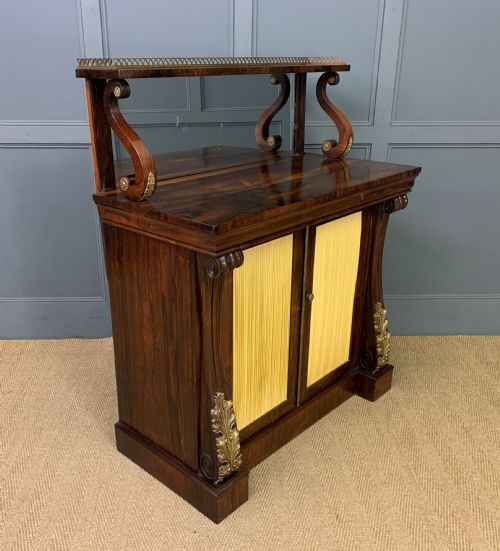
A chiffonier provides enclosed lower storage combined with upper display space or shelving, serving as a practical sideboard in dining areas or living rooms.
During the nineteenth century, these pieces held tableware, linens, or books while offering a flat surface on top for serving or lamps.
How do I identify Regency rosewood furniture?
Regency pieces often display classical proportions, brass inlay, and mounts, reflecting the architectural taste of the early nineteenth century.
The timber selection focuses on dark, heavily figured rosewood veneers applied over sturdy carcases with clean geometric lines.
What is simulated rosewood paint?
Simulated rosewood paint involves decorative graining applied to softer woods like pine to imitate the appearance of expensive exotic timber.
Cabinet makers used this technique during the Regency era to offer fashionable dark wood finishes at a more accessible cost.
Where were nineteenth-century display cabinets placed?
Display cabinets stood in parlours and drawing rooms to showcase porcelain, glassware, and decorative objects behind glass doors.
They protected delicate items from dust while adding a formal architectural element to the room's interior.