



Victorian Riveted Copper Tub
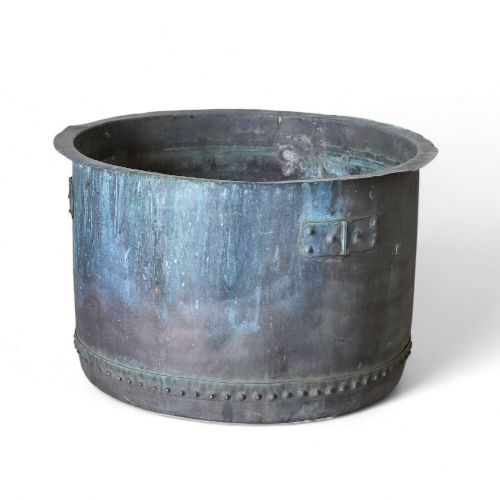
These heavy victorian riveted copper tub examples bring genuine nineteenth century utility and rich warm metal surfaces into modern rooms.
Victorian Riveted Copper Tub
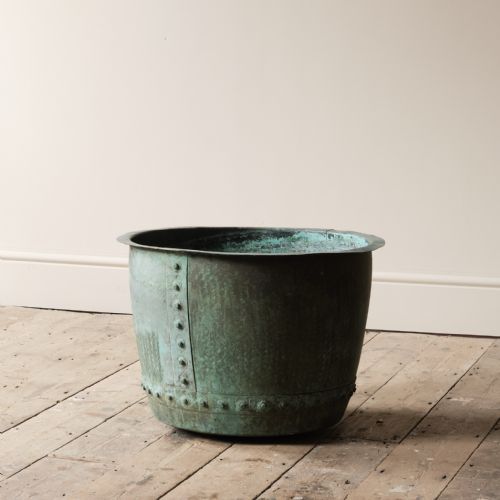
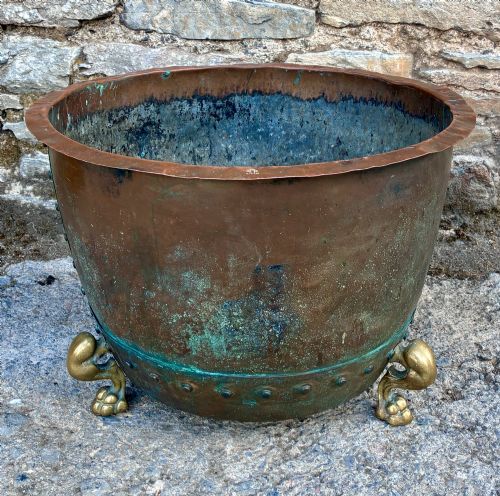
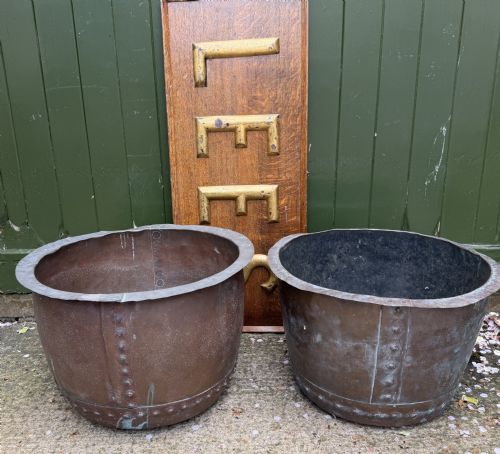
When you search for victorian riveted copper tub items, you encounter robust nineteenth century vessels originally built for daily domestic or agrarian labour. These survive in various utilitarian forms such as log bins, planters, boilers, and heavy cooking vessels.
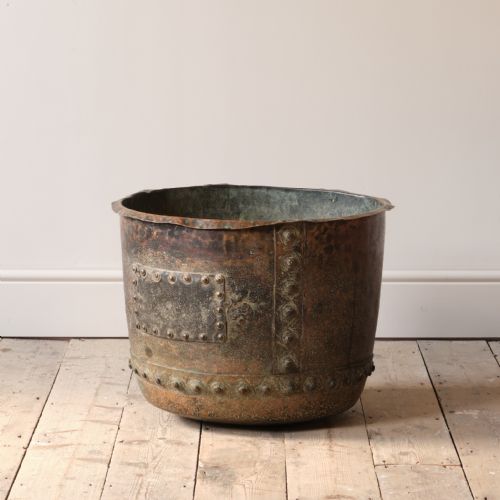
The pieces on this page span the nineteenth century, including specific dates around eighteen fifty, eighteen seventy, eighteen ninety, and nineteen hundred. Alongside vessels shaped for holding logs and plants, you find brass lidded bins and iron accented pieces.
Rustic farmhouse and arts and crafts influences appear across these items, showing how practical workshop items crossed into domestic display. Their primary presence on this page remains large log bins and planters featuring hand riveted construction.
How they were made
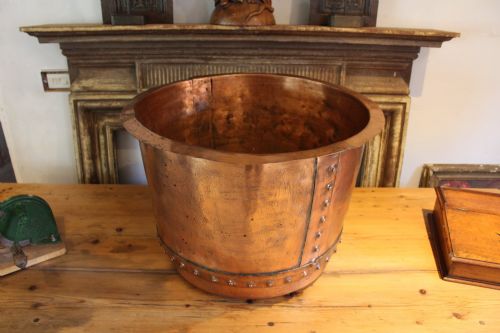
Makers constructed these heavy vessels using sheet copper joined with visible hand-driven rivets, often combining iron and brass for structural handles, bands, or lids. This method ensured durability for holding water, grain, or fuel in busy nineteenth century households.
Surface finishes rely on natural ageing, showing rich patinas, verdigris, and weathered textures developed through decades of exposure and use. Metalworkers hammered sheets into deep cylindrical or oval forms, creating strong vessels designed to withstand heavy loads.
Several heavy grain measures survived agricultural duty to spend their retirement holding fireplace logs in nineteenth century parlours.
What varies in quality
Quality rests in the thickness of the original copper sheet and the integrity of the hand riveted seams. Vessels retaining their original shape without excessive distortion command attention because they demonstrate superior initial manufacture.
The character of the surface patina dictates visual success, where honest weathering, rich tones, and stable verdigris enhance the object. Pieces retaining robust iron or brass fittings present a more complete historical aesthetic than altered examples.
The Victorian Riveted Copper Tub Glossary
- Patina
- The surface oxidation and colour shift that develops on copper over decades of exposure to air and handling. This skin of age gives antique metal its characteristic depth.
- Verdigris
- The green crust or patina formed naturally on copper and brass by atmospheric weathering. Collectors often value this stable surface coloration as proof of age.
- Jardiniere
- An ornamental pot or stand for flowers and plants, usually made of metal or ceramic. In nineteenth century interiors, these held large indoor foliage.
- Ferrat
- A metal vessel or container associated with historic domestic tasks, sometimes linked to arts and crafts production. These items display careful hand working of copper sheet.
- Grain measure
- A standardised cylindrical container used in the nineteenth century to measure dry goods like corn or wheat. Their heavy construction made them durable candidates for later repurposing.
Victorian Riveted Copper Tub: Frequently Asked Questions
What were these copper tubs originally used for?
Nineteenth century households utilised these heavy copper vessels for boiling laundry, heating water, storing grain, or cooking large quantities of food over open fires.
Over time, many of these utilitarian containers transitioned into domestic spaces as log holders or decorative plant pots.
How do I clean a Victorian copper tub?
Most collectors prefer to leave the natural patina and weathered verdigris intact because it documents the age and history of the piece.
If you choose to reduce heavy dirt, washing gently with warm soapy water and a soft cloth preserves the historical surface without stripping its character.
Can I use these copper tubs outdoors?
Many of these robust copper planters and vessels handle outdoor garden conditions well due to their durable metal construction.
Exposing antique copper to weather will continue the natural oxidation process, deepening the surface patina and verdigris over time.
How do I date a riveted copper tub?
Dating relies on observing manufacturing techniques like hand hammered seams, rivet styles, and the specific composition of iron or brass fittings.
Comparing the form against nineteenth century utilitarian standards helps narrow the decade of production.