


Verdigris Copper Tub
These verdigris copper tub examples bring practical nineteenth-century utility into modern rooms and gardens through rich surface patination and heavy metal construction.
Verdigris Copper Tub
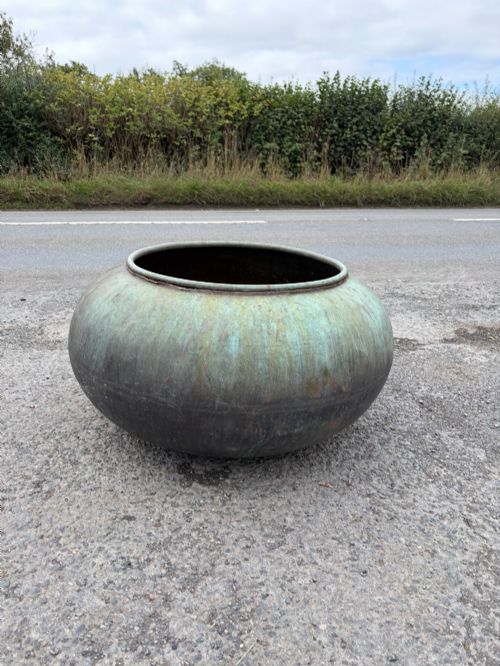
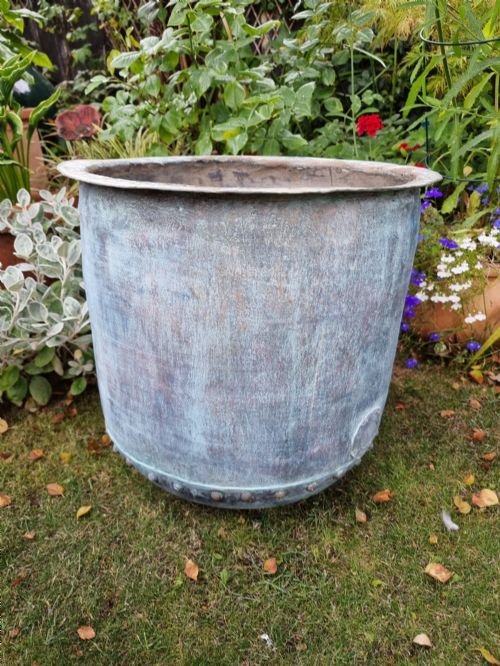
When you search for verdigris copper tub, you encounter utilitarian nineteenth-century vessels originally made for washing, cheese-making, or boiling. These functional objects now serve primarily as garden planters, troughs, and log bins.
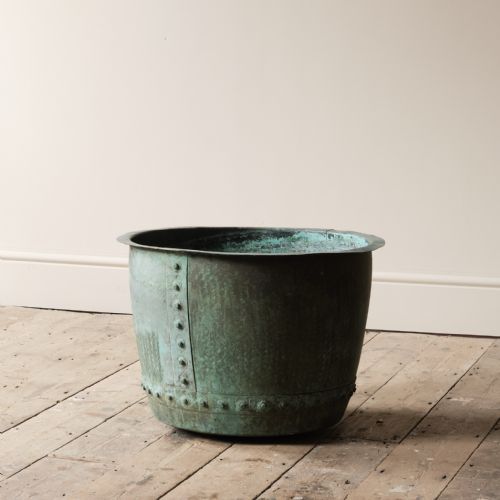
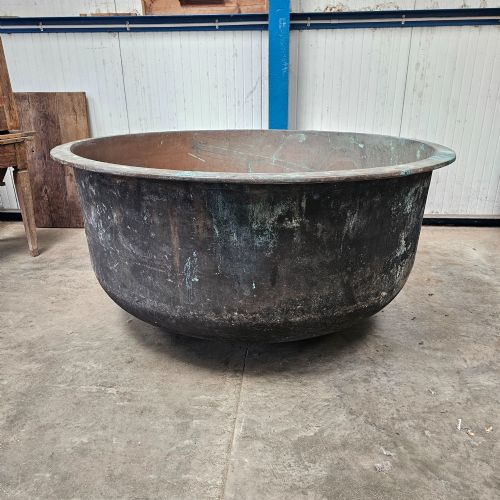
The pieces on this page span Victorian and French country origins, taking forms such as large pots, cheese vats, boilers, and log buckets. Most examples date from the nineteenth century, around eighteen-fifty, reflecting robust industrial and agricultural use.
You frequently meet versatile vessels that function equally well indoors for logs or outdoors as garden displays. Their utilitarian heritage shapes every form available in this selection.
How they were made
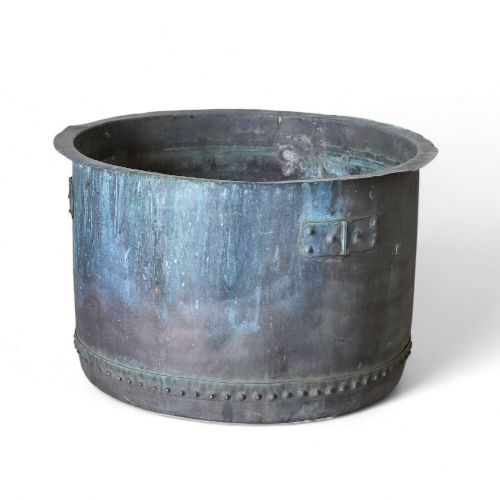
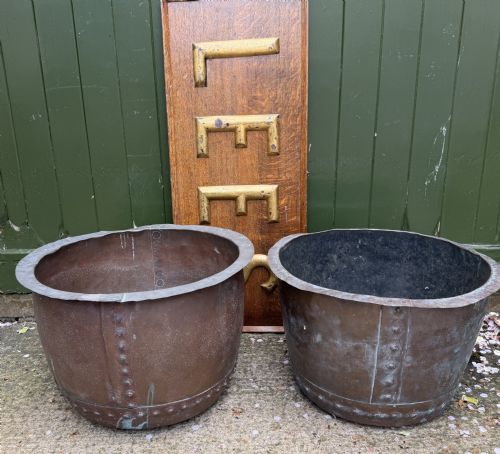
These items rely on heavy sheet copper shaped by hand and joined with visible metal rivets. This construction method ensures structural strength for holding water, logs, or soil.
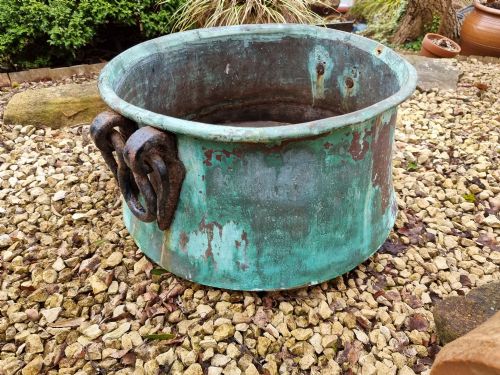
Exposed iron or wrought iron often appears on handles, rims, and fixings, contrasting with the malleable copper body. Weathering over decades produces the characteristic verdigris surface and natural patination.
Matched pairs of weathered coppers survive together, having spent over a century side by side.
What varies in quality
The depth and coverage of the verdigris surface separate standard examples from superior ones. A rich, varied patina develops naturally through long exposure to the elements rather than artificial chemical treatments.
Scale and proportion distinguish the most desirable vessels, particularly extra-large garden display pots and matched pairs. Substantial hand-riveted construction and intact wrought iron fittings indicate higher manufacturing quality.
The Verdigris Copper Tub Glossary
- Verdigris
- A green layer or patina formed on copper, brass, or bronze surfaces through natural weathering and oxidation over time. This surface deposit defines the visual appeal of these antique metal vessels.
- Patina
- The surface appearance altered by age, use, and exposure, showing varied tones and textures on the metal. Collectors value this evidence of long history.
- Riveted
- Joined together using metal bolts or pins hammered flat at the ends to secure heavy copper sheets. This technique provides both structural integrity and decorative industrial character.
- Cheese vat
- A large industrial container originally utilised for curdling and processing milk in agricultural production. These deep vessels now adapt readily to domestic storage or planting.
- Log bin
- A wide container designed specifically for holding firewood near a hearth. Their generous proportions make them practical for contemporary domestic use.
Verdigris Copper Tub: Frequently Asked Questions
What were verdigris copper tubs originally used for?
These robust vessels served demanding domestic, agricultural, and industrial tasks during the nineteenth century. Common historical uses included washing laundry, boiling water, and processing cheese in large farm operations.
Over decades of exposure to moisture and air, the metal developed its characteristic green surface. Today, these utilitarian objects transition naturally into decorative log holders and garden planters.
How do I care for a copper tub indoors?
Maintenance requires minimal effort if you wish to preserve the existing weathered surface and verdigris finish. Simply dust the metal periodically with a dry cloth and avoid harsh chemical cleaners that strip the natural patina.
When using the vessels as indoor log bins or plant containers, place a protective pad underneath to safeguard wooden floors. Moisture management inside the tub prevents further corrosion of the historic metal.
Are these copper tubs suitable for outdoor garden use?
The nineteenth-century materials withstand outdoor environments exceptionally well, having endured decades of agricultural or industrial service. Copper and wrought iron handle soil, moisture, and changing weather conditions without losing structural integrity.
Garden display pots and troughs naturally continue to weather outdoors. The verdigris surface often deepens further when exposed directly to rain and plant life.
How do I distinguish nineteenth-century pieces from later reproductions?
Authentication relies on examining the construction methods, tool marks, and the nature of the surface wear. Nineteenth-century examples feature hand-driven rivets, thick gauge copper sheets, and hand-forged wrought iron fittings rather than uniform modern welds.
The verdigris and patination on period pieces show gradual accumulation over many years. True age reveals itself in the irregular details of manual manufacturing.