
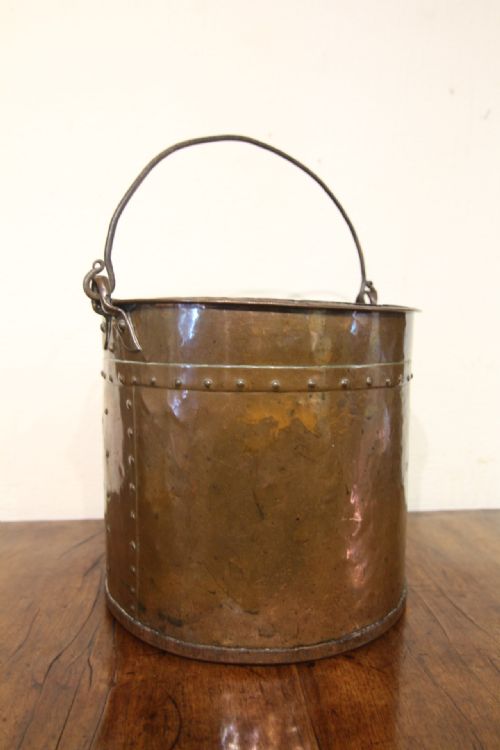


Victorian Riveted Copper Pot
These Victorian riveted copper pot selections offer heavy utilitarian vessels and planters shaped by nineteenth-century metalwork.
Victorian Riveted Copper Pot
A victorian riveted copper pot encompasses heavy utilitarian vessels, boilers, cooking vessels, planters, log bins, and jardiniere forms originating primarily in the nineteenth century and the Georgian period. Buyers seeking this phrase encounter substantial metal containers designed originally for heavy domestic or culinary labour, alongside larger planters and log buckets.
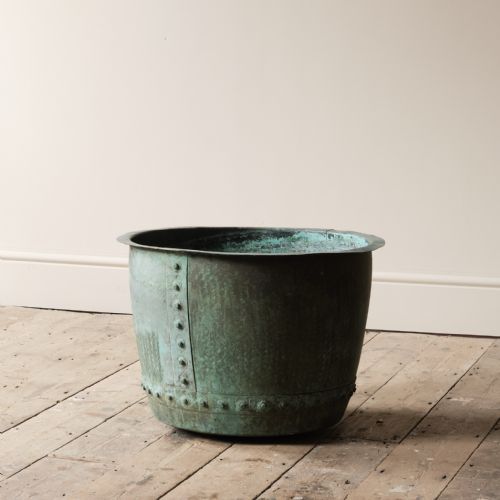
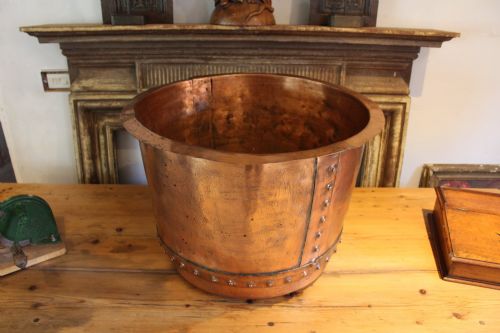
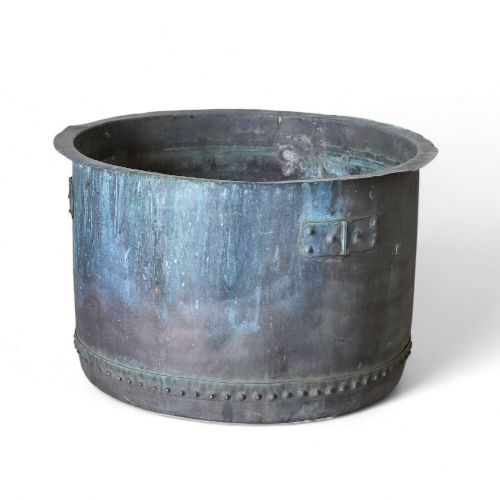
The versions most commonly met on this page span robust nineteenth-century rustic and utilitarian styles, often featuring characteristic side seams joined by visible metal rivets. Many of these pieces now function domestically as indoor planters, log baskets, and decorative fireplace accessories.
Materials and construction
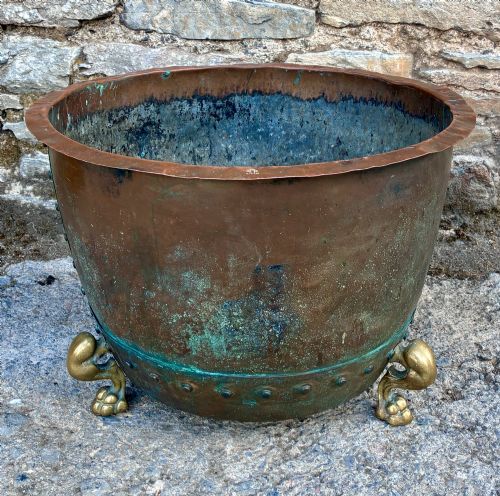
These items rely on heavy sheet copper joined with visible metal rivets along seams, frequently paired with wrought iron handles or brass fittings. Makers constructed these robust vessels to withstand intense kitchen use or utility work.
Surface finishes display natural patinas accrued over decades of age, while certain pieces incorporate embossed decorative work or contrasting brass components alongside the primary copper body.
Grain measure number six stands ready to prove that nineteenth-century dry goods possessed their own heavy metallic dignity.
Judging quality and build
Substantial wall thickness and heavy metal weight separate the top of the range from lighter domestic items, governing how well a piece holds its shape. The integrity of the riveted seams and the original seating of handles indicate the standard of primary manufacture.
Surface character and the depth of natural patina contribute substantially to visual appeal, as do well-preserved wrought iron or brass attachments that remain entirely intact.
The Victorian Riveted Copper Pot Glossary
- Riveted
- A method of joining sheet metal where metal pins are driven through overlapping plates and hammered flat. This technique provides immense structural strength for heavy-duty vessels.
- Jardiniere
- An ornamental pot or stand designed to hold growing plants or flowers. These decorative vessels often feature polished surfaces or embossed detailing.
- Patina
- The natural surface oxidation and colour shift developed by copper over long periods of exposure to air and handling. This aged skin demonstrates genuine historical depth.
- Utilitarian
- Describing items created strictly for practical domestic or agricultural labour rather than purely ornamental display. These objects derive their aesthetic appeal from robust functional design.
- Grain measure
- A standardised cylindrical metal vessel historically employed for quantifying dry agricultural produce. These sturdy containers typically exhibit heavy construction and stamped capacity numbers.
Victorian Riveted Copper Pot: Frequently Asked Questions
What were copper boilers used for?
These large vessels served to heat water for laundry and heavy domestic chores over open fires or kitchen ranges.
Their robust construction allowed them to withstand constant thermal stress and heavy handling in nineteenth-century households.
How do I clean a copper pot?
Most owners prefer to preserve the natural aged patina rather than polish the metal to a bright shine.
Gentle washing with warm soapy water removes dust without disturbing the historic surface character.
Can I use these as planters?
Many buyers repurpose these heavy metal containers as indoor plant pots or outdoor garden jardiniere displays.
Their generous proportions and stable bases suit them well for holding large foliage and heavy root systems.
How do I identify a Georgian piece?
Georgian items display specific hand-beaten construction traits and fastener styles distinct from later nineteenth-century manufacturing.
Examining the weight, rim formation, and handle attachments helps differentiate these earlier domestic saucepans and vessels.