



Victorian Copper Tub
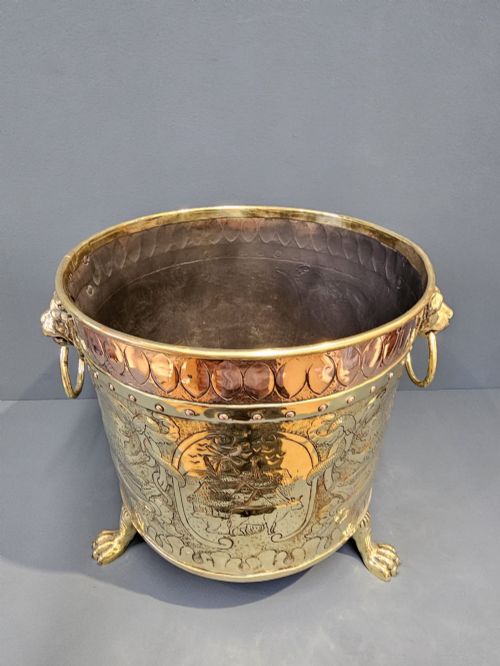
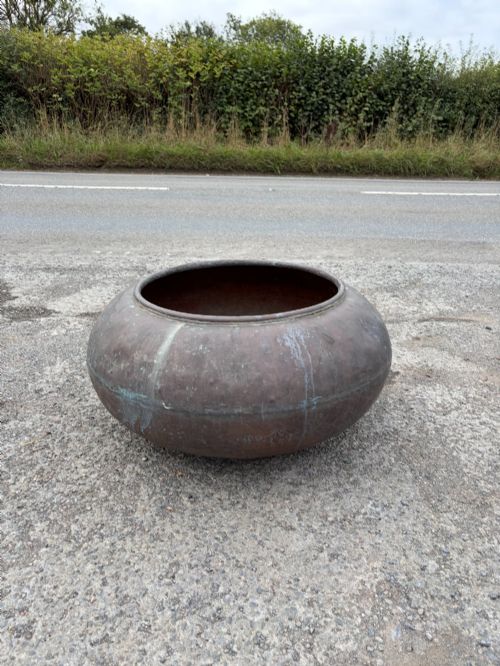
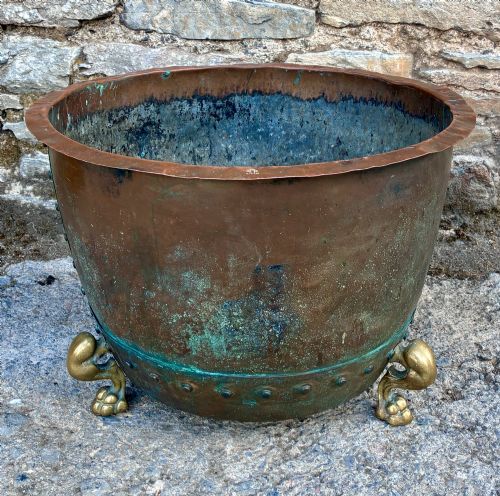
A victorian copper tub brings sturdy utility and rich metallic warmth to a room, serving as a characterful log bin or garden planter.
Victorian Copper Tub
When you search for a victorian copper tub, you encounter robust domestic vessels originally made for washing, cooking, or heating water during the nineteenth century. These heavy-duty containers transitioned from functional utility in washhouses and kitchens to decorative service in contemporary interiors.
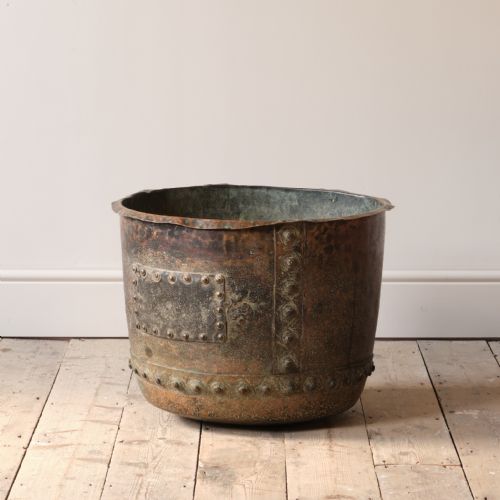
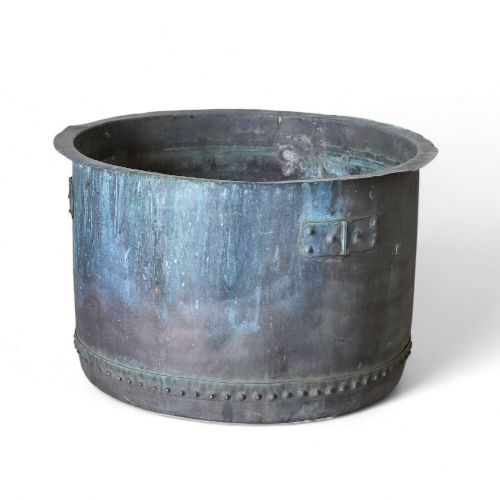
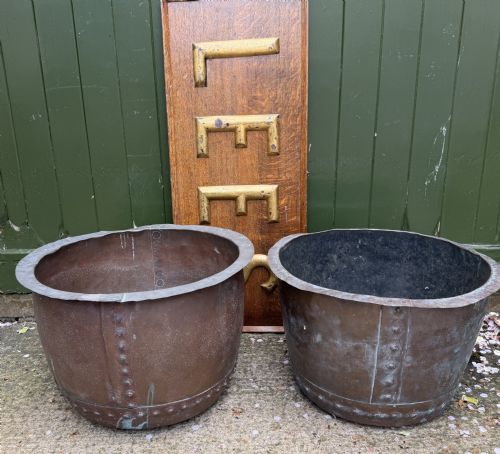
The pieces on this page typically manifest as large pots, cauldrons, boilers, and wash tubs bearing the distinctive marks of nineteenth-century production. Many examples now function primarily as log bins, coal scuttles, planters, and jardinieres within rustic farmhouse and Victorian country settings.
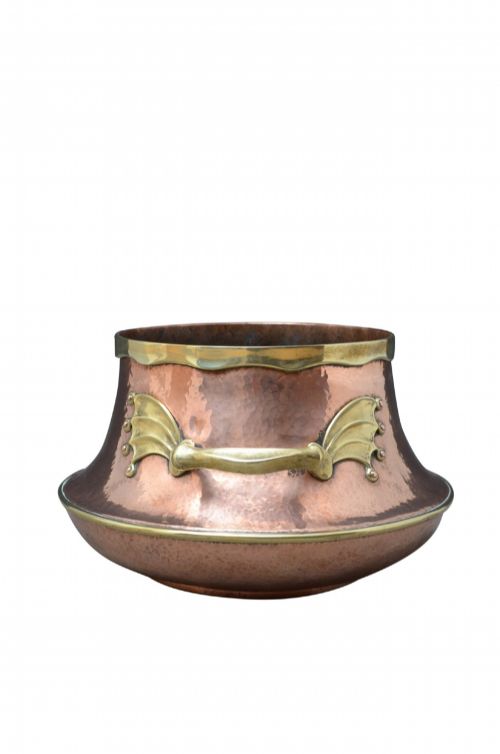
Origins span the broader Victorian era, encompassing styles from utilitarian and rustic country to Arts and Crafts and Art Nouveau. English provenance frequently appears alongside hand-beaten finishes and robust forms designed for heavy domestic labour.
What varies in quality
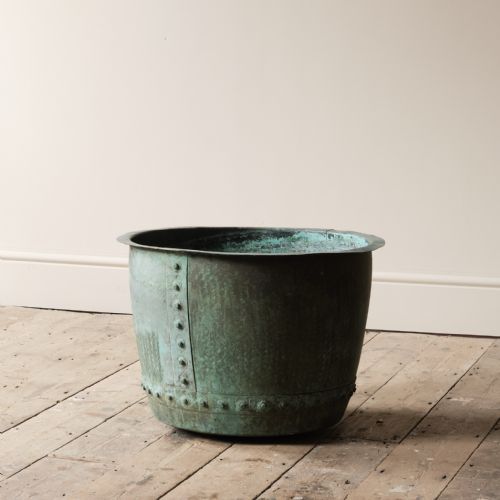
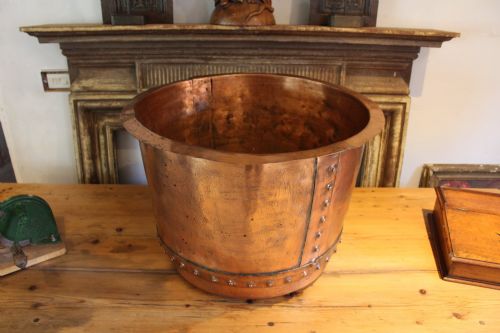
Quality rests in the integrity of the original construction, notably the weight of the metal and the precision of the hand-riveting along seams. Thicker gauge copper resists distortion better over time, maintaining the structural dignity of the vessel whether deployed as a fireside store or a garden planter.
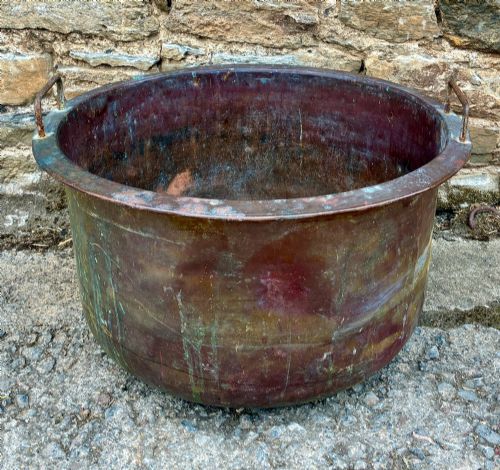
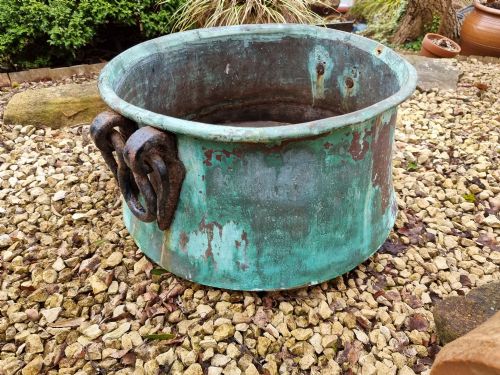
The character of the surface patina distinguishes superior examples, with natural weathering, rich tonal variation, and undisturbed hand-beaten textures providing visual depth. Original hardware, such as secure wrought iron swing handles or complementary brass bands, adds authenticity to the piece.
Some vessels retain the exact dents from nineteenth-century hearths and washhouses, ensuring no two tubs share the same story.
The Victorian Copper Tub Glossary
- Patina
- The surface sheen and colour acquired by metal through age, oxidation, and handling. A rich natural patina indicates decades of unpolished or gently aged history.
- Verdigris
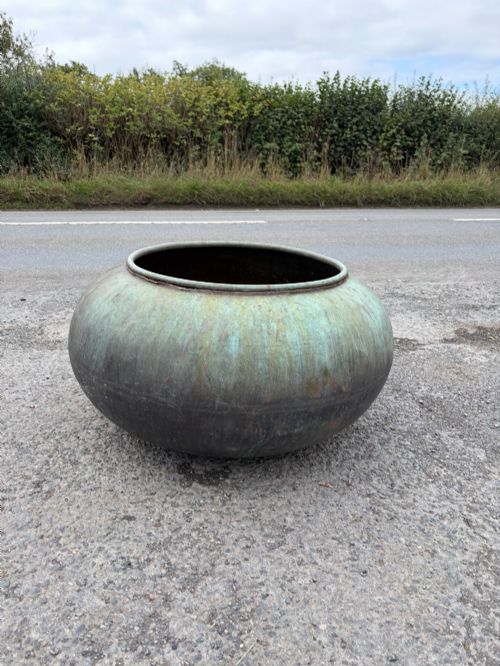
- The green crust or patina formed on copper and brass surfaces through atmospheric weathering and oxidation. This chemical reaction adds distinctive turquoise and green colouration to old metal.
- Cauldron
- A large round metal pot or kettle featuring a swing handle, traditionally used over open fires for heating water or cooking. Nineteenth-century versions frequently employ heavy copper with wrought iron attachments.
- Jardiniere
- An ornamental pot or stand designed to hold growing plants or flowers. These vessels often appear in brass or copper alongside log bins in Victorian interiors.
- Riveted
- Joined together using metal bolts or pins hammered flat at the ends. Hand-riveted copper seams demonstrate traditional construction methods.
Victorian Copper Tub: Frequently Asked Questions
How were copper tubs used originally?
These vessels served demanding domestic tasks such as boiling laundry, heating water, and bulk cooking in nineteenth-century households. Their heavy construction allowed them to withstand constant exposure to heat and moisture.
Over time, many of these utilitarian coppers retired from active kitchen duty to act as fireside log holders or agricultural grain measures before entering the decorative market.
Can I use an antique copper tub outdoors?
Many examples on this page double as garden planters and jardinieres, functioning effectively outdoors on patios or in gardens. Copper handles exposure to the elements well, developing further weathering over time.
Ensure adequate drainage if planting directly into the vessel, or use the tub as an outer cachepot to protect the historic interior metal.
How do I clean an antique copper tub?
Most collectors prefer to preserve the aged surface patina and verdigris rather than polishing the metal to a bright shine. Gentle dusting with a dry cloth removes surface debris without disturbing the historic finish.
Avoid abrasive chemical cleaners that strip away the natural character and tonal depth accumulated over more than a century of existence.
What is the difference between a log bin and a copper?
A copper specifically refers to a large vessel used for boiling water or laundering, often featuring iron swing handles and heavy gauge walls. A log bin is a broader descriptor for containers repurposed specifically to hold firewood near a fireplace.
Many listings combine these terms because deep nineteenth-century wash coppers adapt ideally to storing logs once their original utilitarian service ends.