




Victorian River Scenery Painting
These Victorian river scenery painting works capture nineteenth-century waterways with remarkable atmosphere, offering buyers a genuine window into pastoral landscapes.
Victorian River Scenery Painting
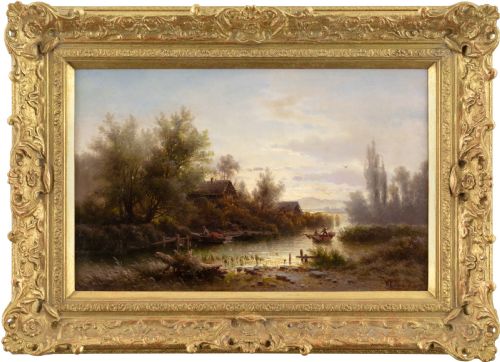
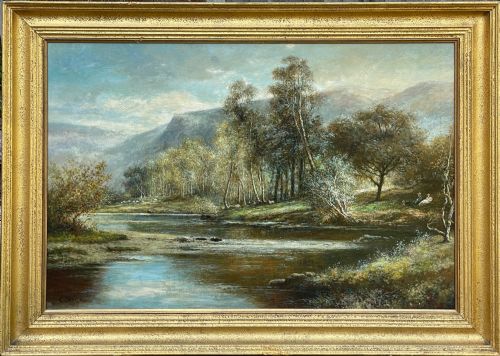
A victorian river scenery painting presents nineteenth-century waterways, pastoral landscapes, and Highland scenes through nineteenth-century realism and pastoral realism. These artworks capture riverbanks, stone bridges, and cattle grazing by the water, reflecting the naturalism favoured during the period.
The pieces appearing on this page span the Victorian era, specifically featuring works dated around eighteen seventy, eighteen eighty, eighteen ninety, and nineteen hundred. Buyers will encounter individual framed canvases, wood panel works, and watercolours created by British and Scottish school artists.
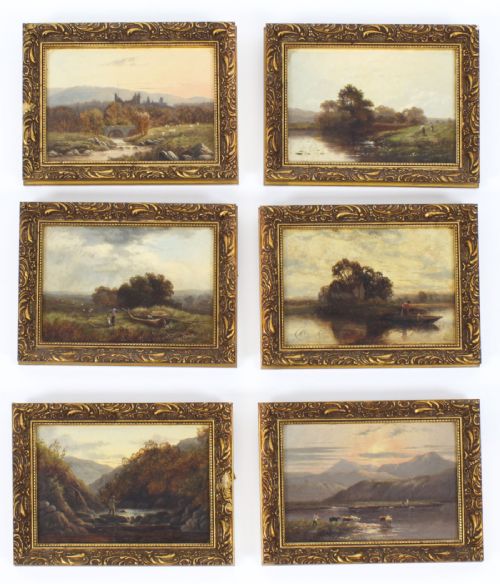
Forms range from single landscape oils and watercolours to pairs and sets of river landscape paintings. Subjects frequently incorporate figures picking flowers by a river bank or morning moods over water.
Materials and Technique
Artists painted primarily in oil on canvas or wood panel, utilising oil paint to build texture and depth in the scenery. Watercolours also appear among the works, capturing lighter atmospheric effects on paper.
Works are typically housed in frames constructed from wood, gesso, and giltwood, often finished with gold leaf. These traditional framing materials complement the nineteenth-century aesthetic of the paintings.
Materials recorded across the inventory include canvas, oil paint, wood panels, watercolours, gesso, and gold leaf giltwood frames.
Assessing Quality
Quality in these works rests upon the handling of light, atmosphere, and natural detail by the artist. Finer examples demonstrate confident brushwork and balanced composition, particularly in capturing water reflections and pastoral light.
The preservation of the original paint surface and the quality of the accompanying giltwood and gesso frames also influence the overall character of the piece. Set integrity matters when evaluating pairs or groups of river landscapes.
Albert Rieger·E Brown·H Wallace·John Wright Oakes·William Mellor·Thomas Swift Hutton·Robert John Hammond·John B MacDonald·James Poole·Thomas E Francis
The Victorian River Scenery Painting Glossary
- Oil on Canvas
- Pigment mixed with drying oil applied to a stretched woven fabric support. This combination allowed artists to achieve rich colour depth and lasting durability.
- Giltwood
- Wood carved and coated with gold leaf or a thin layer of gold paint. It provides an ornate, reflective border for traditional landscape paintings.
- Wood Panel
- A solid flat wooden support used by artists before or alongside canvas. Panels offered a rigid surface suited to detailed brushwork.
- Gesso
- A paint mixture consisting of a binder mixed with chalk, gypsum, or pigment. It served as a smooth preparation layer on frames before gilding.
- Watercolour
- Paint consisting of colour pigments suspended in a water-based solution. It produces translucent washes on paper that evoke delicate light effects.
Victorian River Scenery Painting: Frequently Asked Questions
How are these paintings dated?
Dating relies on artist signatures, stylistic markers of nineteenth-century realism, and period framing techniques. Documentation or inscriptions on the reverse of panels and canvases also help establish the decade.
Changes in painting materials and Victorian naturalism provide further contextual clues for narrowing down the creation period.
Where should I hang a river painting?
These works suit traditional reception rooms, studies, or hallways where natural light enhances the oil or watercolour medium. Paired landscapes work particularly well above sideboards or mantelpieces.
Protect the canvas or paper from direct sunlight and excessive humidity to preserve the integrity of the paint and giltwood frame.
What subjects feature in these scenes?
Common motifs include Scottish stone bridges, Highland landscapes, cattle grazing on riverbanks, and figures picking flowers near water. Morning moods and Welsh river views also frequently appear.
Artists focused on pastoral realism, recording rural British scenery with close attention to natural light and atmospheric conditions.
Are frames original to the pieces?
Framing varies, with many works retaining period gesso and giltwood frames that match the age of the canvas. Some pieces have undergone re-framing or conservation over time to ensure structural stability.
Examining the corner joints and gilding wear helps determine whether a frame shares the history of the painting within it.