



Victorian Revolving Music Chair
A victorian revolving music chair combines mechanical adjustment with timber framing, offering practical height control for musicians at the keyboard or harp.
Victorian Revolving Music Chair
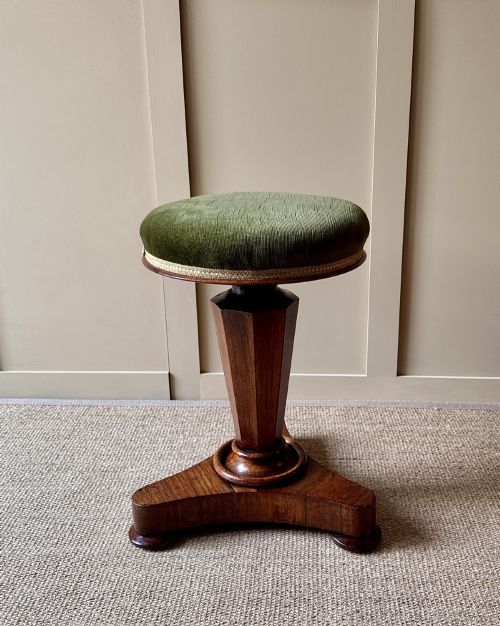
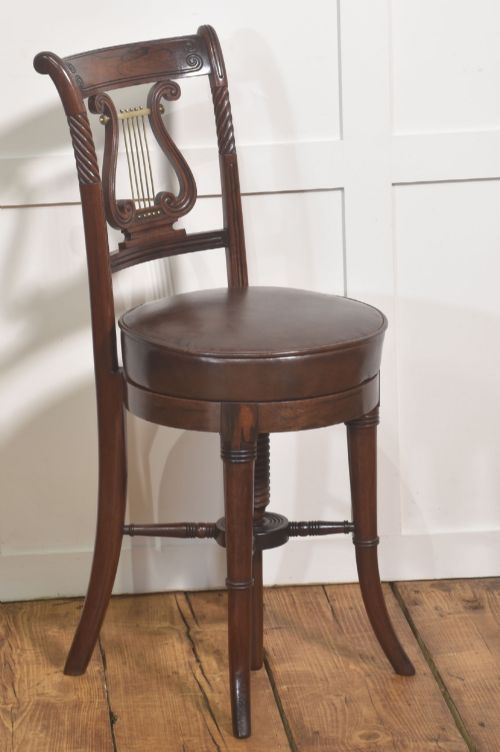
A victorian revolving music chair appears most frequently as a circular or square-topped seat designed for the an era's drawing room, parlour or music salon. These pieces operate on threaded wooden spindles or metal screw mechanisms that permit the sitter to adjust height and rotate freely during a performance.
Makers produced these seating forms across the nineteenth century, utilising styles ranging from William IV and Regency influences through to Victorian Arts & Crafts and Aesthetic Movement designs. The physical evidence shows frequent overlap between piano stools, dressing chairs and harpist seats, sharing identical swivel and rise-and-fall attributes.
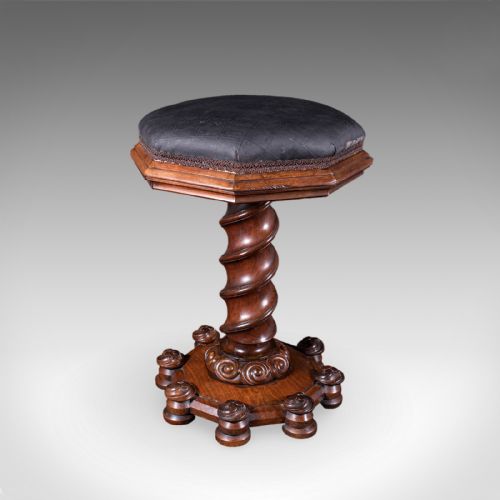
The materials recorded in these listings span dense hardwoods like mahogany, walnut and rosewood, often paired with upholstered velvet, leather or fabric tops. Collectors encounter variations from plain mahogany pedestals to elaborately carved walnut tripod bases and papier-mâché ornamentation.
Materials and construction methods
Cabinet makers constructed these seats using solid timbers such as mahogany, walnut and rosewood, frequently shaping the grain to highlight figure and tone. Turned pedestals and cabriole legs provide the structural support necessary to bear the downward pressure of the central screw mechanism.
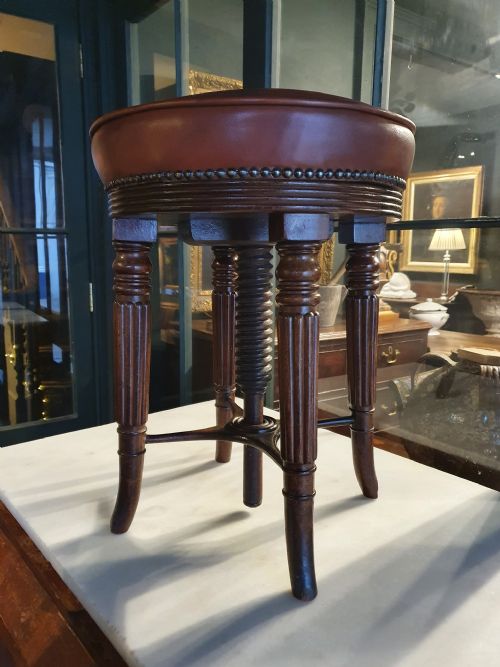
The mechanical core relies on threaded metal rods or wooden screw threads housed within the central pillar, allowing smooth vertical adjustment when the seat top is turned. Upholstered tops utilise materials like velvet, leather and patterned fabric stretched over stuffed padding, occasionally secured with brass tacks.
Victorian Revolving Music Chair Retail Price Guide 2026
Typical asking prices for victorian revolving music chair among the pieces listed under this phrase on Sellingantiques today, from the lower quarter to the upper quarter. They describe what is for sale here now, not the wider market.
Recorded styles on this page range from Regency and William IV through to Victorian, Edwardian, Arts & Crafts and French Chateau.
Judging quality and craftsmanship
Quality rests upon the smoothness of the revolving mechanism and the stability of the central column under rotation. Superior examples maintain tight joints and precise threading that operates without excessive lateral play in the seat.
Carving depth and timber selection separate standard production from high-tier workshops. Finely figured walnut, dense mahogany and crisp, hand-carved ornamentation indicate superior craftsmanship compared to plain turned supports.
Jennens & Bettridge·Gillows·James Shoolbred·Holland & Son
The Victorian Revolving Music Chair Glossary
- Rise & Fall
- A mechanical seat design that alters in height through a turning motion on a central screw thread. This function allowed different musicians to adjust their seating position relative to the keyboard.
- Swivel Base
- A rotating seating platform that turns horizontally on its central pillar. It permits movement without shifting the base of the furniture on the floor.
- Pedestal
- A central vertical column supporting the seat, often terminating in tripod or quadruped scroll feet. This configuration provides clearance for the feet while maintaining stability during rotation.
- Papier-Mâché
- A composite material made from paper pulp or layers of paper bound with glue, then lacquered and painted. It occasionally formed decorative components or tray tops on Victorian music furniture.
Victorian Revolving Music Chair: Frequently Asked Questions
What is a victorian revolving music chair?
A victorian revolving music chair is an adjustable seat designed for keyboard players, harpists and performers in nineteenth-century homes. These pieces allowed musicians to alter their seating height and turn toward an audience or music stand.
The listings demonstrate that these seats were produced in forms ranging from simple mahogany pedestals to heavily carved walnut tripod styles and papier-mâché compositions.
How do you adjust the height?
Height adjustment operates through a central screw mechanism concealed within the pedestal column. Turning the seat top clockwise or counter-clockwise raises or lowers the platform along the internal thread.
Most surviving examples retain this functional screw action, though the smoothness of rotation varies depending on wear to the wooden or metal threads.
Where were these chairs used?
These chairs stood beside upright and grand pianos, harp instruments and dressing tables in Victorian drawing rooms and music rooms. Their compact footprint and swiveling action suited cramped domestic spaces where performers needed flexibility.
They function today as piano benches, dressing table seats or decorative occasional chairs within period interiors.
How do you date a music chair?
Dating relies on stylistic markers such as turned pedestal legs, carved walnut scrollwork, or Aesthetic Movement detailing. Earlier pieces display Regency or William IV influences, while later examples incorporate Arts & Crafts or late Victorian characteristics.
Makers' stamps, where present, provide further chronological evidence linking pieces to firms active in the nineteenth century.