
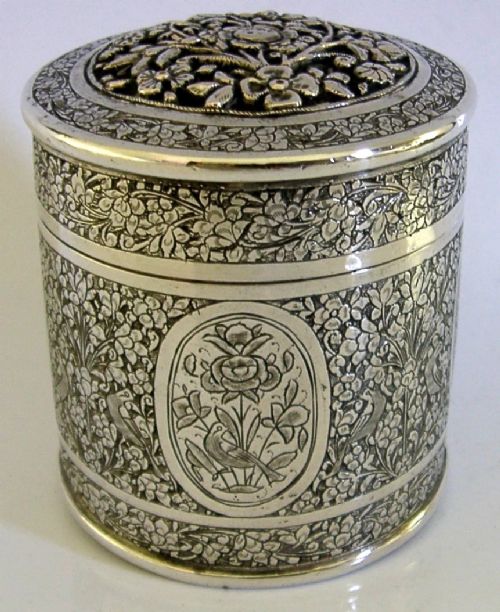
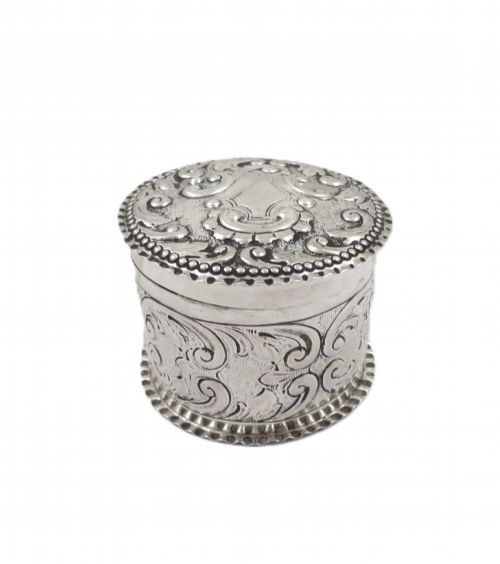


Victorian Repousse Silver Jar
These victorian repousse silver jar pieces are weighty table vessels and boxes carrying deep, hammered decoration that collectors prize for display.
Victorian Repousse Silver Jar
A victorian repousse silver jar typically takes the form of a tea caddy, trinket box or vanity pot fashioned during the nineteenth and early twentieth centuries. These vessels served practical domestic roles in storing loose tea leaves or holding dressing table items while displaying ornamental metalwork.
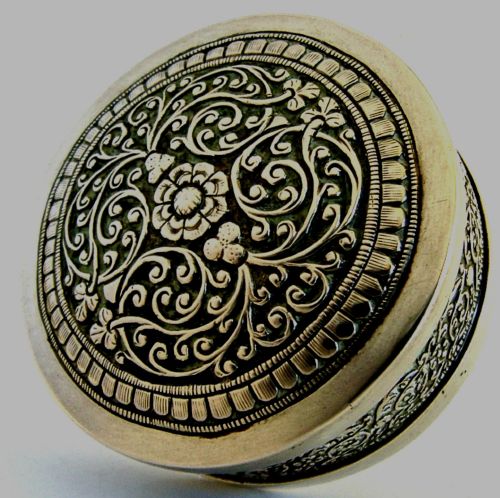
The items found on this page span the Victorian era alongside pieces from the Edwardian period, Georgian times and around nineteen hundred. Alongside domestic English examples, the selection includes Continental, Ottoman Turkish and Indian colonial work.
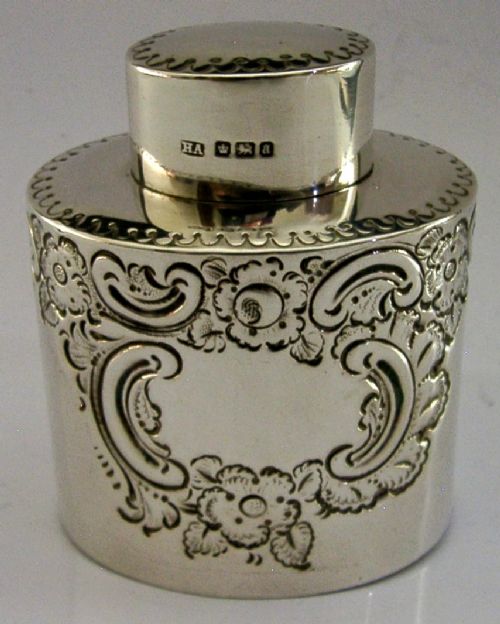
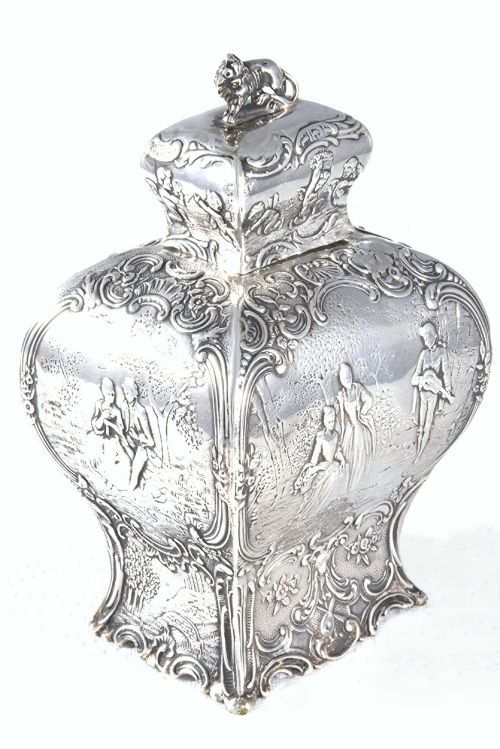
Tea caddies form the most common shape within this group, appearing as oval, bombe or straight-sided containers often fitted with pull-off lids. Smaller trinket boxes and vanity pots also appear frequently, alongside occasional variants in cut glass with silver tops or Old Sheffield plate.
How they were made
Silversmiths constructed these pieces primarily from solid sterling silver, silver plate, copper and cut glass, sometimes combining ebony details within the design. The metal was beaten from the reverse side to push out ornamental motifs in high relief, a technique known as repousse work.
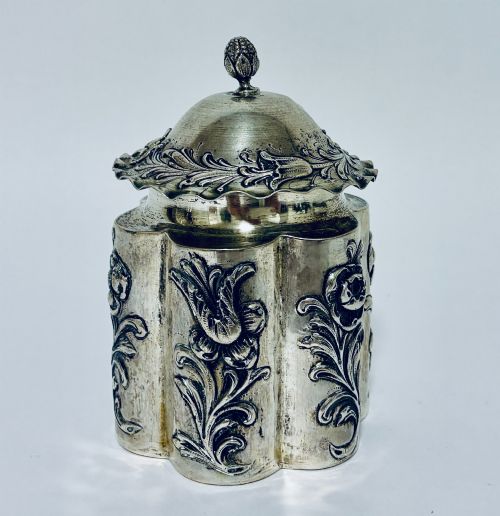
Makers shaped the silver into bodies such as oval or bombe tea caddies and vanity pots, finishing surfaces with detailed floral, scroll or figural patterns. Control of the hammer created depth and crispness across the chased and embossed metal.
Some caddies travelled from Ottoman workshops or Indian provinces before resting on quiet English dressing tables.
What varies in quality
The depth and definition of the hammered repousse decoration dictate much of the visual merit, separating sharp, hand-embossed surface work from softer pressings. Weight and gauge of the metal also distinguish substantial vessels from lighter domestic wares.
The integrity of form across complex shapes like bombe or oval caddies demonstrates the maker's skill in metal-shaping. Additionally, the survival of crisp chasing without excessive smoothing from past polishing maintains the character of the piece.
The Victorian Repousse Silver Jar Glossary
- Repousse
- A metalworking technique where the artisan hammers or pushes designs from the reverse side of the sheet to form a raised pattern on the front. This process creates tactile, three-dimensional surface decoration.
- Tea caddy
- A small container originally designed to store loose tea leaves securely before they were brewed. These vessels often featured tight-fitting lids to preserve the aroma of the dry leaves.
- Bombe
- A curved, swelling furniture or vessel shape that bulges outward towards the base. This rounded contour requires skilled metal-forming or joinery.
- Sterling silver
- An alloy consisting of silver and other metals, usually copper, formulated to increase durability while maintaining a bright metallic appearance. British items meeting this standard typically carry specific hallmarking stamps.
- Old Sheffield plate
- A composite material made by fusing a thin sheet of silver to a thicker copper base. This method preceded modern electroplating techniques.
Victorian Repousse Silver Jar: Frequently Asked Questions
What is a repousse silver jar used for?
These vessels were originally made to hold dry tea leaves, vanity items or small trinkets on dressing tables and living room sideboards.
Today, they function primarily as decorative display pieces that add historic character and metallic texture to interior spaces.
How do I clean repousse silver?
Maintenance requires a soft cloth and gentle silver cleaner designed to avoid wearing down the raised details of the hammered decoration.
Aggressive rubbing can smooth out the crisp edges created by the silversmith during the initial repousse process.
Are all these items made in Britain?
While many pieces originate from English workshops and bear Victorian hallmarks, the selection also includes Continental, Ottoman Turkish and Indian colonial work.
Regional variations in shape and ornament reflect the diverse global traditions of nineteenth-century silversmithing.