

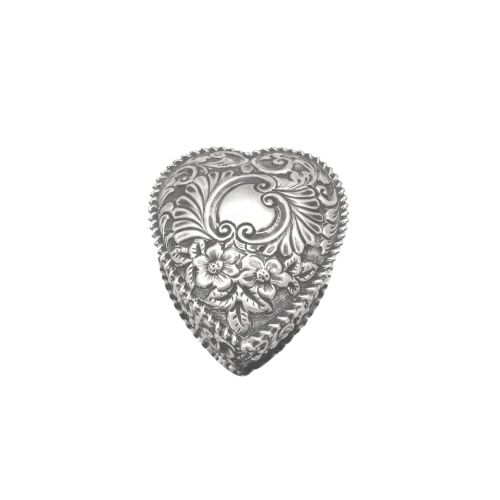


Embossed Silver Vanity Container
An embossed silver vanity container sits on a dressing table to hold personal trinkets, bringing polished metal and intricate decoration to daily routines.
Embossed Silver Vanity Container
An embossed silver vanity container is typically encountered as a trinket box, snuff box, or dressing table jar originating from the Victorian and Edwardian periods. These portable receptacles served to organise small valuables and grooming items in the bedroom or boudoir.
The selections span heart-shaped sterling silver trinket boxes, lidded frosted glass jars, and potpourri boxes dated around the turn of the twentieth century. Alongside British items, occasional continental European and Anglo-Indian variants appear in the listings.
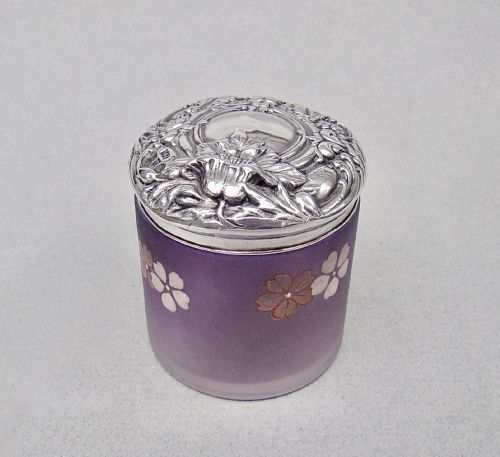
Forms range from hinged metal caskets to glass containers capped with decorated silver lids. Each piece reflects the dressing habits of the nineteenth and early twentieth centuries.
How they were made
Maker's methods combine sterling silver or solid silver sheet with glass, wood, and lacquer elements. Metal components are frequently worked with raised ornamentation across the surface.
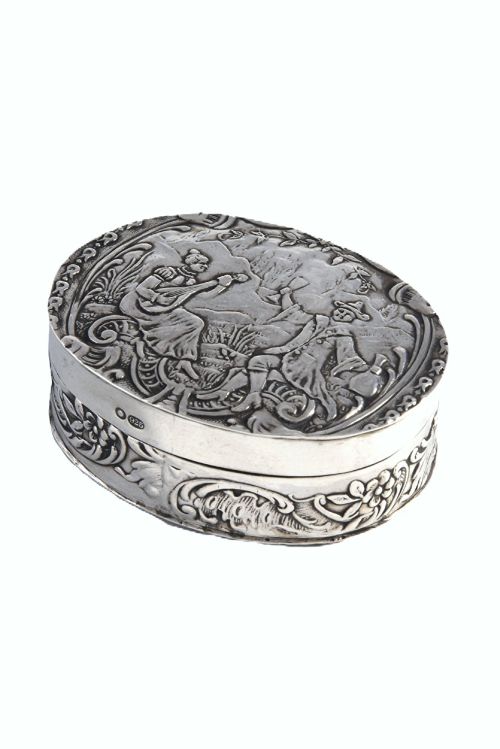
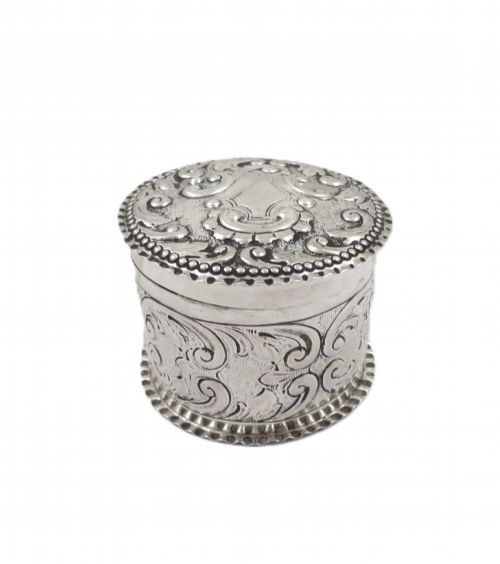
Techniques include manual pressing or chasing to create low relief patterns, paired with cut or frosted glass bodies on dressing table jars. Lids often feature tight-fitting hinges or lift-off rims designed to seal the interior.
Current listings feature items from the Victorian and Edwardian periods, employing sterling silver, frosted glass, and lacquer.
What varies in quality
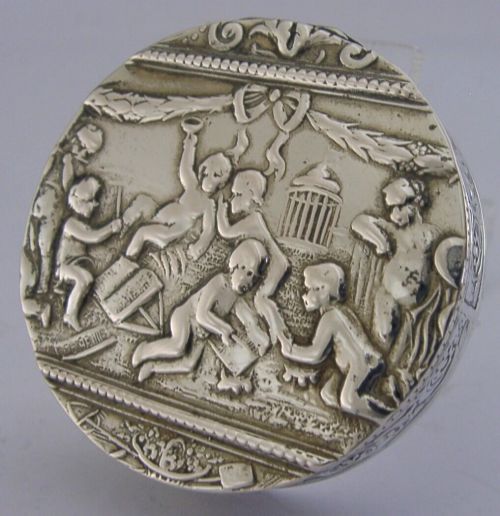
Quality rests on the crispness of the raised metalwork and the integrity of the fitted components, such as hinges and lids. Pieces that retain sharp detail in their decorative scenes demonstrate superior craftsmanship.
The choice of materials also divides the range, particularly where heavy sterling silver meets cleanly cut or frosted glass bodies rather than plain metaled substitutes.
The Embossed Silver Vanity Container Glossary
- Sterling Silver
- An alloy consisting of pure silver and other metals, traditionally copper, standard for British tableware and vanity items. It provides durability alongside a bright, reflective finish.
- Snuff Box
- A small pocket-sized container originally intended for holding powdered tobacco. Many examples feature tight lids and decorative repoussé surfaces.
- Frosted Glass
- Glass treated to produce a textured, translucent surface rather than complete clarity. It diffuses light and obscures the contents of a jar.
- Potpourri Box
- A lidded vessel perforated to allow dried scented plant materials to fragrance a room. They appear in dresser arrangements from the Edwardian era.
- Repoussé
- A metalworking technique where the artisan hammers the material from the reverse side to form a raised design on the front. This creates the characteristic texture of embossed containers.
Embossed Silver Vanity Container: Frequently Asked Questions
What is an embossed silver vanity container used for?
These containers were originally designed to hold small personal items such as rings, pins, snuff, or cosmetics on a bedroom dressing table. Today they serve similar decorative and practical storage roles in modern interiors.
Their compact size makes them suitable for holding everyday jewellery on a bedside table or chest of drawers.
How do I date a silver vanity box?
Dating relies heavily on hallmarks stamped into the silver, which indicate the assay office, year of manufacture, and standard of metal. Stylistic clues such as Art Nouveau curves or Victorian ornamentation also help narrow the period.
Examining the construction methods and any engraved inscriptions on the interior lining provides further chronological context.
Are glass and silver jars fragile?
While the sterling silver components are durable, the cut or frosted glass bodies require careful handling during cleaning and placement. Proper placement away from table edges prevents accidental knocks.
Lids should be lifted straight off or opened gently along the hinge to protect the fitted joins.
How should I clean embossed silver?
Cleaning requires a soft cloth and a gentle silver polish formulated to avoid scrubbing away delicate raised details. Harsh abrasives will flatten the embossed patterns over time.
Careful attention to the crevices of the repoussé work helps maintain the definition of the decorative scenes without damaging the metal.