

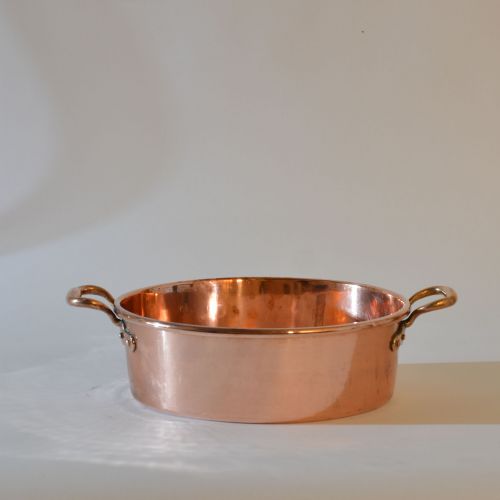
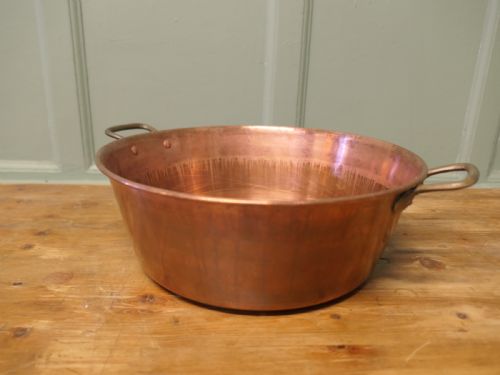
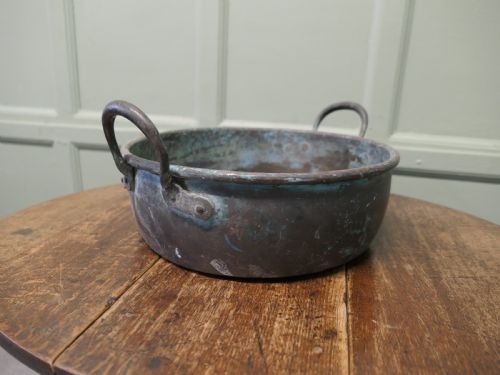


Victorian Preserving Pan
A victorian preserving pan brings heavy, functional warmth to a modern kitchen, offering deep metal bowls built for traditional jam making.
Victorian Preserving Pan
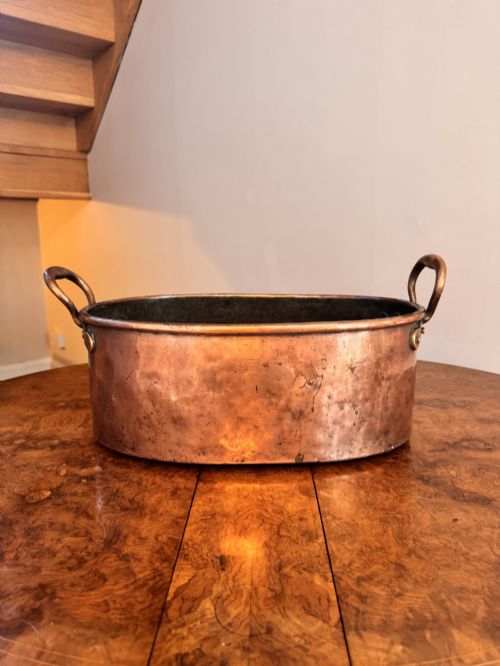
A victorian preserving pan is a robust domestic vessel designed primarily for boiling fruit and sugar into preserves, fruit curds, and jams. These pans emerge predominantly from the nineteenth century, reflecting the heavy-duty utility of a working historic kitchen.
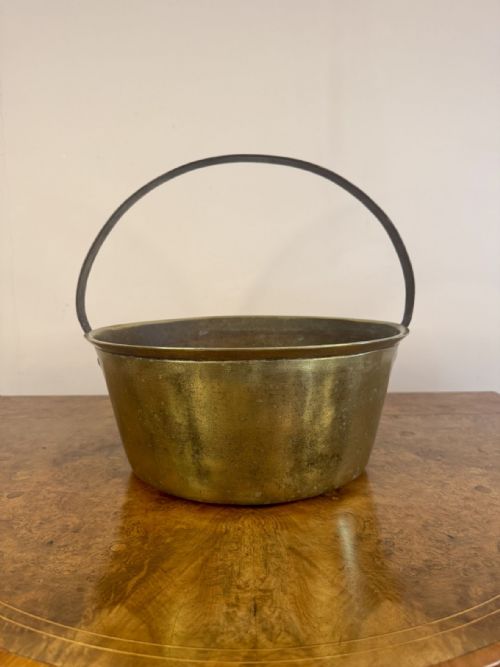
The dominant style is distinctly utilitarian and rustic farmhouse, originating from an era when kitchenware prioritized enduring metal thickness over decorative flourish. Buyers will frequently encounter these items outfitted with heavy side handles or swinging iron bails.
How they were made
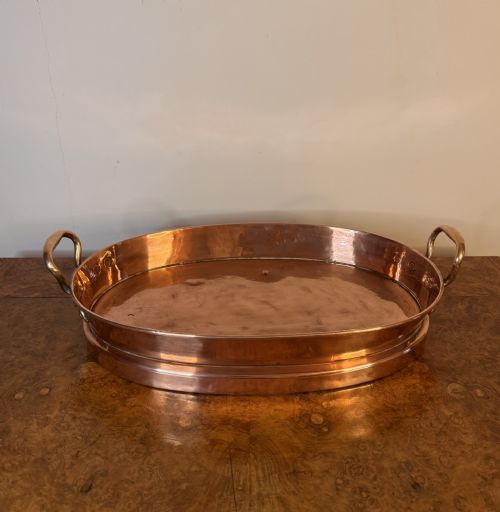
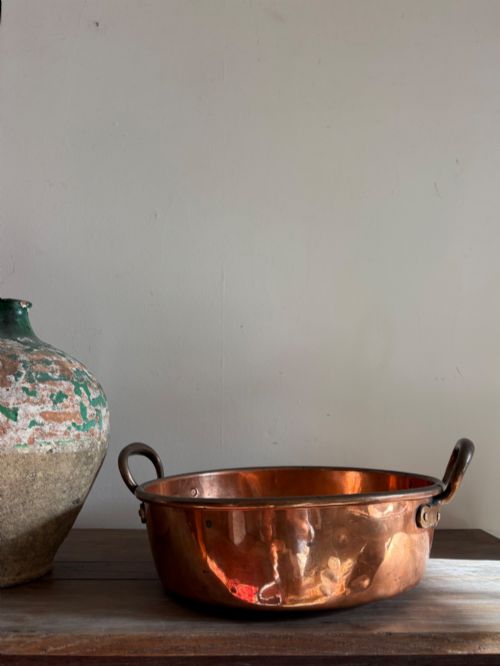
Makers shaped these heavy vessels primarily from hammered and beaten copper or cast and mottled brass, selecting metals that conducted heat rapidly and evenly. Many of these pieces incorporate riveted construction, fastening handles securely to the main body with metal pins.
Iron and wrought iron frequently appear on handles and swing bails, providing rigid support for lifting heavy boiling contents. Additional touches of tin sometimes line the interiors of specific cooking vessels to prevent direct contact between food and base metals.
Victorian Preserving Pan Retail Price Guide 2026
Typical asking prices for victorian preserving pan among the pieces listed under this phrase on Sellingantiques today, from the lower quarter to the upper quarter. They describe what is for sale here now, not the wider market.
A heavy copper pan makes an unexpectedly brilliant holder for oversized bundles of dried lavender by the fireplace.
What varies in quality
Substantial weight separates the finest examples from lighter utility vessels, as heavier metal gauges prevented scorching during long hours of boiling. Superior pieces maintain a thick, uniform wall structure that resists warping across open heat sources over generations.
Handle attachment and metal finishing define the upper tier of craftsmanship, showing clean riveted joints and well-formed brass or iron mounts. The proportion and symmetry of the rounded bowl also indicate whether a maker produced standard utilitarian stock or a superior kitchen piece.
Hodges & Sons
The Victorian Preserving Pan Glossary
- Jam pan
- A wide, open metal basin designed specifically for boiling fruit preserves and sugar. These vessels feature shallow sides to encourage rapid evaporation during the boiling process.
- Cream setting pan
- A specialised agricultural vessel used in nineteenth-century dairies to let cream rise to the top of fresh milk. These pieces share the wide, open-bowl geometry of preserve pans.
- Swing handle
- A flexible arched metal bail attached to opposite sides of a pan to allow easy lifting and hanging. This handle style often incorporates iron or wrought iron fixed with visible rivets.
- Riveted construction
- A method of joining metal plates or handles by inserting a metal pin through overlapping sections and hammering the end flat. This technique ensures durable connections under heavy kitchen loads.
Victorian Preserving Pan: Frequently Asked Questions
What were victorian preserving pans used for?
These heavy metal bowls were designed for boiling large quantities of fruit and sugar to make preserves, marmalades, and jams. Their wide openings allowed steam to escape quickly while keeping the contents accessible for constant stirring.
Beyond jam making, similar vessels served various homestead tasks, including setting cream and general kitchen cooking over open hearths or early stoves.
How do I clean a copper pan?
Copper vessels benefit from gentle cleaning methods that preserve the natural metal surface without introducing harsh scratching. Traditional mixtures of salt and acid or specialised metal polishes help maintain the warm tone of the exterior.
Avoid abrasive scouring pads that can thin the historic metal walls or damage the aged character built over a century of use.
Can I use an antique pan for cooking?
While these items were built for active kitchen use, many buyers choose to display them as decorative pieces rather than cooking over modern induction or gas rings. Those intending to cook should inspect the interior metal lining carefully to ensure it remains suitable for food contact.
Many surviving vessels have spent decades as decorative hearth ornaments and retain a rich patina unsuited to daily culinary work.
How do I date a brass jam pale?
Nineteenth-century dating relies heavily on manufacturing marks, handle attachments, and material characteristics like hand-beaten hammering patterns and riveted joints. Pieces from this era typically display heavier metal gauges and simpler utilitarian construction than later twentieth-century reproductions.
Comparing the specific handle mounts and rim finishes against documented nineteenth-century examples helps narrow down the period of production.