



Victorian Pottery Teapot
These victorian pottery teapot examples offer genuine period character, bringing traditional British ceramic craft directly to the table.
Victorian Pottery Teapot
When searching for a victorian pottery teapot, buyers encounter a diverse range of nineteenth-century earthenware, stoneware, and porcelain vessels. These pieces stem from various decades spanning the mid to late nineteenth century and the early twentieth century.
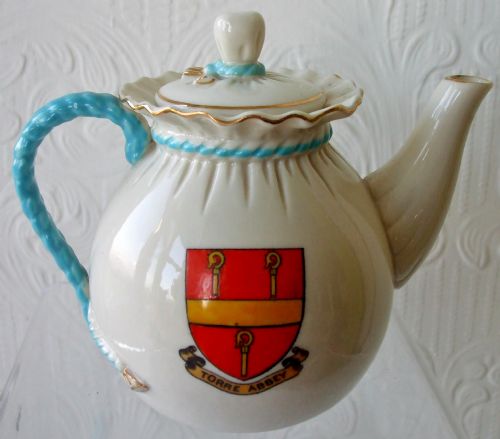
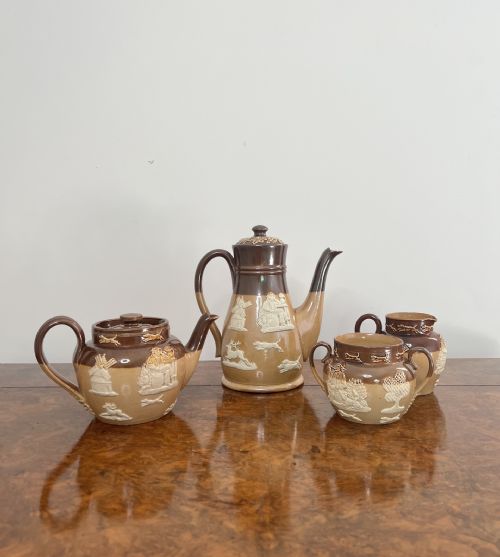
The selections on this page most commonly include traditional teapots, tea sets, milk jugs, and solitaire or bachelor sets. Originating from English potteries, these items display distinct regional styles from Staffordshire, Torquay, and beyond.
Makers utilise distinct decorative approaches, ranging from transfer printing and hand-painting to moulded reliefs. Buyers find both large utilitarian tea vessels and smaller decorative miniatures among the available items.
How they were made
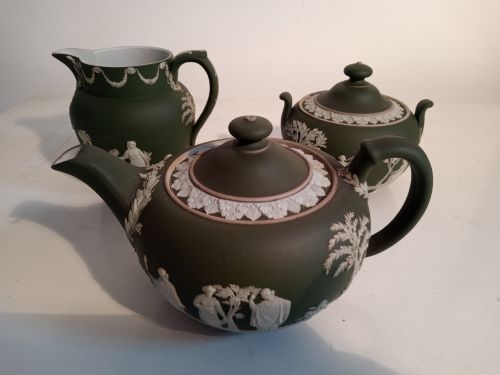
Potters shaped these vessels using earthenware and stoneware bodies, often finishing the surfaces with lead glazes or enamel colours. Some specialised pieces incorporate delicate gold leaf detailing or distinct jasperware compositions.
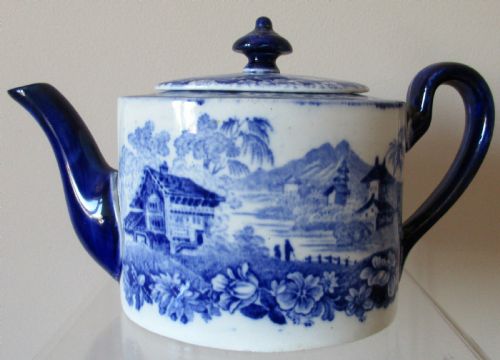
Techniques varied from simple slip casting and throwing to intricate hand-modelling found in figural majolica designs. Transfer printing applied detailed patterns like blue and white transfer scenes directly onto the ceramic body before glazing.
Materials represented across the pottery selections include earthenware, stoneware, jasperware, and porcelain.
What varies in quality
Quality in a victorian pottery teapot lies in the crispness of the moulding and the depth of the ceramic glaze. Pieces featuring hand-painted enamels or applied details demonstrate greater artisanal skill than standard factory output.
The reputation of the producing pottery and the complexity of the design distinguish standard domestic items from exceptional decorative examples. Intricate folk art traditions or signed factory pieces command distinct attention from collectors.
Wedgwood·W.H. Goss·Mintons·Doulton·Joseph Holdcroft
The Victorian Pottery Teapot Glossary
- Earthenware
- A porous pottery body fired at lower temperatures, requiring a glaze to become impermeable. It forms the base for many traditional domestic vessels.
- Majolica
- A colourful lead-glazed earthenware popular during the nineteenth century, known for vibrant tones and moulded relief decoration. It often depicts natural forms or figural scenes.
- Jasperware
- A fine-grained stoneware developed by Josiah Wedgwood, characterised by a matte surface and contrasting applied white relief decorations. Blue and olive green are typical background shades.
- Transferware
- Pottery decorated by pressing a paper transfer inked from an engraved copper plate onto the ceramic surface. This technique allowed for consistent and detailed pattern replication.
- Stoneware
- A dense, vitrified pottery fired at high temperatures, naturally impermeable to liquids even without glaze. It provides durable service for everyday use.
Victorian Pottery Teapot: Frequently Asked Questions
How do I clean a victorian pottery teapot?
Wash these antique ceramic pieces gently by hand using warm water and mild soap. Avoid soaking or using abrasive scrubbers to protect the historic glaze and any delicate enamel work.
Store the vessel safely away from sudden temperature changes to prevent stress on the nineteenth-century ceramic body.
Are these teapots safe for daily use?
While these items were originally created for functional tea service, age and historic glazes mean many collectors prefer them for display purposes. Historic earthenware can absorb liquids and odours over extended periods.
Consider displaying your piece on a sideboard or within a cabinet to preserve its condition for future generations.
What is bargeware pottery?
Bargeware refers to colourful, heavily decorated folk art pottery traditionally made for use on canal narrowboats. These pieces often feature applied clay flowers, geometric motifs, and bright lead glazes.
They represent a distinct strand of nineteenth-century vernacular craft produced in English potteries.
How can I tell the age of a teapot?
Examine the base for impressed factory marks, registration numbers, or handwritten signatures that correspond to known nineteenth-century production periods. The style of the handle, spout, and glaze type also offer clues regarding the decade of manufacture.
Comparing the manufacturing technique with documented pieces helps narrow down the production era.