

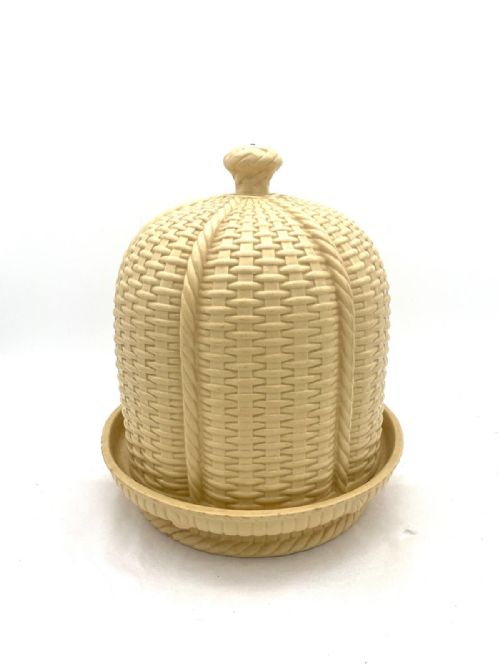


Victorian Pottery Dome
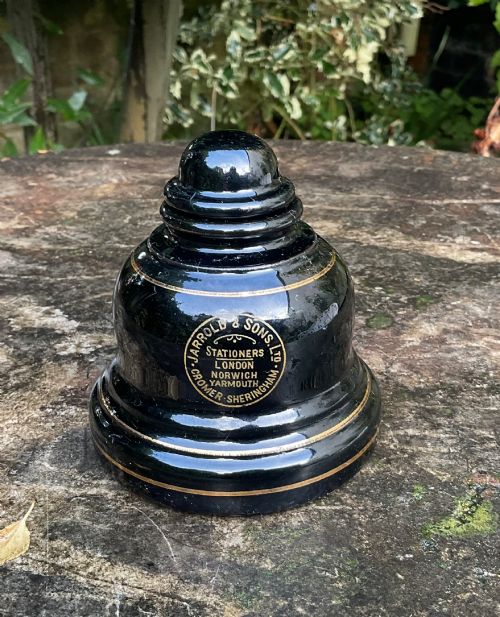
These Victorian pottery dome pieces are robust serveware and inkwells created to grace dining tables and desks during the nineteenth century.
Victorian Pottery Dome
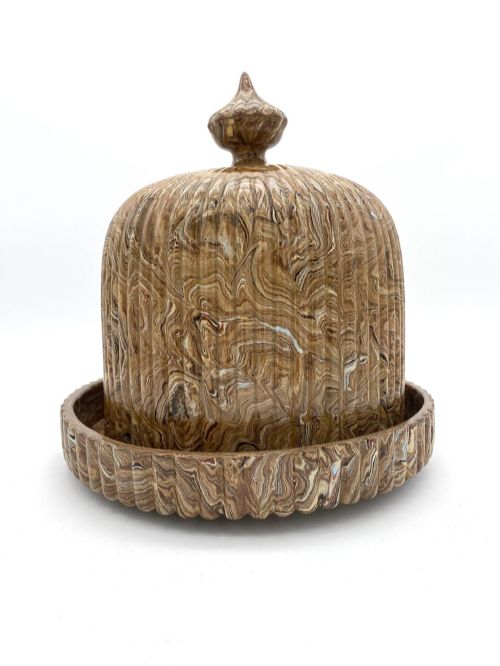
A victorian pottery dome primarily takes the form of a cheese dish or cheese bell with a matching stand, alongside occasional variations such as inkwells. These ceramic pieces served functional domestic purposes in nineteenth-century households, designed to protect dairy or ink from the air.
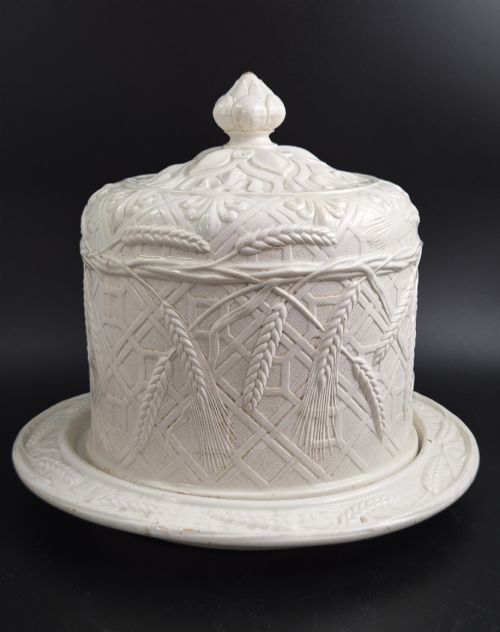
The versions most commonly met on this page date from the 1880s and the wider Victorian era, featuring substantial earthenware or ironstone bodies. Forms range from simple white ironstone serveware to elaborate majolica and jasperware designs.
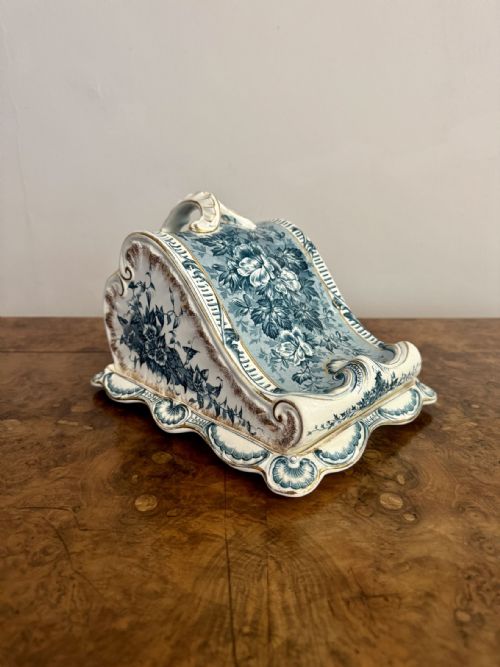
Makers utilised distinct decorative motifs including basket weave patterns, wheat and lattice details, and pagoda patterns in the Chinoiserie style. Serveware items were produced as lidded covers paired with flat bases to preserve large blocks of cheese.
Materials and Construction
Potters shaped these objects from earthenware, stoneware, and ironstone, applying specialised glaze finishes to the ceramic or clay bodies. Many examples employ coloured glazes characteristic of majolica or the fine matte surface of jasperware.
Moulding techniques allowed artisans to achieve intricate relief details such as basket weave textures, botanical motifs, and architectural pagoda patterns. Firing in kilns ensured the hardwearing nature of the ironstone and ceramic materials suited to daily dining use.
Victorian Pottery Dome Retail Price Guide 2026
Typical asking prices for victorian pottery dome among the pieces listed under this phrase on Sellingantiques today, from the lower quarter to the upper quarter. They describe what is for sale here now, not the wider market.
Even inkwells received the Victorian treatment, proving that nineteenth-century writers required their writing desks to match their cheese displays.
Quality Variations
Quality in a victorian pottery dome rests upon the crispness of the moulded relief work, whether in delicate jasperware or heavy ironstone. Pieces displaying sharp botanical details, such as wheat and lattice patterns, demonstrate superior execution by the potter.
The application and depth of the glaze separate standard production items from finer decorative pieces, particularly within majolica serveware where rich colour variation enhances the surface. The symmetry of the dome and how evenly it fits its matching stand further indicate the standard of manufacture.
James Dudson·Masons·Jarrold And Sons
The Victorian Pottery Dome Glossary
- Ironstone
- A heavy, durable type of earthenware patented in the nineteenth century that resisted chipping and suited practical serveware. It provided a reliable white body for domestic ceramics.
- Majolica
- A type of pottery decorated with colourful lead glazes fired over an opaque tin or lead glaze base. This technique produced vibrant surfaces popular on Victorian decorative dishes.
- Jasperware
- A fine-grained, unglazed stoneware developed with a contrasting coloured background and applied white relief ornaments. It is frequently associated with classical and botanical motifs.
- Drabware
- Pottery featuring a subdued, brownish-grey earthenware body that gained popularity for utilitarian and decorative kitchenware. It often relied on textured surface patterns rather than bright glazes.
- Cheese Dome
- A ceramic cover designed to fit over a matching plate or stand to keep cheese fresh on the dining table. These large covers often feature a handle on top for lifting.
Victorian Pottery Dome: Frequently Asked Questions
What is a victorian pottery dome used for?
These pieces were primarily designed as cheese dishes and cheese bells to store and present cheese on the dining table. The heavy cover kept the dairy fresh while the matching stand caught crumbs.
Alternative forms included glazed inkwells for desks. Each item fulfilled a practical household function during the nineteenth century.
How do I care for my pottery dome?
Wash ceramic and ironstone pieces gently by hand using warm water and mild soap to protect the glaze and any delicate surface decoration. Avoid harsh scourers that can scratch majolica or ironstone finishes.
Store the dome and its matching stand securely together to prevent chipping the rims. Keep the pieces away from sudden temperature extremes to protect the historic ceramic body.
How can I tell the period of a cheese dome?
Examine the material, weight, and decorative style of the ceramic body to determine its era. Victorian pieces often utilise heavy ironstone, majolica, or jasperware with characteristic nineteenth-century motifs.
Look for maker marks, impressed registry numbers, or specific stylistic cues like basket weave and pagoda patterns. These details help connect the item to periods such as the 1880s or the broader Victorian age.
Are all cheese domes sold with stands?
Many antique cheese dishes were manufactured as a matched set comprising both the domed cover and the base stand. The dome rests upon this flat plate during use.
Listings specify whether a particular piece includes its original matching stand. Both components share the same ceramic material and decorative scheme.