




Victorian Pottery Basin
A victorian pottery basin brings utilitarian ceramic craft into the home, offering functional washware and display pieces shaped by nineteenth-century domestic life.
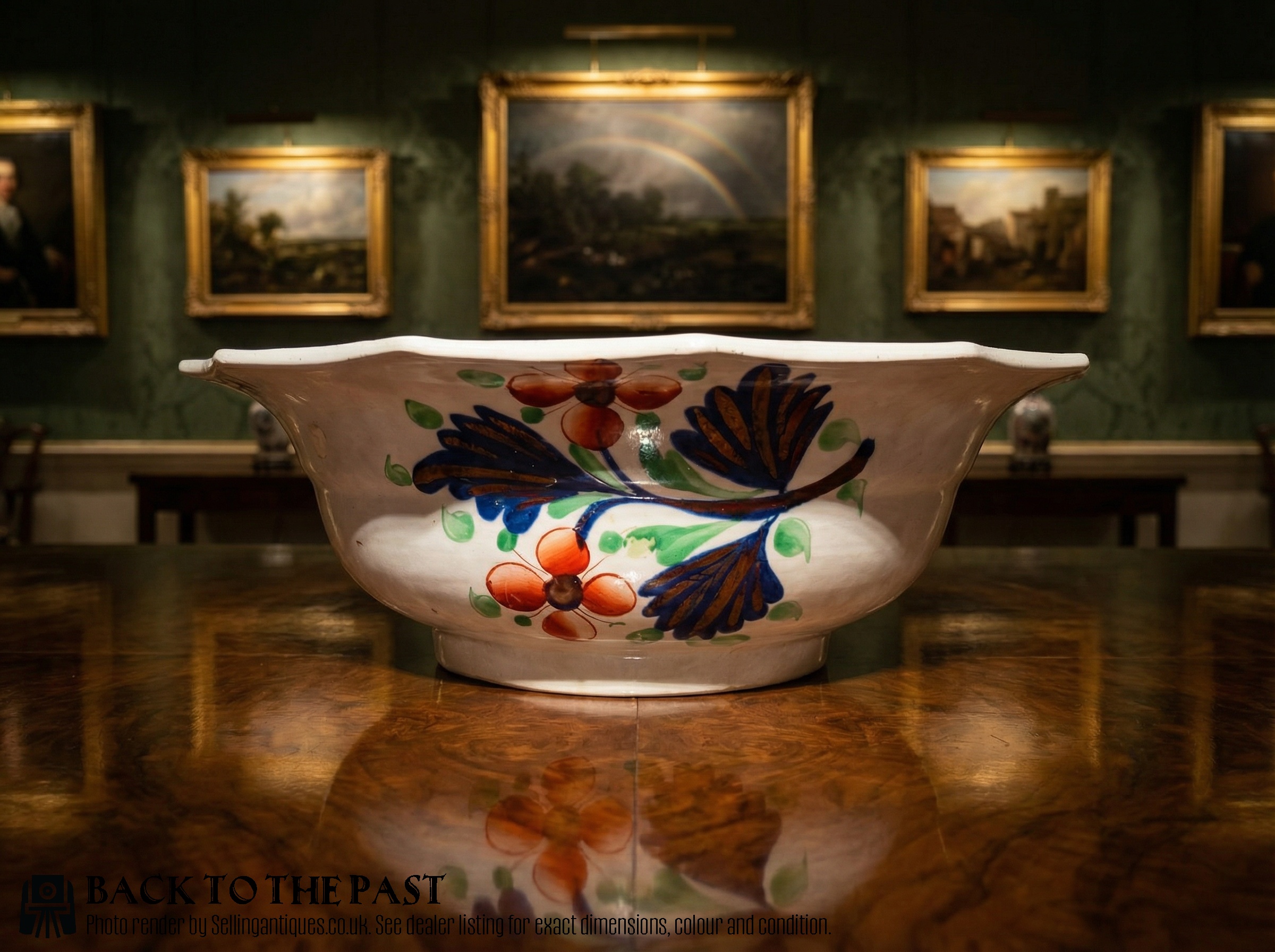
Victorian Pottery Basin
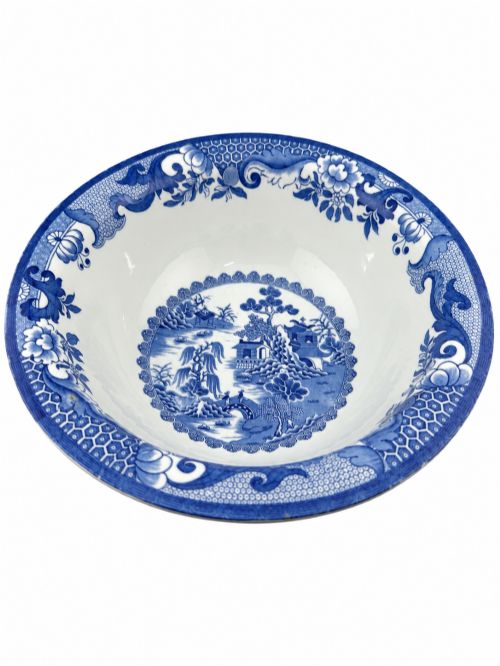
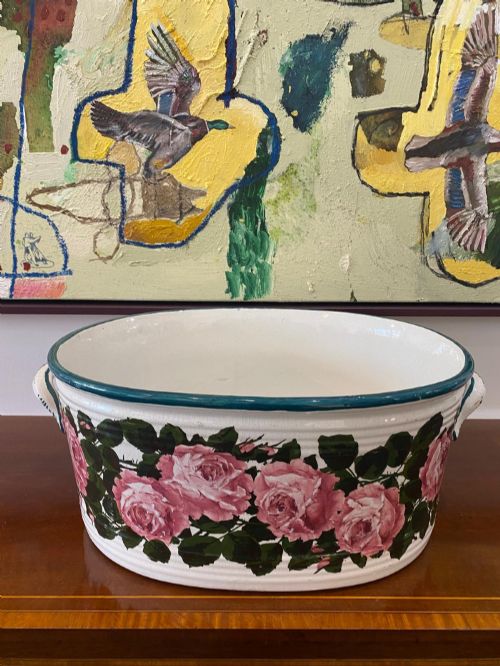
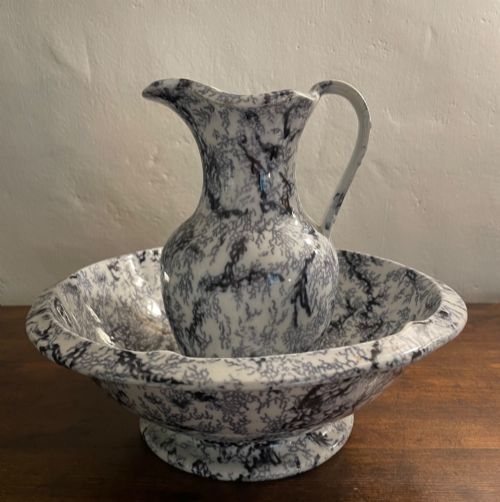
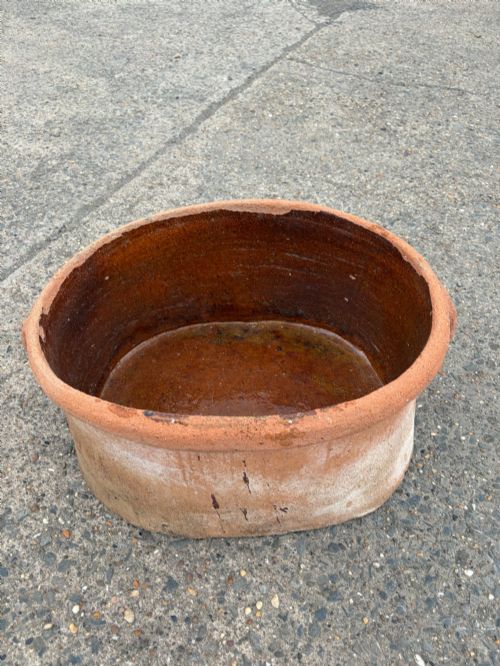
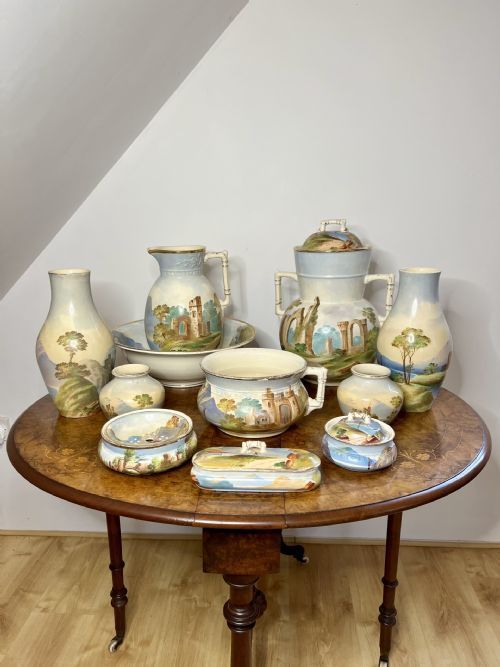
When you examine a victorian pottery basin, you encounter a range of heavy utilitarian wares designed for washing, dairy work, and display. The selection here spans large footbaths, toilet basins, dairy bowls, and complete wash sets originating from nineteenth-century production centres.
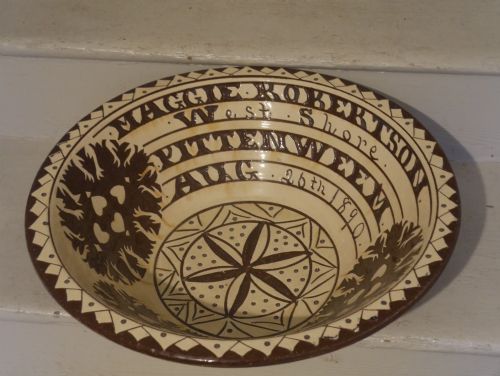
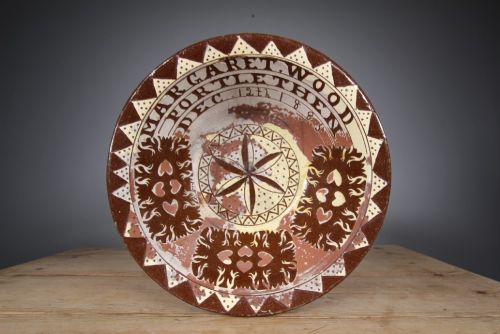
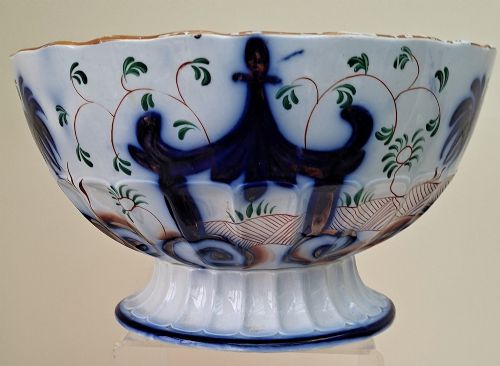
The pieces on this page lean heavily towards large earthenware and stoneware forms, including footbaths and dedicated wash set basins. You will also find regional slipware, spongeware, and patterned transferware such as Gaudy Welsh and flow blue.
Makers and regional potteries from Staffordshire, Scotland, and Devon feature prominently across the inventory. These items range from simple dairy vessels used in rural farmhouses to ornate botanical and gilt-edged toilet basins made for formal bedrooms.
What varies in quality
The standard of a victorian pottery basin depends heavily on the crispness of the transfer print and the control shown during the glazing process. Superior examples display even colour saturation, clean pattern alignment, and stable surfaces without excessive kiln distortion.
Material choice and finishing also separate everyday kitchenalia from high-end sanitary ware. Refined ceramic bodies, intricate hand-painted botanical details, and intact gilt accents distinguish top-tier bedroom sets from utilitarian dairy bowls.
Listings feature earthenware, stoneware, terracotta, and ceramic bodies decorated with glaze, enamel, and gold leaf.
Wemyss·Seaton Pottery·Mann And Co·Doulton Lambeth·Minton·Doulton Burslem·Spode·Masons
The Victorian Pottery Basin Glossary
- Earthenware
- A porous ceramic body fired at relatively low temperatures and typically covered with an opaque or transparent glaze to ensure it holds water.
- Stoneware
- A heavy, impermeable ceramic fired at high heat until vitrified, making it exceptionally durable for kitchen and dairy use.
- Transferware
- Pottery decorated by applying a printed design from an engraved copper plate onto tissue paper and then transferring the ink onto the ceramic surface before glazing.
- Slipware
- Pottery decorated with slip, which is a liquid clay mixture applied to the wet body through trailing or dipping to create contrasting surface patterns.
- Spongeware
- A technique where colour is applied to pottery using a sponge or stamped fabric, creating a mottled or speckled pattern across the ceramic body.
Victorian Pottery Basin: Frequently Asked Questions
What was a victorian pottery basin used for?
These basins served primarily for personal hygiene within bedroom wash sets, holding water for morning and evening washing routines alongside matching jugs.
Larger versions functioned as footbaths or served agricultural purposes in dairies, where wide ceramic bowls allowed cream to separate from milk.
How do I identify a nineteenth century basin?
Look for characteristic nineteenth-century ceramic bodies, weight, and decorative motifs such as flow blue transfer printing, spongeware speckling, or hand-painted botanical sprays.
Backstamps, impressed potters' marks, and regional styles like Gaudy Welsh or Staffordshire earthenware further point towards the period of manufacture.
Are these basins safe to use daily?
While durable, antique earthenware and soft glazes can be sensitive to modern detergents, thermal shock, and acidic foods.
It is best to treat these historical pieces as decorative objects or dry storage rather than subjecting them to heavy everyday use.
How do I clean an antique ceramic basin?
Wash the surface gently with warm water and a mild, non-abrasive soap using a soft cloth.
Avoid harsh scouring pads and chemical cleaners, which can damage old glazes, fade hand-painted details, or wear away gold leaf accents.