


Victorian Porcelain Water Jug
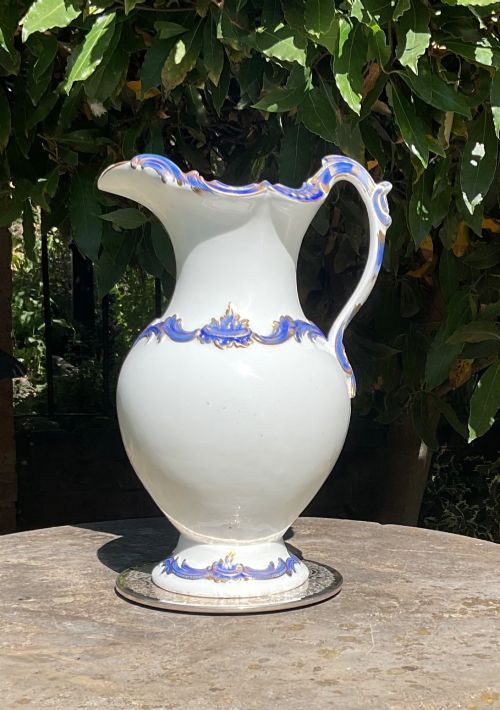
These victorian porcelain water jug examples bring period weight and hand-painted detail to any washstand, taking forms from simple water vessels to elaborate decorative ewers.
Victorian Porcelain Water Jug
A victorian porcelain water jug serves as both a practical chamber vessel and a decorative statement, emerging from periods spanning the nineteenth century through the early twentieth century. Buyers seeking this phrase encounter standalone pitchers alongside larger components of washstand sets, jug and basin sets, and wash sets.
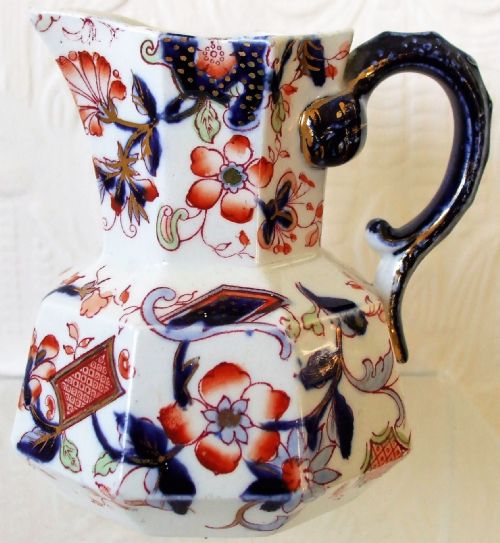
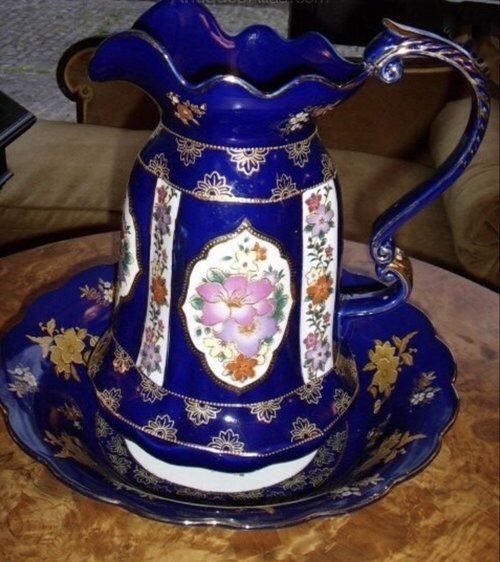
The surviving forms range from large porcelain water jugs and decorative ewers to matching jug and bowl sets with cobalt blue glaze or flower designs. Many pieces reflect Victorian, Edwardian, and Aesthetic Movement design sensibilities, including specific expressions like Victorian Rococo Revival and Victorian Chinoiserie.
How they were made
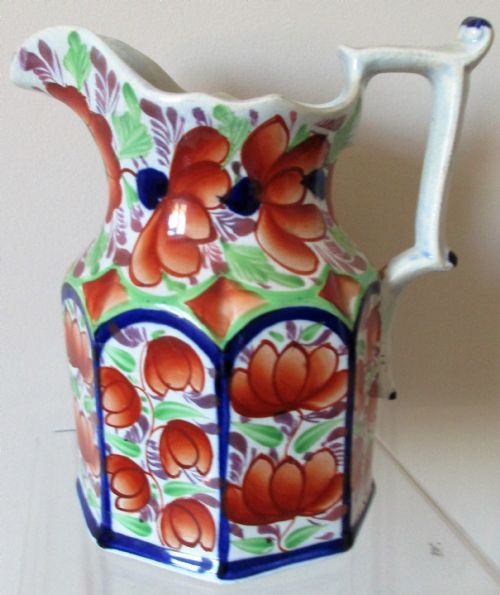
Potters and ceramicists shaped these vessels using porcelain, earthenware, and ceramic bodies, often finishing surfaces with rich glaze, enamel, and hand-decorated motifs. Artisans applied gold leaf, gilding, and copper lustre to accentuate moulded details, handles, and rims.
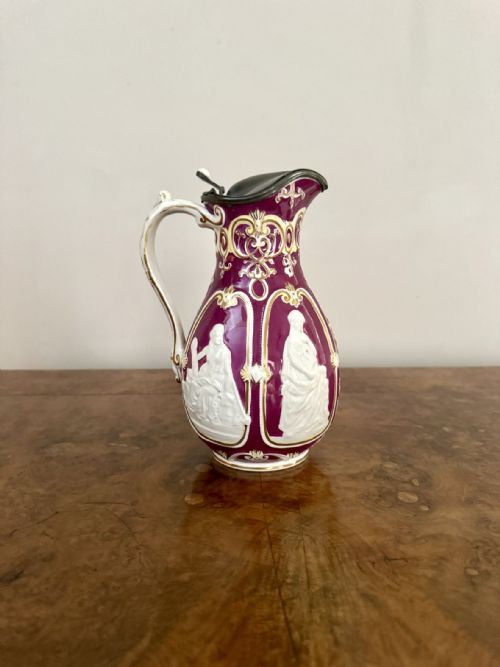
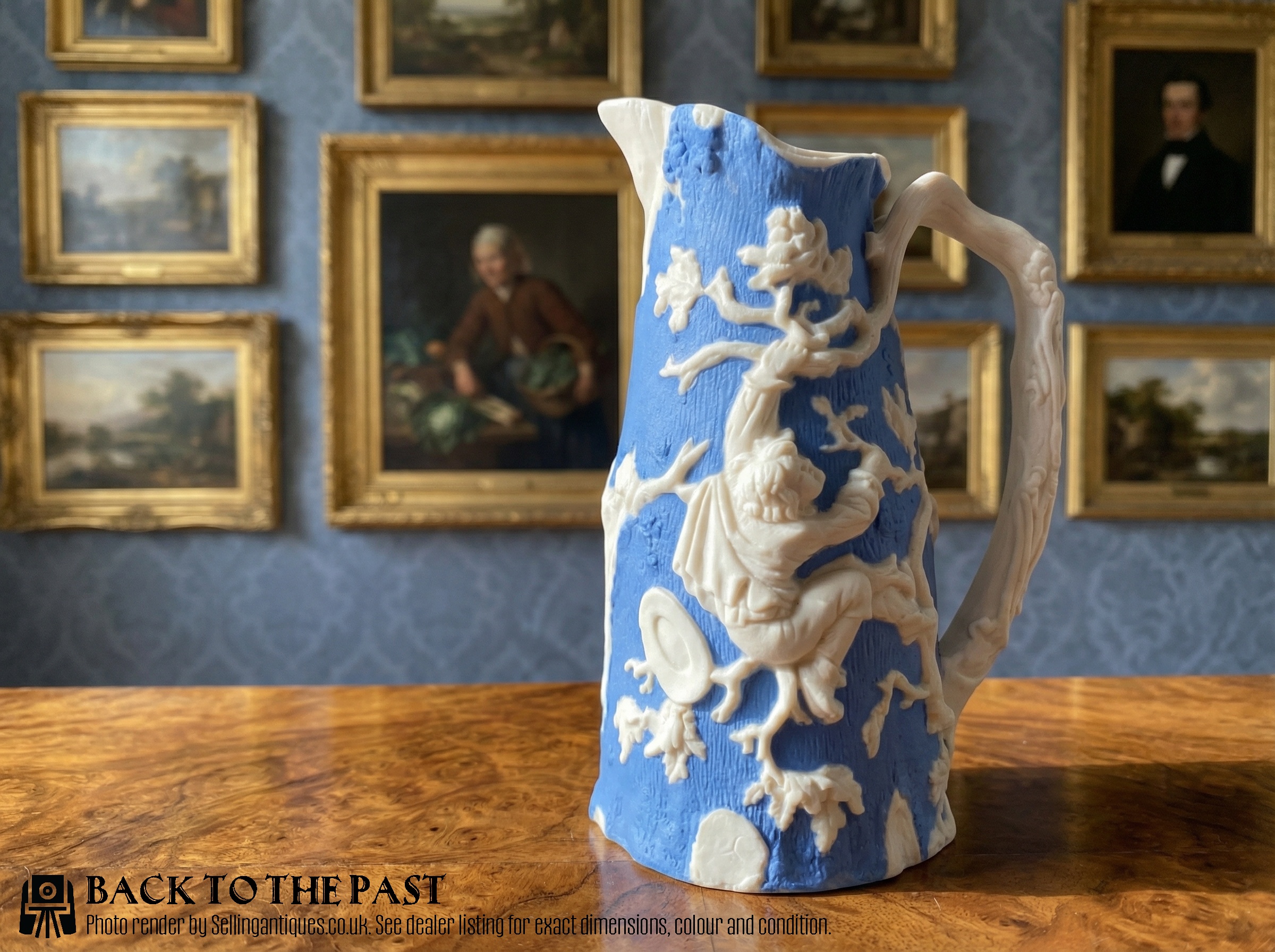
Specialised manufacturing techniques produced distinct regional varieties, such as Parian ware bisque porcelain and transfer-printed or hand-painted botanical and avian scenes. Pewter lids occasionally accompanied these ceramic bodies to secure the contents during daily use.
Current listings demonstrate a prevalence of nineteenth-century porcelain alongside earthenware, featuring decorative styles from Victorian Rococo Revival to the Aesthetic Movement.
What varies in quality
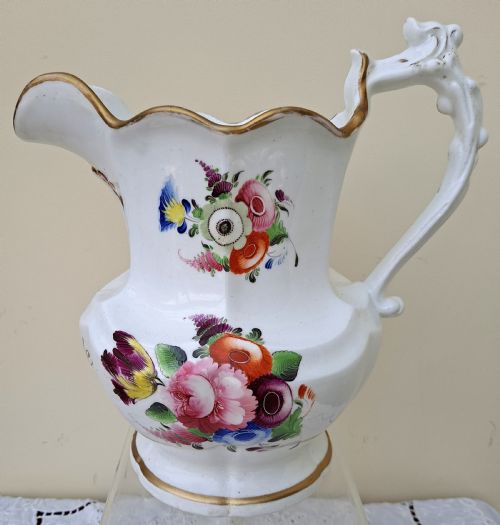
The distinction between standard domestic ware and finer studio output rests in the crispness of the moulding and the precision of the hand decoration. Pieces displaying finely rendered motifs, such as hand-painted swans or intricate flower designs combined with gold leaf accents, sit at the upper end of the scale.
The weight and refinement of the porcelain body, alongside the depth and brilliance of the glaze, dictate the overall presence of the piece. Early nineteenth-century examples and marked factory productions demonstrate greater material ambition than standard utilitarian vessels.
Keeling And Co·John Baley·Royal Worcester·Doulton Burslem·Coalport
The Victorian Porcelain Water Jug Glossary
- Porcelain
- A white, vitrified ceramic material that is hard, impermeable, and resonant when struck. It forms the primary body for finer nineteenth-century water jugs and ewers.
- Ewer
- A large jug or pitcher with a wide spout and a shaped handle, often used as a decorative ornament rather than for carrying water. These vessels frequently feature elaborate Victorian revival styling.
- Gilding
- The application of gold leaf or powdered gold suspended in a medium to ceramic surfaces. It highlights handles, rims, and painted panels on better quality pieces.
- Parian ware
- A type of fine biscuit porcelain developed in the nineteenth century to imitate white marble. It appears in drinks jugs and decorative figures.
- Copper lustre
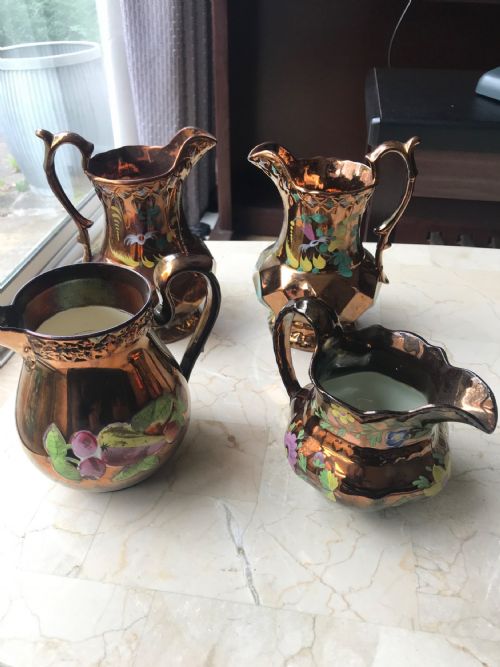
- A metallic glaze technique that produces a coppery, iridescent sheen over a ceramic or earthenware base. It is commonly found on nineteenth-century Staffordshire jugs.
- Washstand set
- A matching collection of ceramic vessels, typically comprising a large water jug and a deep basin. These sets formed an essential part of Victorian bedroom furnishings.
Victorian Porcelain Water Jug: Frequently Asked Questions
Were these jugs used for drinking water?
These vessels served primarily as washstand accessories, holding water for morning ablutions in bedrooms before plumbing became standard. They paired with large basins to complete the washing set.
Larger standalone examples occasionally functioned at dining tables or sideboards for service, though the inclusion of washstand sets points directly to personal hygiene use.
How do I identify a Victorian ewer?
Victorian ewers typically feature a bulbous body, an exaggerated scrolled handle, and a distinctively shaped spout designed for pouring. Their ornamentation often draws upon Rococo Revival or Aesthetic Movement motifs.
Makers frequently employed hand-painted florals, birds, or cobalt blue glazes on these decorative forms, separating them from simpler utilitarian pitchers.
What is Parian ware?
Parian ware is a fine biscuit porcelain introduced in the nineteenth century to resemble carved white marble. It possesses a matt, smooth finish that highlights moulded relief decoration without needing glaze.
This material was frequently chosen for drinks jugs and ornamental ewers where sculptural form took precedence over utility.
How should I display a jug and basin set?
Displaying a complete jug and basin set requires a sturdy surface with sufficient depth, such as a antique washstand, sideboard, or low table. Placing the jug securely inside the basin protects both pieces and creates the correct historical arrangement.
Natural light helps reveal the hand-decorated flower designs, copper lustre, or gold leaf accents across the ceramic surface.