


Victorian Porcelain Table Clock
A victorian porcelain table clock brings warmth and decorative brilliance to a mantelpiece, combining intricate ceramic artistry with precision timekeeping.
Victorian Porcelain Table Clock
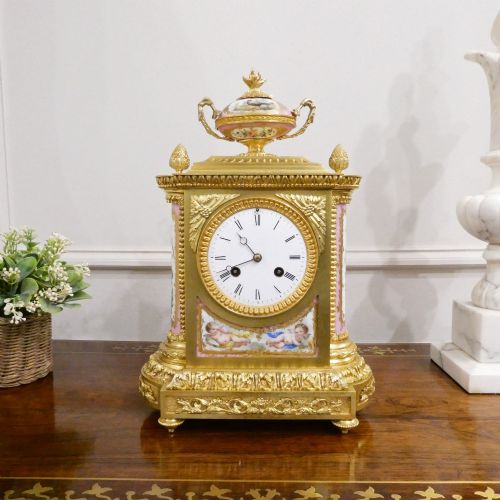
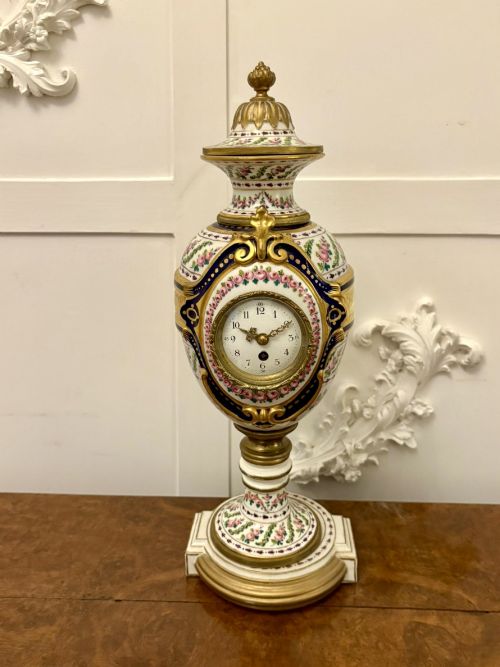
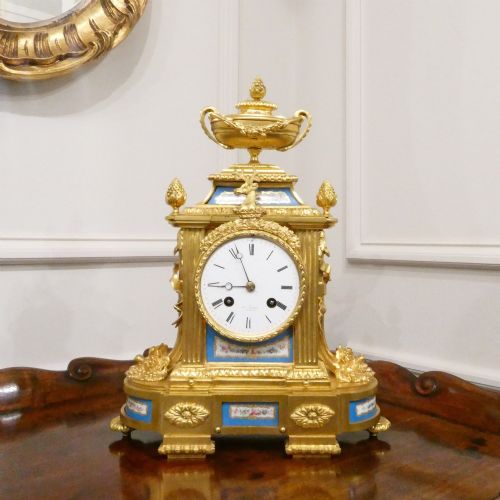
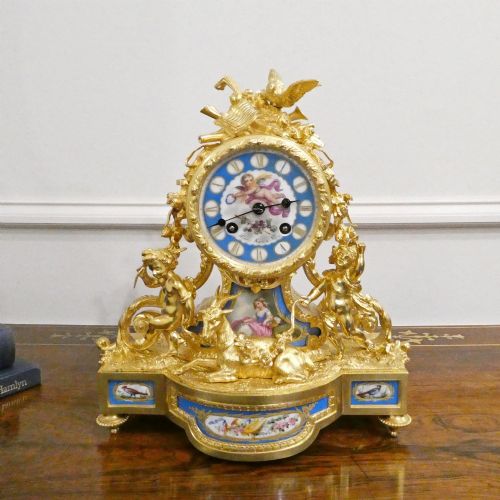
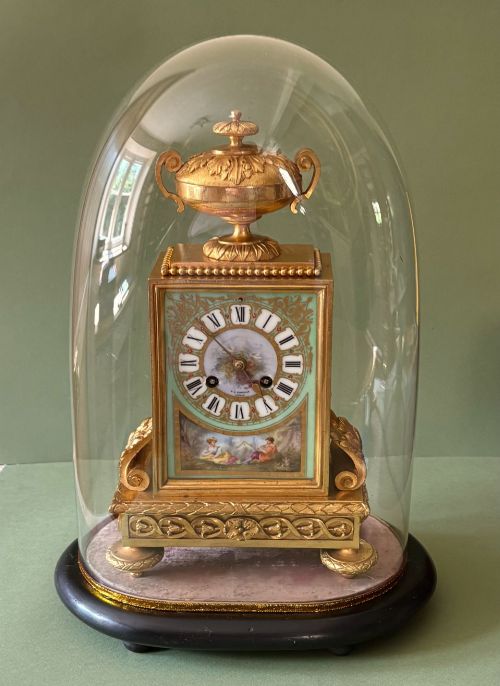
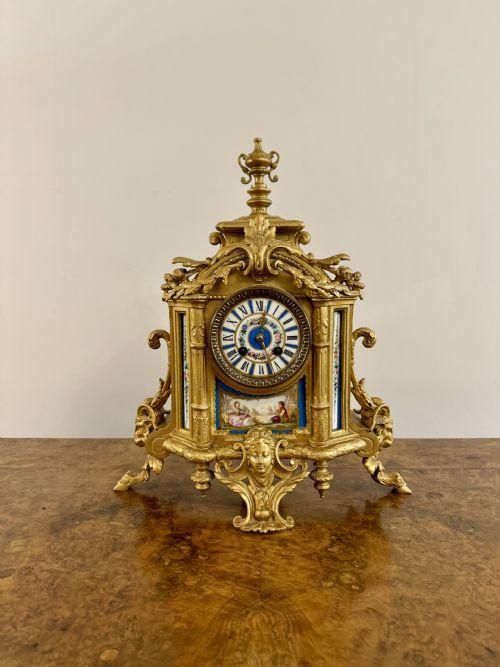
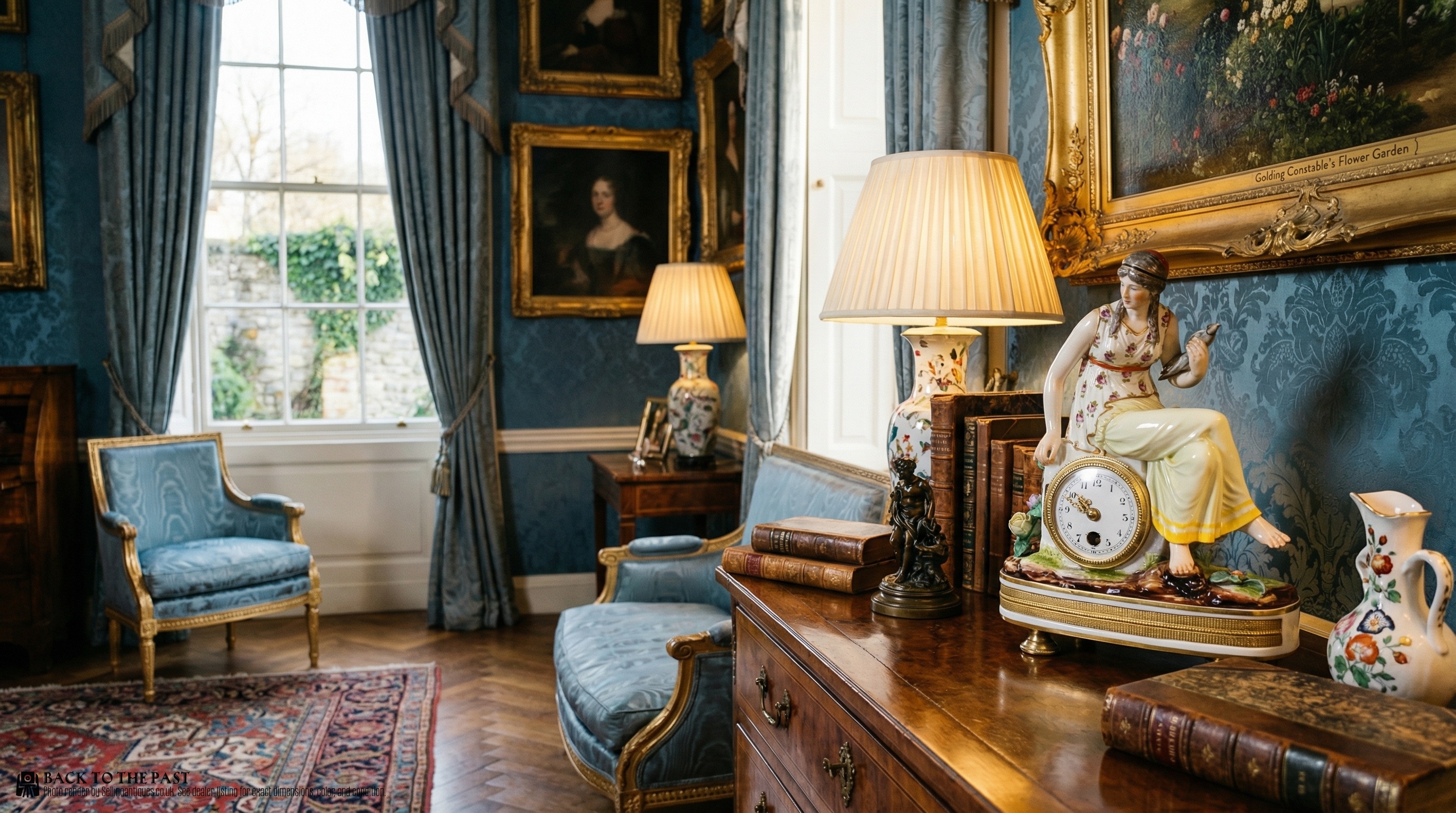
A victorian porcelain table clock frequently emerges as a French mantel clock or clock garniture decorated with hand-painted ceramic panels and gilt metal mounts. These pieces date principally from the mid to late nineteenth century, reflecting periods such as the Second Empire and Napoleon III.
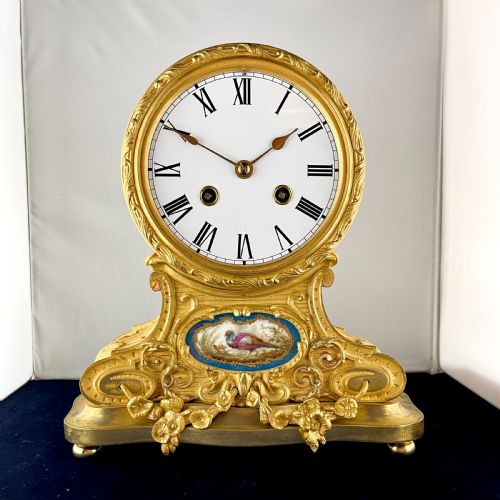
Makers and workshops from this era combine porcelain with ormolu, gilt bronze, and enamel dials. Forms range from urn-shaped mantel clocks and drumhead designs to miniature skeleton clocks and carriage clocks housed beneath glass domes.
Materials and Construction
Craftsmen shape these timepieces using cast gilt bronze or ormolu frames paired with delicate porcelain plaques, often executed in the Sèvres or Meissen style. Enamel is frequently utilised for the clock face dials, featuring delicate numeric markers and fine hand-painted details.
The heavy metal housings provide structural support for intricate brass mechanical movements, which drive bell-striking functions and eight-day gear trains. Ceramic components are fixed securely into the metal chassis using specialised pins and bezels.
Evaluating Quality and Execution
The refinement of the hand-painted porcelain panels sets exceptional examples apart from simpler production. Superior objects display crisp brushwork on figurative or floral scenes, avoiding flat transfers or muddy coloration.
Casting depth and chisel work on the gilt bronze or ormolu mounts indicate the skill of the foundry. High-grade pieces exhibit sharply defined ornamentation on the bronze cases and bear the signatures of known clockmakers or bronze-workers.
Jean Baptiste Delettrez·Henry Marc·PH Mourey·Drocourt·Le Roy Et Fils·Japy Freres·Miroy Freres·Palais Royal
The Victorian Porcelain Table Clock Glossary
- Ormolu
- A technique of applying finely ground high-carat gold to an bronze object using a mercury amalgamation process, yielding a rich golden finish. This surface treatment protects the bronze from tarnish while providing a bright decorative sheen.
- Garniture
- A set of matching decorative objects, typically comprising a central clock flanked by matching vases or candelabra. These matched ensembles sit together on a mantelpiece to create a balanced symmetrical display.
- Drumhead clock
- A style of timepiece featuring a circular clock case mounted atop a plinth or base, resembling the shape of a military drum. The compact dial housing sits centrally within an ornate metal frame.
- Skeleton clock
- A timepiece designed with an open framework that exposes the going train, escapement, and gear wheels. This construction allows the observer to view the inner mechanical movement from multiple angles.
- Carriage clock
- A small, portable spring-driven timepiece equipped with a carrying handle and glass panels on all sides. Originally designed for travel by horse-drawn carriage, these clocks feature robust movements.
Victorian Porcelain Table Clock: Frequently Asked Questions
How do I wind a Victorian porcelain clock?
Insert the appropriate winding key into the designated winding arbours on the enamel dial and turn gently in the correct direction until resistance is felt.
Avoid overwinding the mainspring, as excessive tension can damage the internal brass gear train.
What is a clock garniture set?
A clock garniture consists of a central mantel clock accompanied by two matching side pieces, such as decorative urns or candelabra.
These matching items are designed to be displayed together on a mantelpiece or sideboard for visual balance.
Where were these clocks made?
The majority of these nineteenth-century clocks originate from French workshops in Paris, utilising regional porcelain painting traditions and bronze casting.
Some examples feature German porcelain from Meissen or specialised ceramics from Vienna and English makers.