


Victorian Porcelain Lidded Urns
These victorian porcelain lidded urns combine decorative presence with practical containment, offering finely painted surfaces that anchor a grand interior.

Victorian Porcelain Lidded Urns
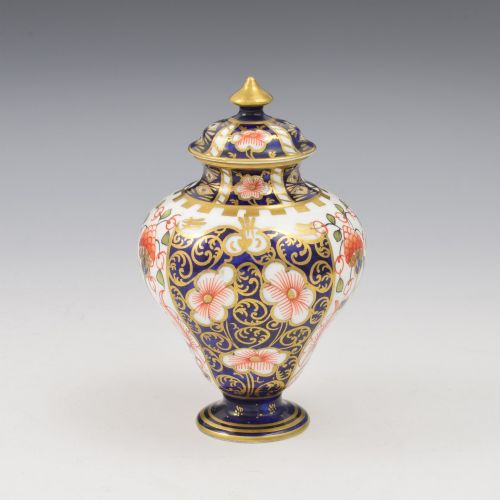
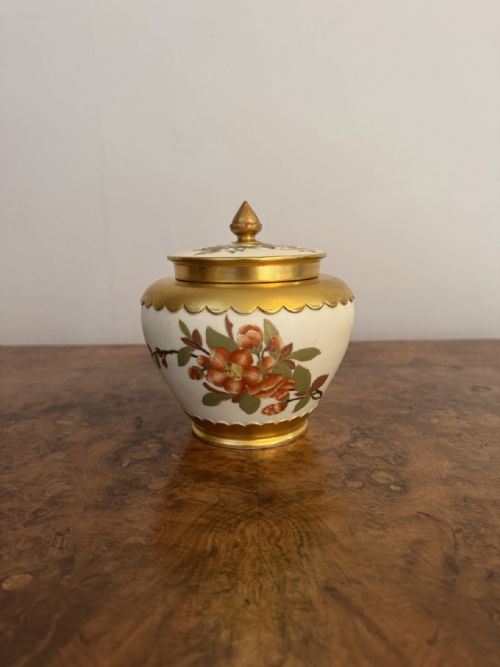
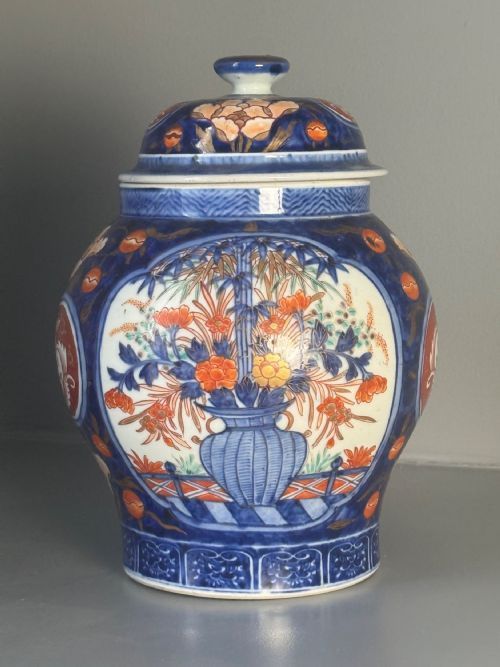
Victorian porcelain lidded urns encompass large decorative vessels, lidded jars, and potpourri pots produced primarily across the nineteenth century and into the Edwardian period. Buyers encounter forms ranging from classical pedestal urns to blush ivory rose jars and Imari pattern containers.
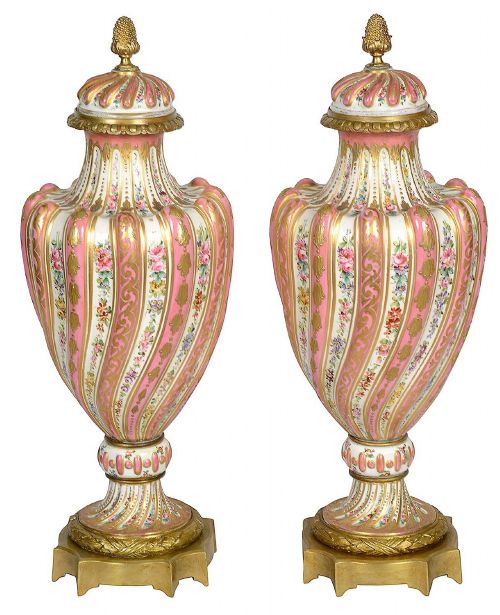
The selection reflects both British factories such as Royal Worcester and continental European traditions, including Dresden, Sevres style, and Vienna production. These pieces frequently appear as pairs or individual garniture elements designed for display on mantelpieces or centre tables.
How They Were Made
Potters shaped ceramic bodies from fine porcelain and fired them before applying complex glaze layers. Artisans then executed detailed hand-painted scenes, incorporating floral motifs, Watteau figures, and intricate bird studies directly onto the ceramic surface.
Makers finished many vessels with extensive gilding, gold leaf highlights, and enamel detailing. Gilt bronze mounts occasionally completed the composition, securing lids and handles to the porcelain body.
The documented styles span Victorian, Rococo Revival, Neoclassical, and Japanese Meiji Period aesthetics.
What Varies in Quality
The fineness of the hand-painted brushwork distinguishes standard production from superior pieces, particularly in figural scenes and delicate floral panels. Crisp execution in the gilding and gold leaf application further separates high-grade examples.
Proportion and scale dictate visual impact, with larger pedestal urns and balanced pairs commanding greater attention. The precision of the porcelain moulding and the crispness of relief details also define the tier of the piece.
Royal Crown Derby·Royal Worcester·Helena Wolfsohn·Hadley and Sons·Sitzendorf
The Victorian Porcelain Lidded Urns Glossary
- Potpourri jar
- A lidded ceramic vessel perforated to diffuse fragrance from dried flower petals housed inside. These pieces often feature pierced crown covers.
- Garniture
- A set of three or more matching vases or urns designed to be displayed together on a mantelpiece. They share decorative themes and colour palettes.
- Blush ivory
- A soft cream-coloured ceramic ground developed by Royal Worcester, typically decorated with pastel floral designs and gilt highlights. It creates a matte, subtle surface.
- Imari
- A decorative style inspired by Japanese export wares, characterised by underglaze blue, iron red, and abundant gilding. British and continental factories frequently adopted this palette.
- Pedestal vase
- A vessel elevated on a distinct foot and stem, giving the body height and architectural presence. These forms often incorporate removable lids with decorative finials.
Victorian Porcelain Lidded Urns: Frequently Asked Questions
What is the difference between an urn and a vase?
An urn typically sits upon a pedestal or footed base and often includes handles alongside a fitted lid. Vases span a broader range of open and closed profiles without necessarily requiring a formal base.
In nineteenth-century production, the terms frequently overlap, particularly when describing lidded decorative vessels intended for display rather than holding cut flowers.
How were lidded urns used in nineteenth-century homes?
These vessels served primarily as architectural ornaments placed upon mantelpieces, sideboards, and large centre tables. Pierced versions held scented potpourri to freshen the air in formal reception rooms.
Larger pairs and garnitures anchored symmetrical interior schemes, demonstrating the household's taste for continental and domestic porcelain art.
Are these urns suitable for everyday use?
These decorative objects function best as static display pieces rather than functional containers for daily handling. The delicate hand-painted enamel and gold leaf surfaces require gentle care to prevent wear.
Owners should keep them away from direct sunlight and clean them only with a dry, soft cloth.