


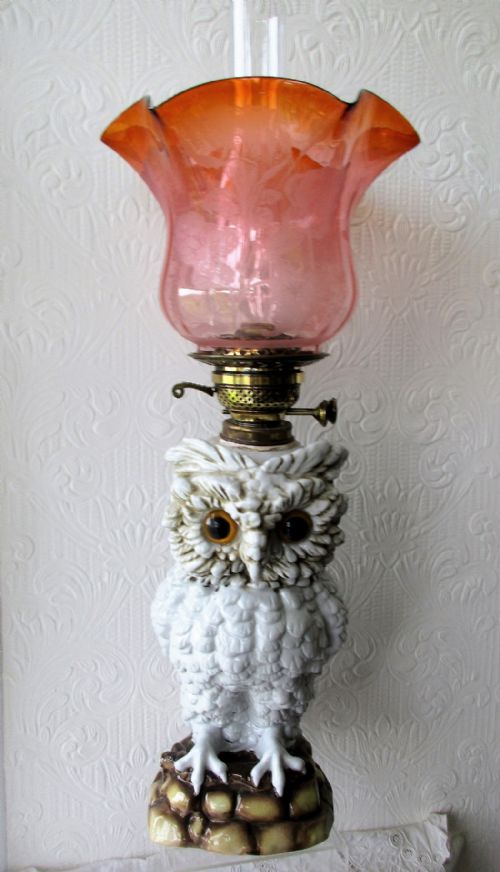
Victorian Porcelain Kerosene Lamp
These Victorian porcelain kerosene lamps combine decorative ceramics and functional brass with remarkable craftsmanship, bringing period character to any interior.
Victorian Porcelain Kerosene Lamp
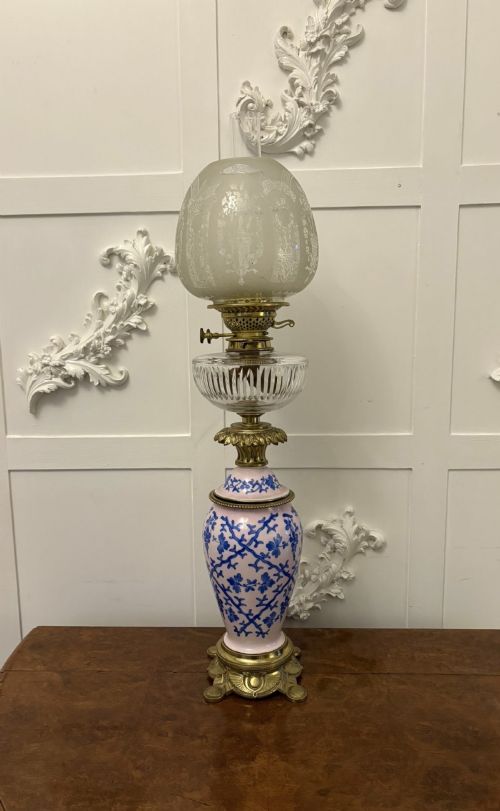
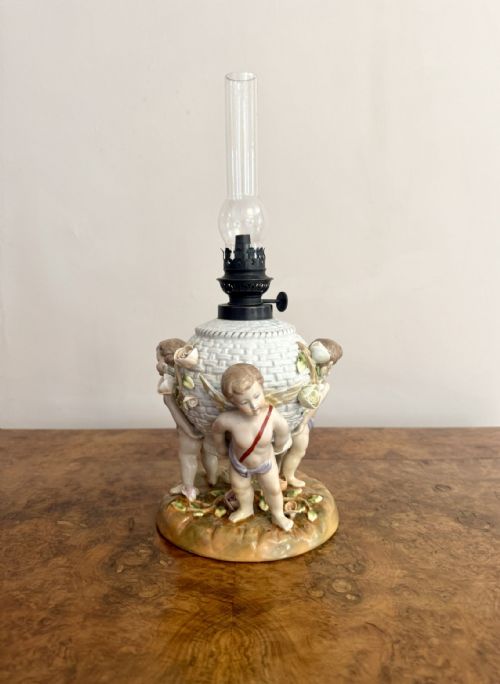
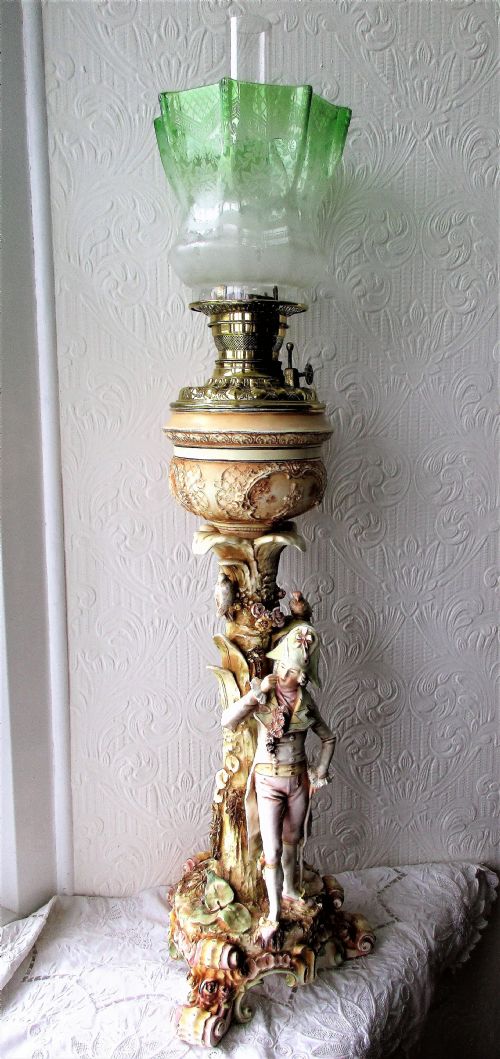
A victorian porcelain kerosene lamp is an oil lamp produced during the nineteenth century, combining a ceramic font or figural body with brass and glass components. These table lights survive in forms ranging from straightforward white or decorated porcelain reservoirs to elaborate figural compositions.
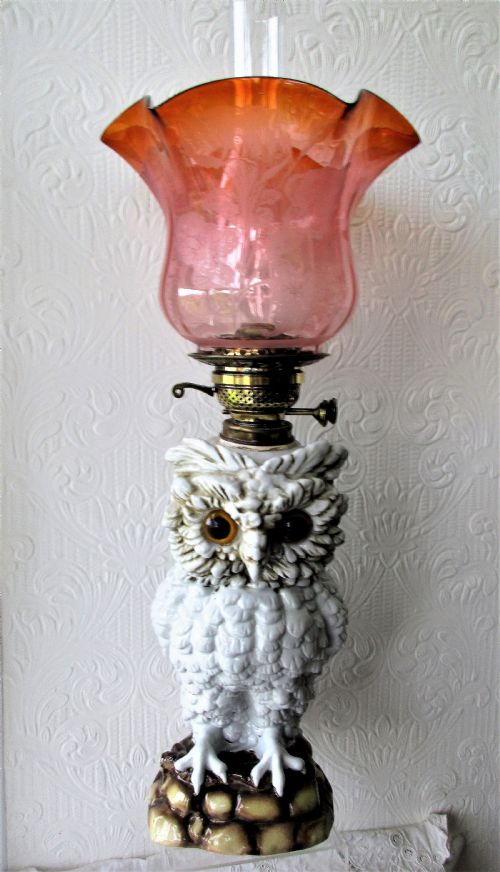
You are most likely to encounter pieces dating from eighteen-eighty onwards, including German factory outputs such as Sitzendorf. Forms extend from simple table lamps with shades to figural subjects like owls or pairs of lamps mounted in gilt brass.
The aesthetic bridges domestic utility and Victorian parlour display, often incorporating revival influences like French Rococo Revival or Anglo-American design. These objects served as essential illumination before electric lighting became widespread, which explains their robust construction.
Materials and construction
Makers shaped these lamps using ceramic and porcelain bodies, frequently paired with cast brass mounts and burners. Gilt brass provides structural support and decorative contrast to the white or painted porcelain surfaces.
Moulding and hand-painting define the porcelain elements, particularly on figural subjects and decorated table lights. Glass shades complete many of the compositions, requiring careful fitting above the metal burner mechanisms.
The listings show nineteenth-century periods including eighteen-eighty and eighteen-ninety, featuring porcelain, brass, and opaline glass materials.
Judging quality and execution
Quality rests upon the crispness of the porcelain modelling and the detail found in figural works, especially on pieces depicting animals or human figures. Superior examples display finer hand-painting and heavier, more substantial gilt brass mounts.
The integration of materials determines the overall visual balance of the lamp. Finer pieces maintain proportion between the porcelain body, the metal fittings, and any accompanying shade.
Sitzendorf
The Victorian Porcelain Kerosene Lamp Glossary
- Porcelain
- A fine ceramic material fired at high temperatures to produce a hard, white, non-porous body. It forms the primary decorative element for these lamps.
- Font
- The oil reservoir of the lamp, which sits atop the base and holds the fuel supply. In these pieces, the font is frequently executed in porcelain.
- Burner
- The metal mechanism mounted to the top of the font that regulates the wick and flame. These are commonly fashioned from brass.
- Rococo Revival
- A nineteenth-century decorative style marked by ornate, asymmetrical scrolls and naturalistic motifs. This style heavily influences many Victorian lighting designs.
Victorian Porcelain Kerosene Lamp: Frequently Asked Questions
What is a Victorian porcelain kerosene lamp?
It is a nineteenth-century lighting device featuring a porcelain body or font combined with brass and glass. These pieces burned oil for illumination before the widespread adoption of electricity.
Today they function primarily as decorative table lights and period interior accents.
How do I identify a Sitzendorf lamp?
Sitzendorf lamps typically feature detailed porcelain modelling, such as figural animal designs including owls. They originate from the German factory and date towards the late nineteenth century.
Examine the modelling quality and porcelain finish to spot these factory pieces.
Were these lamps used with shades?
Many table oil lamps included glass or fabric shades to diffuse the light from the burner. These shades sat above the brass burner mechanism on the upper portion of the lamp.
Surviving examples sometimes retain their original or period-appropriate shade configurations.
What metals were used with the porcelain?
Makers predominantly utilised brass and gilt brass for the structural mounts, burners, and bases. These metals provided the necessary rigidity and weight to support the porcelain reservoirs.
The combination of white porcelain and warm brass is characteristic of the period.