


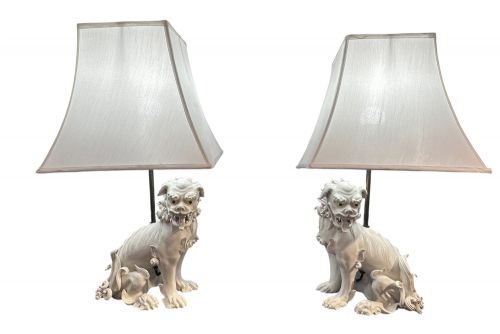


White Glazed Ceramic Lamps
White glazed ceramic lamps bring sculptural presence and soft light to a room, spanning centuries of global pottery traditions.
White Glazed Ceramic Lamps
White glazed ceramic lamps take many forms, appearing most often as converted vases from Chinese export kilns, Dutch workshops, and Italian potteries alongside figural Victorian oil lamps.
The selection ranges from robust eighteenth-century Delftware and Majolica vessels to nineteenth-century crackleware vases and twentieth-century porcelain animal figures mounted for electricity.
These pieces combine utilitarian lighting with decorative ceramics, drawing on styles from Chinoiserie and Renaissance Revival to Victorian design.
How they were made
Potters shaped these bodies in earthenware and porcelain, applying white, tin-glazed, or celadon glazes before firing the ceramic vessels.
Many of these lamps began life as vases or oil lamps before later conversion into table lamps, incorporating brass fittings alongside fabric elements.
Listings feature items spanning the eighteenth, nineteenth, and early twentieth centuries, incorporating porcelain, earthenware, and brass.
What varies in quality
Quality rests on the crispness of the ceramic moulding, the depth of the glaze, and the artistic merit of hand-painted or crackleware surface details.
The success of the conversion matters greatly, separating lamps that respect the original vessel from those where the mounting compromises the ceramic form.
The White Glazed Ceramic Lamps Glossary
- Delftware
- Tin-glazed earthenware originating from the Netherlands, known for its distinct white surface and often associated with Dutch and English production.
- Majolica
- Heavy earthenware covered with an opaque tin glaze, frequently decorated with colourful or white pigments in Italian and European traditions.
- Crackleware
- Pottery featuring a network of fine cracks in the glaze layer, deliberately produced during the firing process for decorative texture.
- Blanc de Chine
- White porcelain made in Dehua, China, prized for its smooth, ivory-toned glaze and frequently modelled into figures and temple lions.
- Celadon
- Pale green or grey-green glazed ceramics from Asian traditions, sometimes grouped with white glazed pieces in broader decorative schemes.
White Glazed Ceramic Lamps: Frequently Asked Questions
Are these lamps converted from old vases?
Many examples began as decorative vases, ginger jars, or oil lamps before electricians fitted them for modern table use.
This adaptation process preserves historical ceramic bodies while allowing them to function safely in contemporary interiors.
How do I date a ceramic lamp?
Dating relies on examining the characteristics of the ceramic body, the formulation of the glaze, and the style of decoration.
Supporting clues often come from the mounting hardware, wiring methods, and any visible potter marks beneath the glaze.
Where do white glazed ceramic lamps work best?
These pieces suit side tables, hallways, and living spaces where their sculptural ceramic forms contribute daylight presence as well as evening illumination.
Their neutral white and off-white tones allow them to anchor traditional or eclectic room schemes without overwhelming surrounding furniture.