


Victorian Porcelain Dog Figures
Victorian porcelain dog figures bring the character of nineteenth-century parlours into a room with charm and directness.
Victorian Porcelain Dog Figures
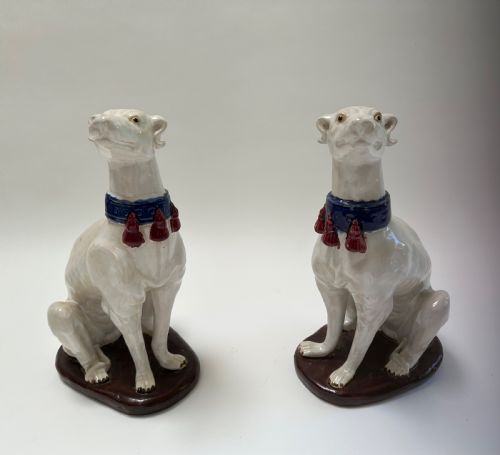
Victorian porcelain dog figures encompass earthenware, ceramic, and parian creations that typically depict spaniels, poodles, and greyhounds. Buyers searching for victorian porcelain dog figures encounter decorative figurines and utility pieces such as inkwells, quill holders, and table lamps.
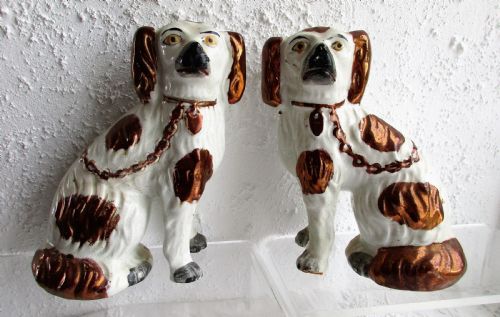
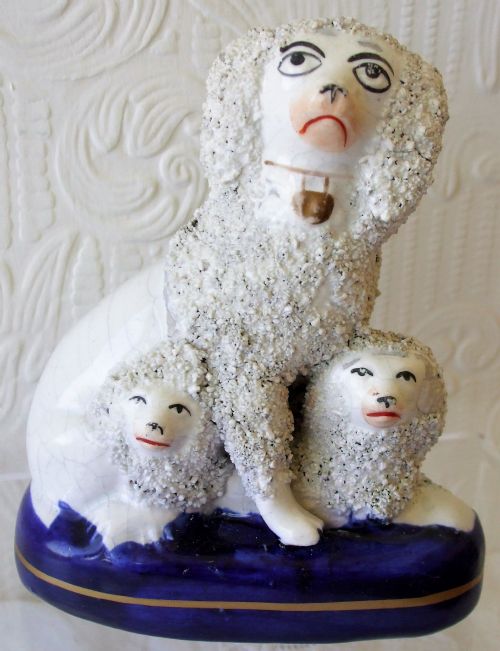
The most common examples on this page are pairs of Staffordshire spaniels and poodles, alongside greyhounds and hunting dogs. These ornaments range from miniature continental porcelain specimens to large sculptural figures produced during the nineteenth century.
Materials and construction
Parian ware required specialised biscuit porcelain casting to achieve a matte, marble-like texture suitable for sculptural figure groups. Firing temperatures and hand-painted details determined the final lustre and durability of the ceramic surface.
Assessing quality and craftsmanship
The presence of secondary elements like baskets, quills, inkwells, or pups adds complexity to the composition and indicates a higher tier of production. Subtle variations in glaze consistency and gilding preservation also distinguish finer pieces from simpler wares.
Thomas Parr·John Durham·Royal Dux Bohemia·James Dudson
The Victorian Porcelain Dog Figures Glossary
- Staffordshire pottery
- Ceramic wares produced in the pottery towns of Staffordshire, England, famous for utilitarian figures and mantel dogs.
- Parian ware
- A fine-grained, unglazed porcelain developed in the nineteenth century that resembles white marble and was used for portrait busts and animal sculptures.
- Quill holder
- A ceramic or porcelain desk accessory featuring a hollow or ring designed to hold writing feathers.
- Enamel
- Opaque vitreous colours fused to the ceramic surface during a secondary low-temperature firing.
- Lead glaze
- A glossy coating containing lead oxide applied to earthenware to seal the porous body and enrich surface colours.
Victorian Porcelain Dog Figures: Frequently Asked Questions
What are Staffordshire dogs?
Staffordshire dogs are ceramic figures made in English potteries during the nineteenth century, most notably representing spaniels placed symmetrically on parlour mantelpieces.
Potters painted these companion animals with enamel details, sometimes adding copper lustre or gilt highlights to collars and chains.
How were dog figures used?
These ceramic and porcelain dogs served primarily as decorative ornaments on mantelpieces, sideboards, and drawing-room tables.
Certain models doubled as functional items, incorporating inkwells, quill holders, or table lamps into the animal sculpture.
What is Parian ware?
Parian ware is a type of biscuit porcelain that mimics carved white marble, popular in the Victorian era for detailed sculptures and figure groups.
Manufacturers used it to create matte-finished dogs and mythological scenes that emulated classical statuary.
Where were these figures made?
The majority originate from English potteries in the Staffordshire region, though continental European factories also produced porcelain dogs.
German and Bohemian workshops contributed specialised porcelain lamps and figurative groups during the later nineteenth and early twentieth centuries.