
Victorian Pocket Match Case
A victorian pocket match case is a small container designed to keep matches dry and ready for use.
Victorian Pocket Match Case
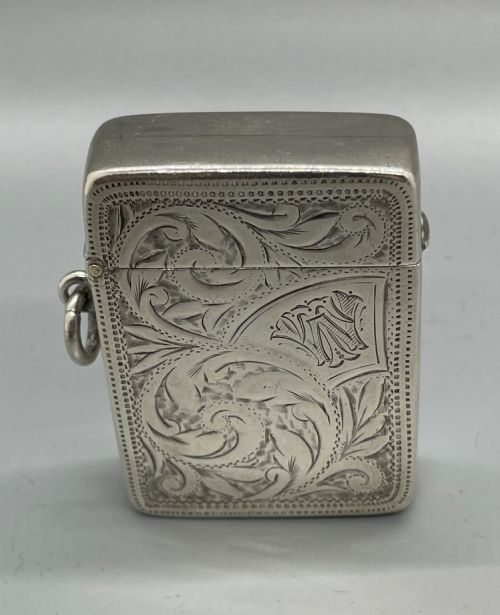
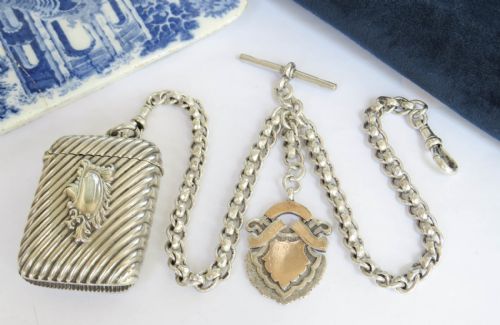
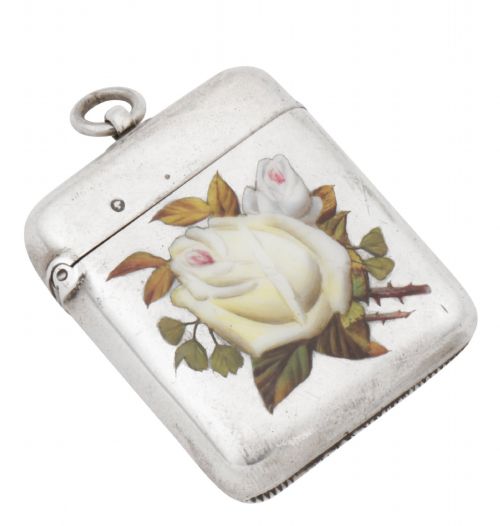
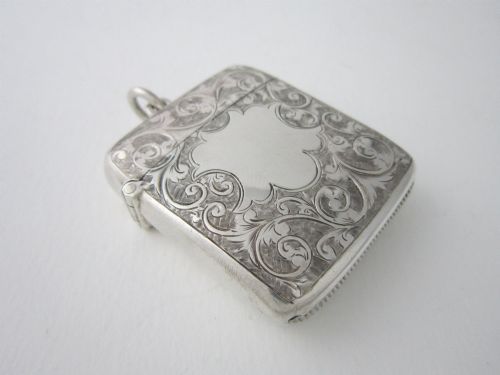
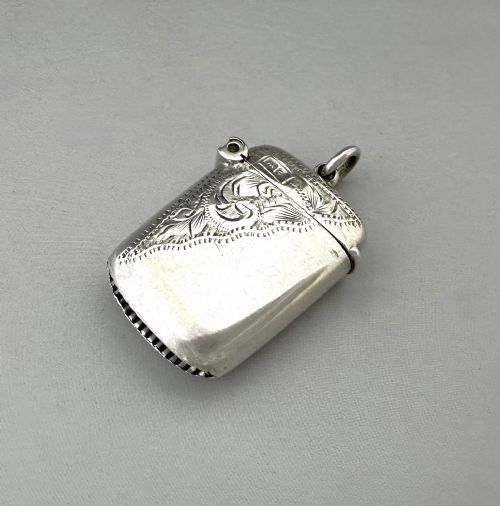
A victorian pocket match case, commonly known as a vesta, is a portable container designed to hold matches safely in the pocket or attach to a watch chain. These pieces date principally from the Victorian and Edwardian eras, spanning the nineteenth and early twentieth centuries.
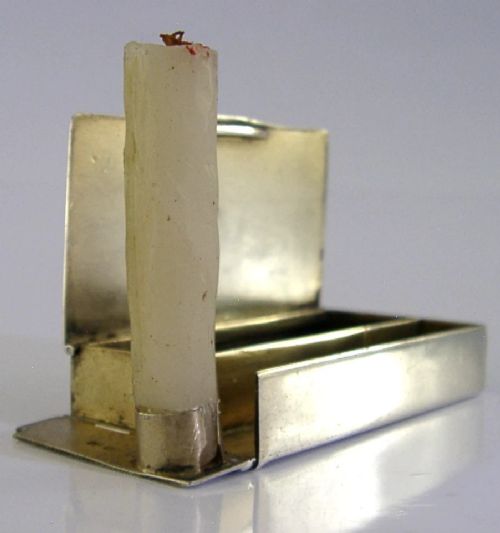
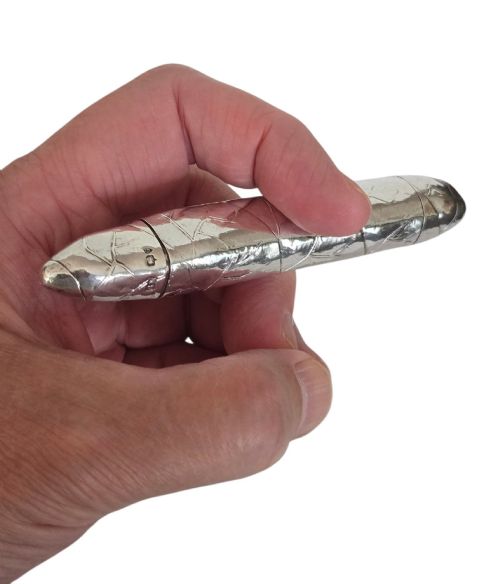
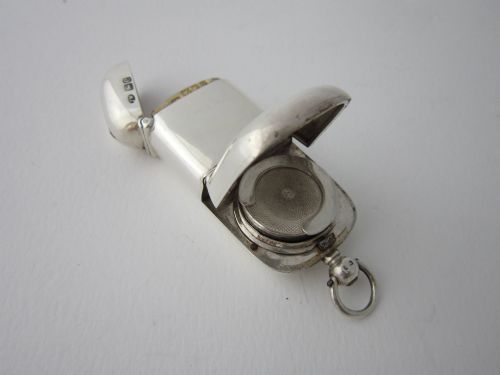
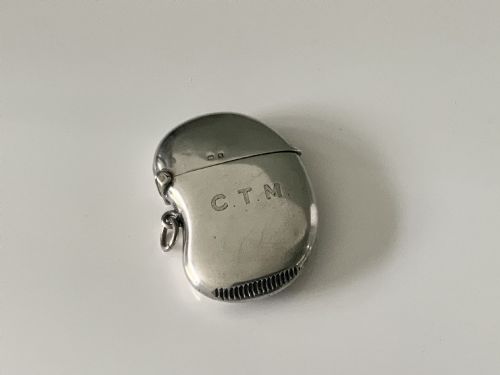
The selections on this page appear in various standard pocket formats, including kidney-shaped, heart-shaped, and sarcophagus forms, alongside novelty shapes modelled as animals, figures, and boots. Many examples incorporate dual functions, combining the match container with sovereign holders, scent compartments, photo frames, or wax tapers.
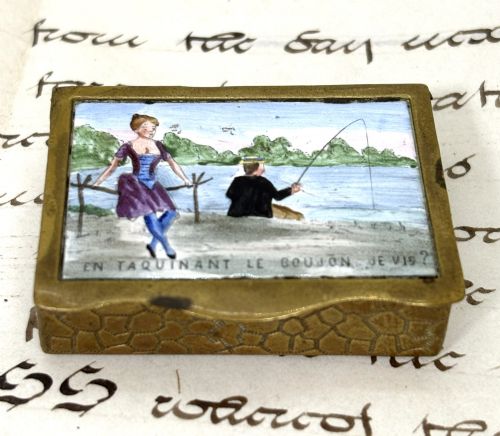
Originating predominantly from British assay offices in cities such as Birmingham, Chester, and London, these items also encompass continental European silver and French brass variations. Buyers will frequently encounter sterling silver constructions alongside silver gilt, brass, and enamel finishes.
Materials and Techniques
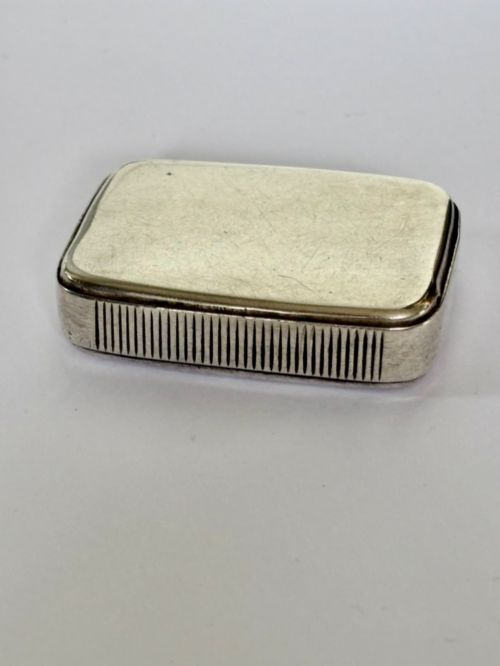
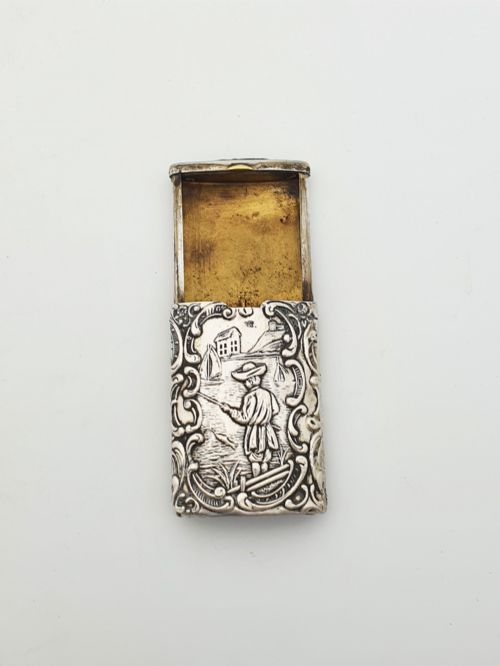
Makers utilised sterling silver as the primary material, shaped through pressing, stamping, and repoussé techniques to create rigid protective bodies. Silver gilt and rose gold additions provide contrasting interior and exterior tones, while brass appears in continental and novelty pieces.
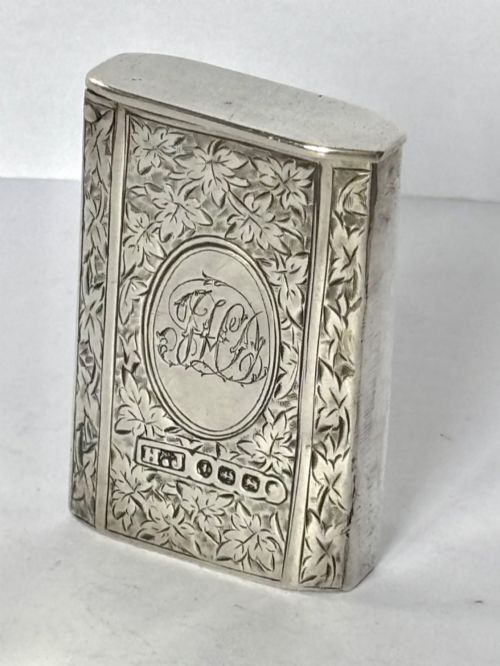
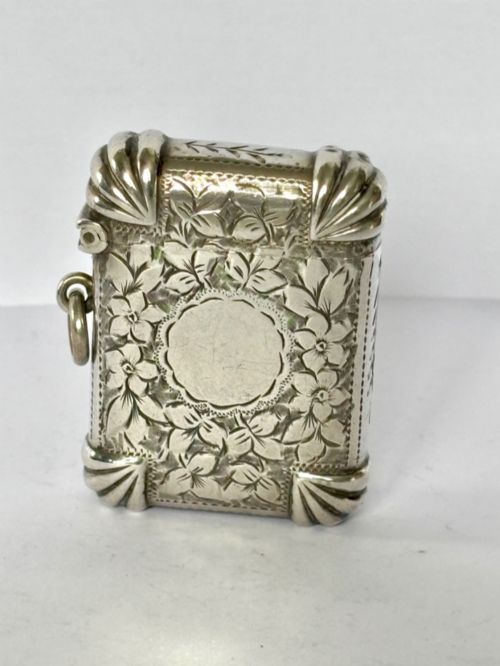
Surface decoration relies heavily on hand engraving, scenic relief, and painted enamel work depicting floral motifs, portraits, and sporting scenes. Functional elements include integrated striker bases and spring-loaded hinged lids designed to snap shut securely.
Sampson Mordan produced a novelty match safe shaped precisely like a sentry box, complete with a tiny guard peering out.
Craftsmanship and Detail
The calibre of a victorian pocket match case rests on the crispness of its repoussé work, the depth of hand engraving, and the preservation of any applied enamel. Superior examples exhibit finely detailed figural modelling or intricate portraits rather than mass-produced stamped patterns.
Hinge construction and lid alignment dictate the mechanical standard of each piece, with top-tier items maintaining a flush closure and a functional spring. Maker attribution to notable silversmiths further elevates the standing of an individual match safe.
Howard James Birmingham·EV Pledge And Son·Sampson Mordan And Co·A And J Zimmerman·William Neale·Minshull And Latimer·William Hair Haseler
The Victorian Pocket Match Case Glossary
- Vesta
- A small pocket container specifically made to hold matches and keep them dry. This term is frequently used interchangeably with match safe.
- Albert
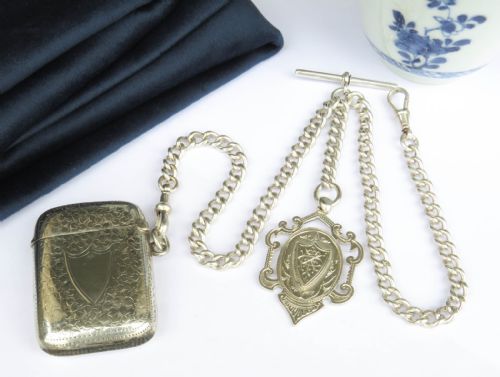
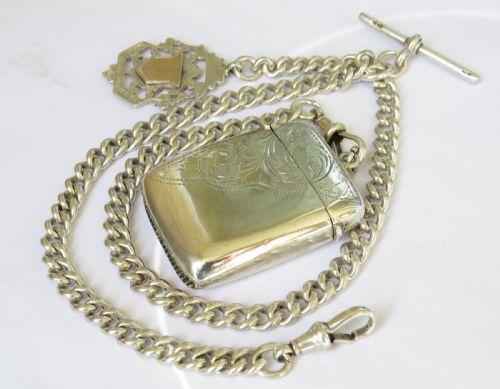
- A watch chain worn across the waistcoat, named after Prince Albert. These chains often secure a match case alongside a pocket watch or fob.
- Sovereign
- A British gold coin of the nineteenth century. Combination cases featured dedicated compartments to store these coins alongside matches.
- Repoussé
- A metalworking technique where the design is hammered into relief from the reverse side. This method creates tactile, raised patterns across the body of the case.
- Taper
- A slender wax-coated wick used for transferring a flame. Some combination cases incorporate a wax taper holder alongside the match reservoir.
Victorian Pocket Match Case: Frequently Asked Questions
What is a vesta case?
A vesta case is a small pocket-sized box created to hold matches safely while preventing them from igniting accidentally.
These containers became essential accessories during the nineteenth century when safety and strike-anywhere matches gained widespread popularity.
How were they carried?
Owners typically carried these match holders loose in a pocket or attached securely to a pocket watch albert chain.
Many examples feature a small suspension loop specifically designed for attachment to a chatelaine or watch chain.
What is a combination case?
A combination case is a versatile accessory that houses matches alongside another functional item within the same body.
Common variations include dual compartments for sovereigns, photography frames, stamp holders, or integrated wax taper rolls.
How do I date these pieces?
Dating relies heavily upon the legible hallmarks stamped into the metal, which indicate the assay office, standard of silver, and year of manufacture.
Stylistic indicators such as Art Nouveau curves or specific Victorian commemorative motifs also help establish the approximate period of creation.