


Victorian Pine Pot Cupboard
These Victorian pine pot cupboards are practical bedside companions offering concealed storage and solid nineteenth-century timber construction for any bedroom.
Victorian Pine Pot Cupboard
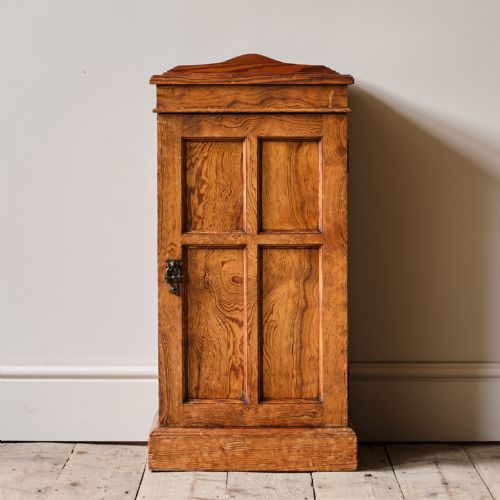
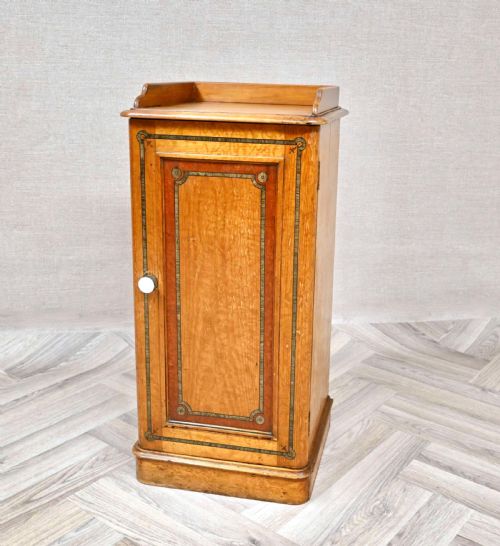
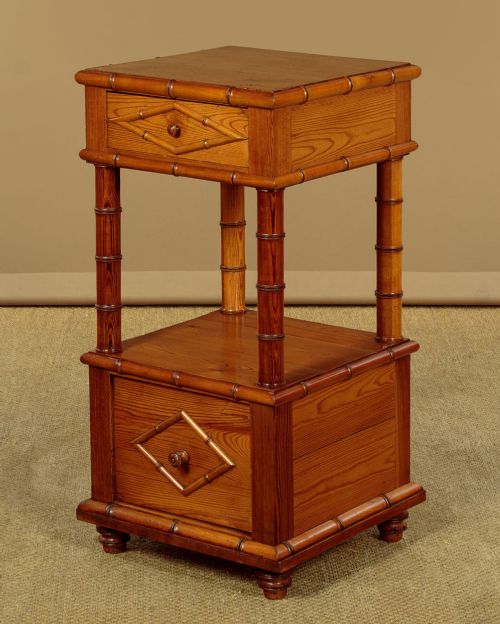
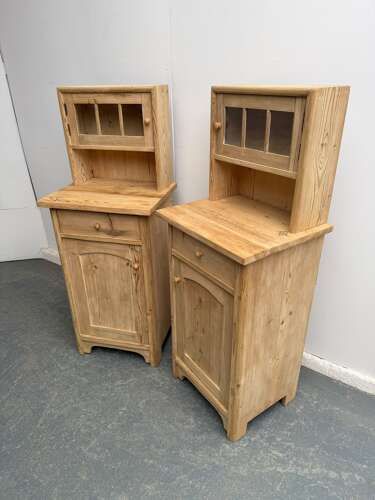
A victorian pine pot cupboard is a compact bedside cabinet designed in the nineteenth century to hold a chamber pot behind a single door, alongside variations styled as bedside tables and night stands. You will most frequently encounter standard upright wooden cupboards dating from the Victorian era, alongside pieces finished with paint, faux bamboo detailing, or gothic revival influences.
The form spans straightforward utilitarian timber pieces from the 1860s through to the 1900s, occasionally incorporating raised upstands or cylindrical bodies. Many examples show regional or continental character, including French country models and items constructed from pitch pine or Oregon pine.
How They Were Made
Constructed primarily from solid pine and pitch pine, these cabinets rely on traditional timber joining techniques suited to daily nineteenth-century use. Iron hardware and hinges secure the doors, while structural integrity depends on the dense grain of the wood.
Surfaces frequently receive applied finishes such as layers of paint, graining, or wax to alter the natural timber appearance. More decorative examples integrate inset marble tops or ceramic components into the pine framework.
The documented forms span bedside cabinets, tables, night stands, and cylinder pot cupboards.
What Varies in Quality
The distinction between standard utility cupboards and finer examples lies in the ambition of the design and the treatment of materials. Pieces featuring fitted marble tops, carved wooden detailing, or deliberate painted schemes sit higher in the range than plain utilitarian boxes.
Execution of decorative elements such as faux bamboo turning or gothic revival arches separates basic workshop production from more considered furniture making. The choice of denser woods like pitch pine or Oregon pine also signals a sturdier build quality.
The Victorian Pine Pot Cupboard Glossary
- Pot cupboard
- A small bedside cabinet originally built to house a chamber pot behind an enclosed door. They now serve primarily as compact night stands.
- Pitch pine
- A durable resinous softwood utilised frequently in nineteenth-century furniture construction. It provides a distinct grain pattern and robust structure.
- Upstand
- A raised vertical timber backboard fitted to the top edge of a cabinet. This prevents items from sliding off the surface against the wall.
- Gothic revival
- An architectural and decorative style drawing inspiration from medieval forms. In these cabinets, it appears through pointed arches and structural motifs.
- Faux bamboo
- Wood turned and carved by hand to imitate natural bamboo stalks. This decorative technique gained popularity during the late nineteenth century.
Victorian Pine Pot Cupboard: Frequently Asked Questions
What is a pot cupboard?
A pot cupboard is a small nineteenth-century bedside cabinet designed specifically to conceal a chamber pot within its lower storage compartment.
Today, these compact pieces function well as standard bedside tables while retaining their historical enclosed storage space.
How do I date a pine cabinet?
Dating relies on observing construction methods, material choices, and stylistic clues such as gothic revival motifs or faux bamboo turnings.
Evidence from nineteenth-century pieces points towards specific periods like the 1860s or 1890s through distinct surface treatments and hardware.
Where were these cupboards placed?
These cabinets sat directly beside the bed to provide accessible nighttime storage within Victorian bedrooms.
Their compact footprints made them suitable for smaller chambers where larger furniture pieces would not fit.
Why do some have marble tops?
Marble tops provided a durable, easily cleaned surface for placing water jugs and washing basins during the nineteenth century.
This addition elevated the utility and finish of the bedside cabinet, often paired with painted or pitch pine bodies.