
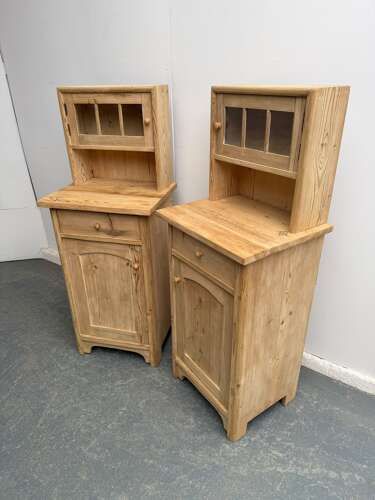


Country Pine Nightstand
A country pine nightstand brings honest utility and warmth to a bedside, forged from humble timber and shaped by regional hands.
Country Pine Nightstand
A country pine nightstand draws together functional bedside forms like cabinets, washstands and small side tables, originating primarily from the nineteenth century and the Victorian era. These pieces reflect domestic needs across English, Scandinavian and rural European traditions, offering compact storage or surface space next to a bed.
You will most frequently meet nineteenth-century bedside cabinets, side tables and smaller cupboards rendered in plain or painted timber. The selection spans straightforward utility tables alongside glazed or upstand cabinets designed for practical daily use in farmhouse and country interiors.
The forms range from primitive eighteenth-century examples to late-Victorian lamp tables and occasional pieces. Each item demonstrates the straightforward construction methods characteristic of regional cabinet-making without elaborate artifice.
How they were made
Makers utilised solid pine and pitch pine as the primary structural timbers, often selecting softwoods that were readily available locally. Construction relied on straightforward joinery suited to utilitarian household furniture.
Many surfaces received layers of paint, simulated wood grain or traditional wax finishes to protect the softwood and suit prevailing domestic fashions. Glass panels, ceramic elements and simple metal fittings appear where utility demanded them, such as on washstands and cabinets.
Listings feature items spanning the eighteenth and nineteenth centuries, utilising pine, pitch pine, paint, glass, metal and ceramic.
What varies in quality
Quality rests in the integrity of the original timber and the honesty of the construction, distinguishing straightforward rural carpentry from later alterations. Pieces retain higher character when their painted surfaces, glass elements and structural fittings remain undisturbed by modern restoration.
Proportion and utility drive the distinction between standard utilitarian items and more considered regional examples. The balance between practical storage capacity and pleasing domestic scale determines the distinction among side tables, washstands and bedside cupboards.
The Country Pine Nightstand Glossary
- Pitch pine
- A dense variety of pine known for its prominent grain pattern and durability. It provides robust construction for nineteenth-century furniture.
- Washstand
- A specialised piece of furniture designed to hold a basin and pitcher for morning ablutions. These often feature upstands to protect bedroom walls from splashes.
- Upstand
- A vertical board rising above the back or sides of a cabinet or table top. It prevents items from sliding off and protects adjacent surfaces.
- Occasional table
- A small, versatile table intended to be moved about a room as needed. They serve practical functions beside seating or sleeping areas.
Country Pine Nightstand: Frequently Asked Questions
What periods do these nightstands come from?
The pieces span the eighteenth and nineteenth centuries, with a strong representation of Victorian examples.
Craftsmanship from these periods emphasises durable softwoods and regional domestic styles.
How were country pine nightstands used originally?
They served practical bedside functions, holding lamps, water jugs or personal items within easy reach.
Many double as small cupboards, washstands or occasional side tables tailored to modest bedrooms.
Are these pieces usually painted or bare wood?
Surfaces vary between plain wood, waxed finishes and traditional paint or simulated wood grain.
Historic paint and simulated wood treatments reflect regional domestic preferences of the nineteenth century.
How do I care for antique pine furniture?
Maintain the wood with appropriate traditional wax and protect surfaces from excessive moisture and direct heat.
Gentle care preserves the original finish and the honest character of the softwood over time.