
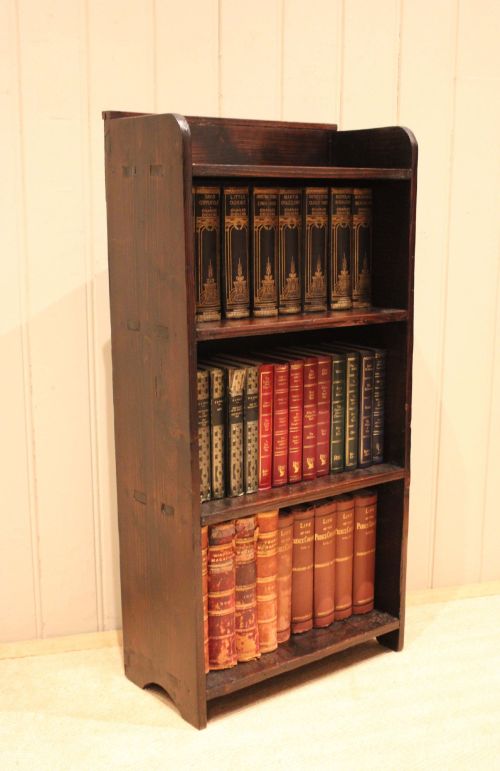
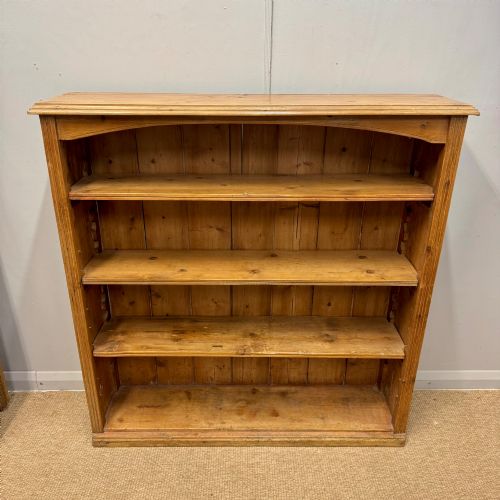
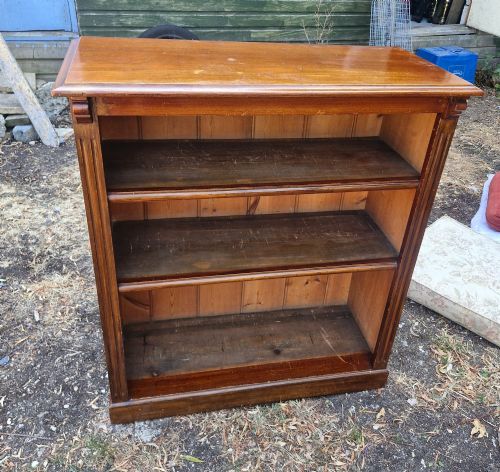
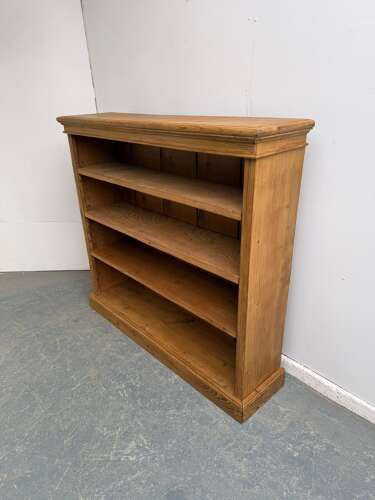


Victorian Pine Open Bookshelf
These Victorian pine open bookshelf pieces bring honest, practical utility to any room, offering straightforward shelving with distinct period character.
Victorian Pine Open Bookshelf
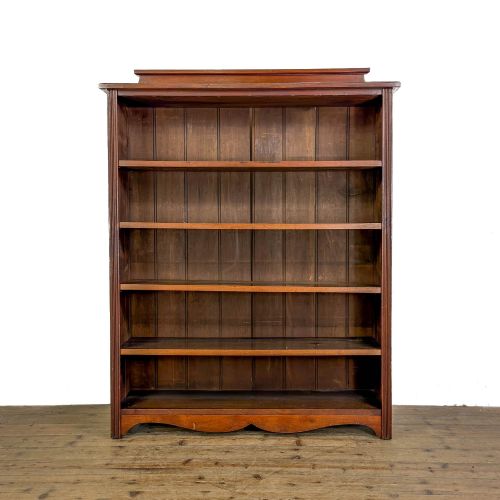
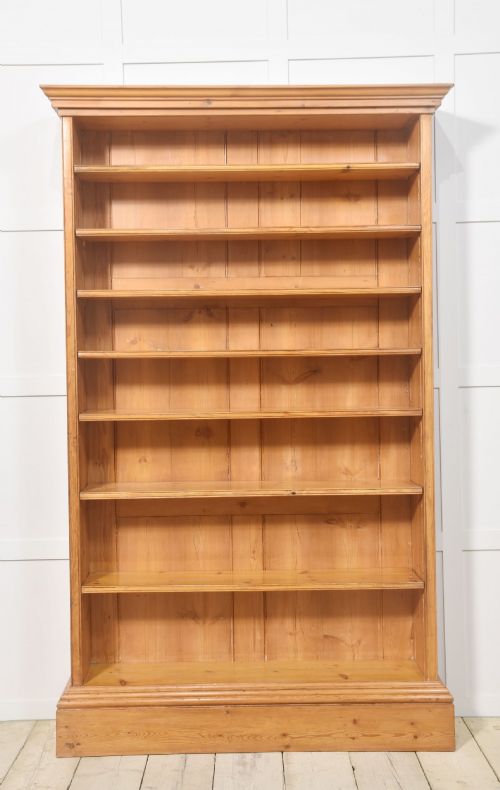
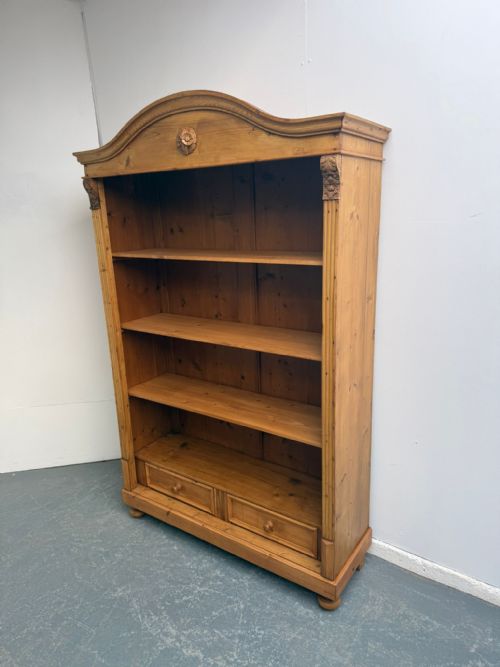
A victorian pine open bookshelf provides accessible, open storage that suits everyday use in any room. These pieces range from compact rustic examples to taller late Victorian formats designed for holding collections of books.
The versions most commonly met on this page span the Victorian era, the nineteenth century, and early decades up to nineteen thirty. They appear in forms such as small rustic open bookcases, adjustable shelf variants, and larger deal wood formats.
Originating largely from country and domestic settings, these bookcases focus on utility. Their open fronts allow for immediate access to volumes while displaying the natural grain and warmth of the wood.
How they were made
Construction relies primarily on pine, deal wood, and timber, sometimes treated with a waxed finish or stained to deepen the tone of the wood. Solid pine provides the structural integrity needed to support heavy rows of books without sagging.
Many examples incorporate adjustable shelf mechanisms, allowing owners to alter the interior layout for different book sizes. Joinery remains straightforward and functional, reflecting the utilitarian purpose of country and domestic furniture.
Listings span periods from the nineteenth century through nineteen thirty, featuring materials such as deal wood, solid pine, and walnut.
What varies in quality
Quality rests on the selection of timber and the proportion of the carcass. Superior pieces display carefully chosen solid pine boards with minimal warping and pleasing natural grain patterns.
The presence of working adjustable shelf systems and original waxed surfaces elevates an example above simpler, fixed-shelf alternatives. Finer execution shows in clean lines and balanced proportions that maintain stability over decades of use.
The Victorian Pine Open Bookshelf Glossary
- Pine
- A soft timber widely used in British domestic furniture for its workability and strength. It takes wax and stain finishes readily.
- Deal wood
- A traditional term for fir or pine timber used in cabinet making and joinery. It forms the primary material for many nineteenth-century bookcases.
- Adjustable bookcase
- A shelving unit equipped with tracks, pegs, or ratchet supports that allow shelves to move vertically. This feature accommodates books of varying heights.
- Late Victorian
- The period spanning the final decades of the nineteenth century. Furniture from this time often shows refined proportions alongside traditional construction methods.
Victorian Pine Open Bookshelf: Frequently Asked Questions
How do I style a pine bookshelf?
Keep the focus on a balance of books and objects, arranging volumes both vertically and horizontally to create visual interest. Leave some shelf space open to let the timber background show through.
Position the bookcase against a neutral wall to highlight the natural grain and warmth of the pine. Layering in smaller decorative items adds personality without cluttering the display.
Are these bookcases sturdy enough for heavy books?
Solid pine construction provides the necessary strength to support standard collections of hardcover books. Pieces featuring thicker timber boards handle heavy loads with ease.
Check that the shelves and uprights remain square and firm. Adjustable shelf supports should sit securely in their slots to maintain stability.
What is deal wood?
Deal wood refers to fir or pine timber commonly utilised in nineteenth-century furniture production. It offers a reliable and durable material for larger functional items.
This timber takes wax finishes well, developing a rich patina over time. It forms the basis for many rustic and country bookcases found in this range.
How do I date a Victorian bookcase?
Examine the timber, construction methods, and hardware for clues to the period of origin. Nineteenth-century pieces often display hand-planed surfaces and traditional joinery.
Styles shifted from simple country forms to more refined late Victorian designs by the end of the century. Comparing the specific finish and hardware against known examples helps narrow down the decade.