






Victorian Pin Dish
These Victorian pin dish examples offer a glimpse into nineteenth-century dressing tables, providing small receptacles crafted for holding daily accessories.
Victorian Pin Dish
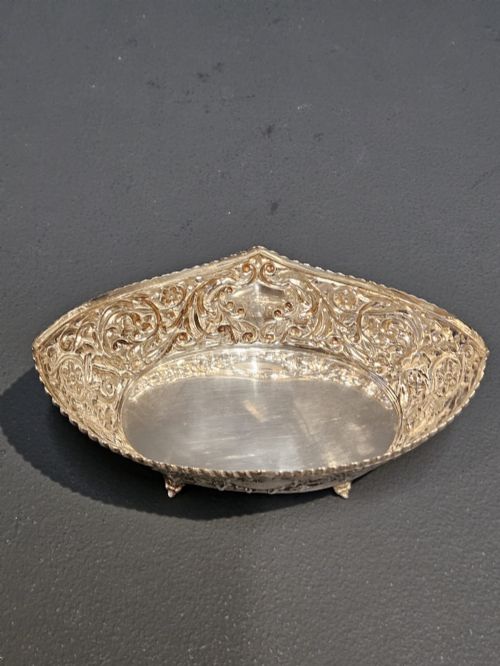
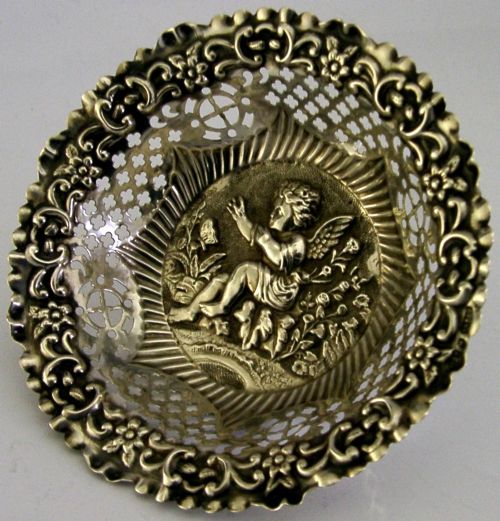
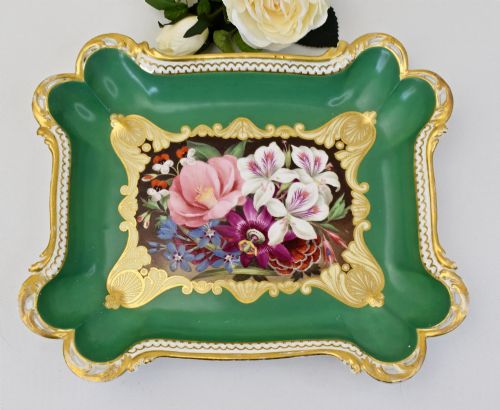
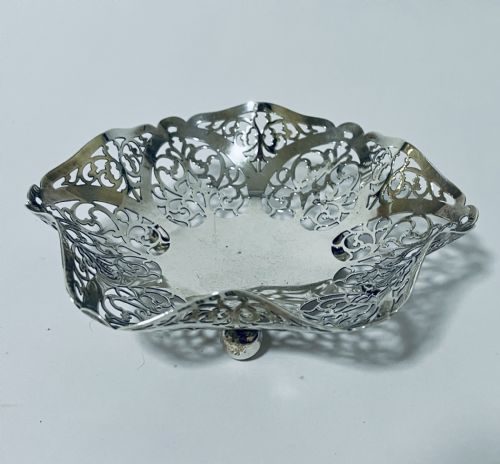
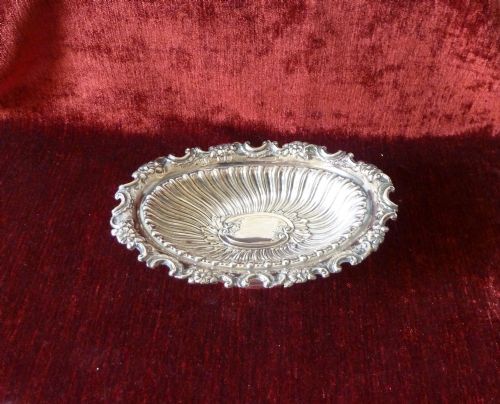
A victorian pin dish is typically encountered as a small receptacle designed for dressing tables to hold pins, small trinkets, or confectionery. The selection spans porcelain, silver, and papier-mache, reflecting diverse domestic uses across the nineteenth century and into the Edwardian period.
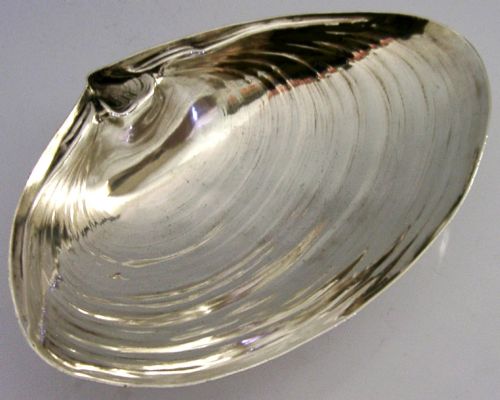
Most pieces date from the Victorian era, alongside related items from the Edwardian period and the early twentieth century. Forms range from simple circular trays to shaped heart designs, shell motifs, and leaf patterns.
Materials and construction
Silver and sterling silver pieces demonstrate smithing techniques including chasing and embossing, often bearing hallmarks from London or Birmingham assay offices. Other examples utilise porcelain from makers like Royal Worcester and Dresden, finished with hand-painted details and gilt edges.
Alternative media include papier-mache, horn with silver mounts, and green opaline glass. These varied materials required specialised handling, from ceramic firing and gilding to the pressing and lacquering of papier-mache trays.
Victorian Pin Dish Retail Price Guide 2026
Typical asking prices for victorian pin dish among the pieces listed under this phrase on Sellingantiques today, from the lower quarter to the upper quarter. They describe what is for sale here now, not the wider market.
Periods represented include Victorian, Edwardian, and the early twentieth century alongside specific dates from the 1830s onward.
Assessing quality
Quality rests upon the execution of the material, whether in the crispness of chased floral details on silver or the fineness of hand-painted floral sprays on porcelain. Maker attribution to known workshops such as William Comyns or Mappin and Webb elevates an item above standard domestic wares.
The integrity of the surface finish, from intact gold leaf and gilt edges to well-preserved enamel and clear hallmarks, determines the distinction between ordinary production and finer examples.
William Comyns·Mappin and Webb·Atkin Brothers·Royal Worcester·William Padley
The Victorian Pin Dish Glossary
- Sterling silver
- A silver alloy containing 92.5 percent pure silver by mass and 7.5 percent other metals, usually copper. This standard appears frequently across nineteenth-century British silver dishes.
- Chasing
- A metalsmithing technique where a design is hammered into the front surface of the metal to sink it rather than cut it away. It frequently decorates Victorian silver pin dishes with floral motifs.
- Blush ivory
- A porcelain finish developed by Royal Worcester featuring a creamy, matte ivory ground decorated with pastel floral sprays and gilt. It appears on ceramic pieces from the turn of the twentieth century.
- Papier-mache
- A composite material consisting of paper pieces or pulp bound with glue or paste, then moulded and painted. Small trays in this medium date from the mid-nineteenth century.
- Hallmark
- An official stamp applied to precious metals in Britain to indicate standard of purity and the assay office. These marks help date silver items accurately.
Victorian Pin Dish: Frequently Asked Questions
What was a victorian pin dish used for?
These small vessels rested on dressing tables and desks to hold straight pins, hairpins, and small items of jewellery during daily routines.
They also served as bonbon dishes or receptacles for visiting cards, reflecting the varied social habits of the period.
How do I date a silver dish?
British silver pieces carry hallmarks that indicate the assay office, standard mark, and a date letter corresponding to the specific year of testing.
Additional clues come from stylistic indicators, such as Rococo Revival curves or Art Nouveau motifs.
Are porcelain and silver pieces cleaned differently?
Silver requires periodic gentle polishing with appropriate cloths to manage tarnishing without wearing away chased details or hallmarks.
Porcelain and glass items need careful washing in warm soapy water, avoiding abrasive sponges that might damage hand-painted details or gilt edges.
What styles influence these designs?
Design styles span Neoclassical symmetry, Rococo Revival scrolls, and later floral or shell patterns inspired by nature.
French Napoleon III influences and early twentieth-century Art Nouveau aesthetics also appear across the selection.