




Victorian Pierced Brass Fender
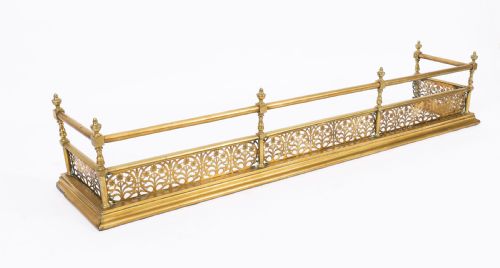
A victorian pierced brass fender frames a hearth with pierced metalwork and polished metal, bringing period detail and containment to an open fire.
Victorian Pierced Brass Fender
When you search for a victorian pierced brass fender, you encounter low metal hearth guards designed to keep glowing embers contained while reflecting the firelight. The pieces on this page span the nineteenth century, including specific dates from eighteen thirty-five through eighteen ninety, alongside broader victorian and regency periods.
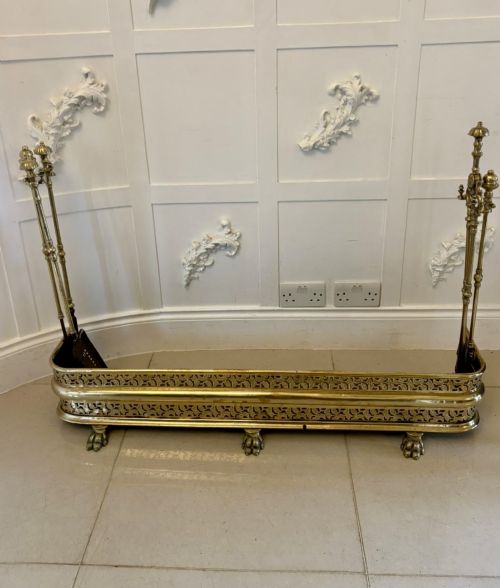
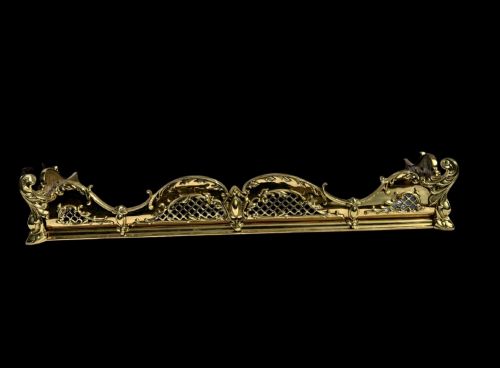
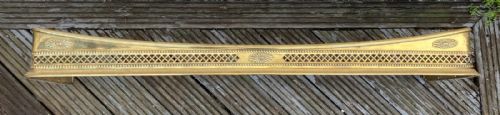
The dominant forms are fireplace fenders and kerbs, frequently featuring pierced fretwork and floral motifs. You will also find variations incorporating iron and steel components, or accompanied by original fire irons.
The material palette is centred on brass, supplemented by cast iron, steel and cast brass. Styles range from classical victorian and regency lines to arts and crafts and gothic interpretations.
Materials and Construction
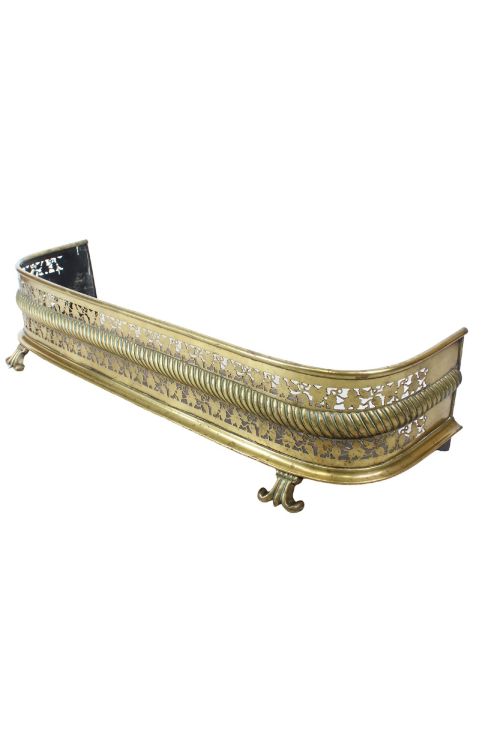
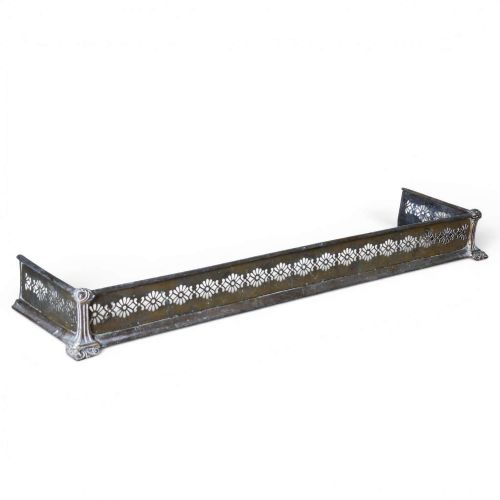
These pieces rely on sheet brass and cast brass, frequently combined with iron and steel frames for structural weight. Artisans pierced the metal plates by hand or machine to create decorative fretwork patterns, floral designs and geometric openings.
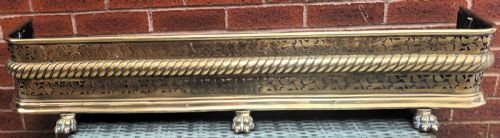
Substantial pieces utilise heavy brass castings alongside sheet metal, sometimes featuring applied feet such as lions paw designs. Finish details range from bright polished surfaces to patinated metals and black finishes on steel elements.
Several fenders arrive with their original lions paw feet intact, standing ready to guard the rug from rogue embers.
Judging Quality
Quality rests in the crispness of the pierced fretwork and the thickness of the brass gauge. Heavier castings and deeply rendered motifs separate standard production from superior examples.
The integrity of the corners, the retention of original mounting feet and the presence of complementary fire irons or tools elevate an individual piece within the range.
The Victorian Pierced Brass Fender Glossary
- Fender
- A low metal guard placed around the hearth to contain ash and embers. It establishes a physical boundary between the fire and the room.
- Kerb
- An alternative term for a hearth fender, often denoting the structural frame enclosing the fireplace opening. These boundary pieces sit directly on the floor.
- Pierced
- Metalwork perforated with decorative patterns or fretwork. This technique lightens the visual mass of the brass while allowing heat to circulate.
- Fretwork
- Ornamental perforated design cut into sheet metal. It defines the decorative character of many nineteenth-century hearth guards.
- Patina
- The surface sheen developed through age, handling and polishing. Collectors value undisturbed patination for the historical depth it conveys.
Victorian Pierced Brass Fender: Frequently Asked Questions
What is a brass fender used for?
A brass fender sits on the hearth around an open fire to prevent burning fuel from rolling onto the floor. It acts as a physical barrier for domestic safety.
Beyond utility, the polished metal surfaces reflect warmth and light from the grate into the room, serving as a decorative centrepiece for the fireplace.
How do I date a brass fender?
Dating relies on stylistic clues, construction methods and recorded periods such as regency or victorian. Details like arts and crafts motifs or specific foot designs help narrow the era.
Heavier cast components and particular pierced patterns also indicate whether a piece originates from the mid or late nineteenth century.
Are these fenders made of solid brass?
Many examples combine solid brass sheets and heavy brass castings with internal iron or steel frames for added weight and rigidity. The visible components and decorative pierced plates are typically brass.
Iron and steel are frequently used for structural base elements or accompanying fire tools rather than the main decorative facade.
How do I clean a vintage brass fender?
Cleaning generally involves dusting and occasional gentle wiping with a soft cloth to preserve the surface. Many collectors prefer to retain the aged patina rather than polish the metal to a bright shine.
Harsh chemical cleaners should be avoided because they strip away the historical character and subtle surface tones accumulated over decades.