




Victorian Pedestal Dressing Table
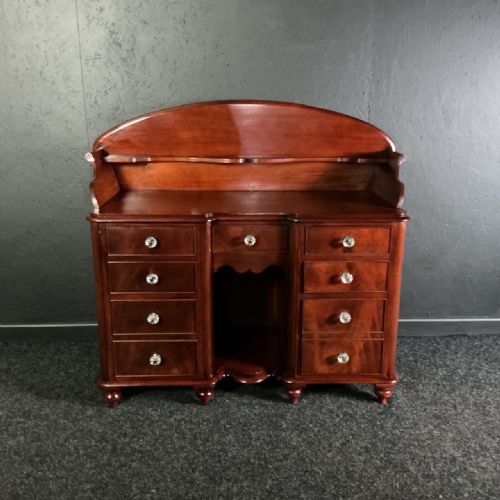
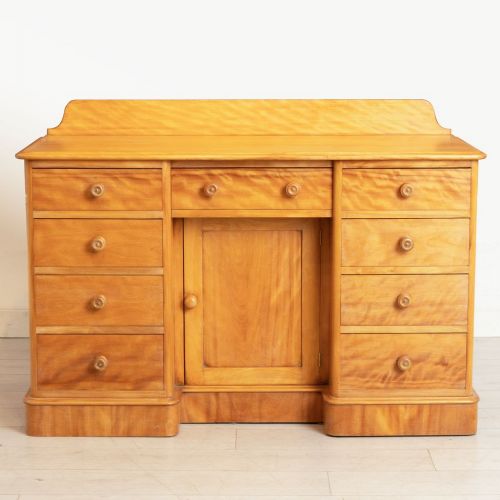
When you search for a Victorian pedestal dressing table, you look for a substantial piece of bedroom furniture designed with twin banks of drawers and a central mirror.
Victorian Pedestal Dressing Table
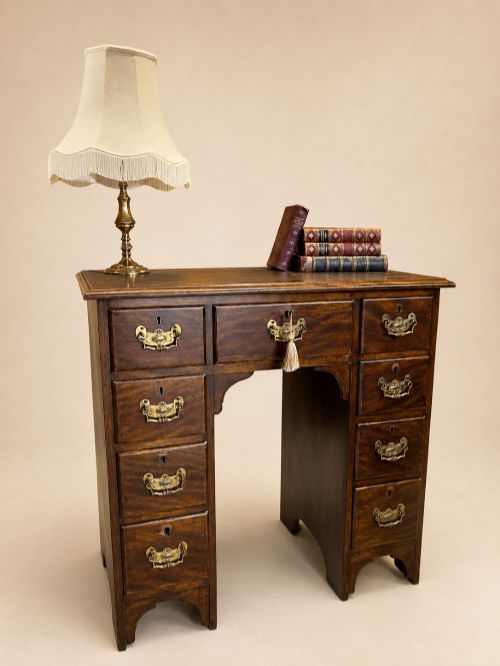
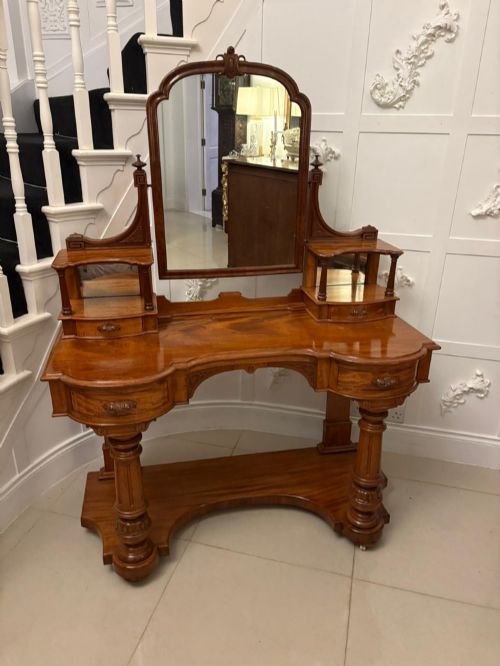
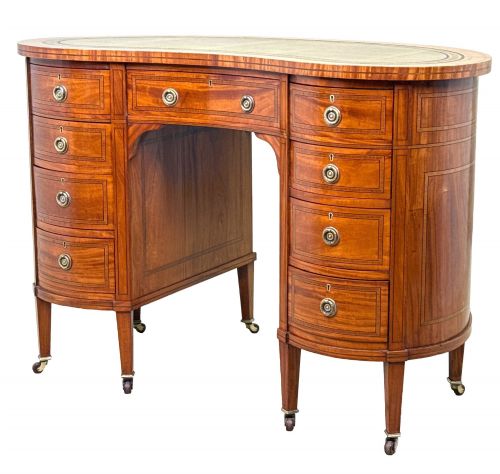
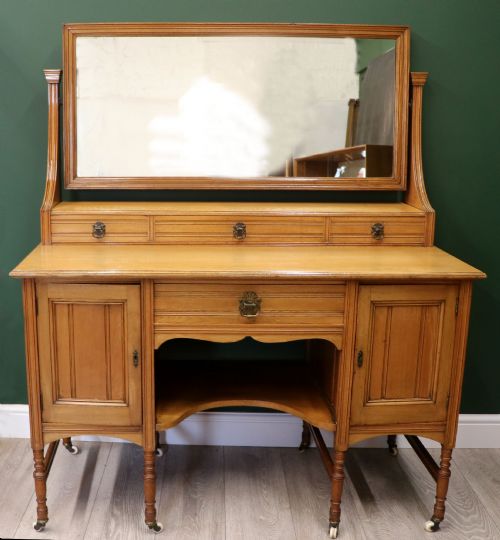
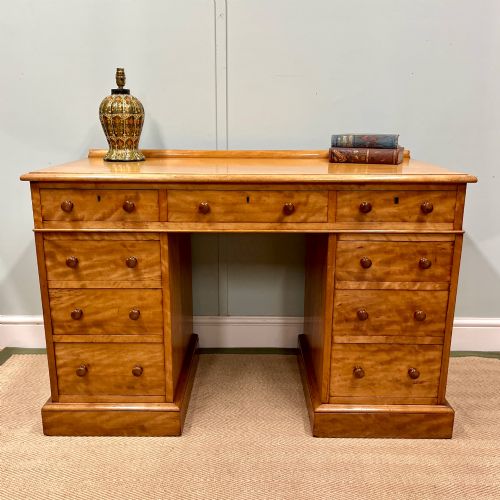
A Victorian pedestal dressing table typically comprises a central kneehole flanked by pedestals containing multiple drawers, topped by an upright or swinging mirror. These pieces emerge chiefly from the nineteenth century, spanning from early decades through to late Victorian and Edwardian periods.
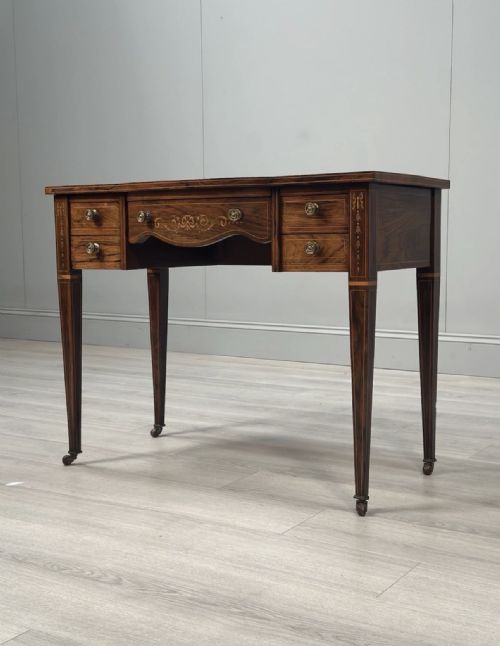
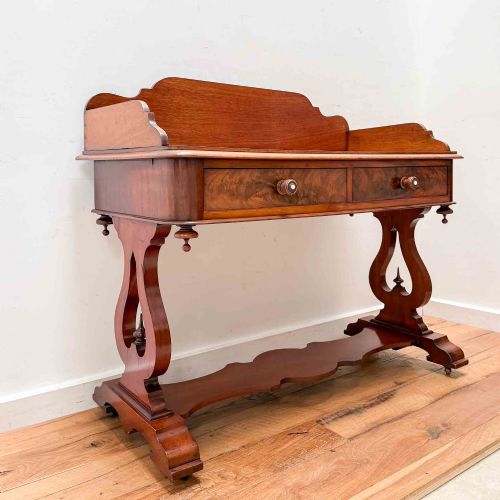
The form appears in several distinct timbers, most commonly mahogany, walnut, and satin birch, alongside variants in pine and satinwood. Alongside standard dressing tables, related items include kneehole desks, writing tables, and washstands that share similar pedestal configurations.
How they were made
Cabinet makers constructed these pieces primarily from solid and veneered timbers such as mahogany, burr walnut, and satin birch, supported by secondary woods like pine. Brass hardware, leather inserts, and glass mirrors complete the assembly, while marquetry inlay and stencilled decoration provide surface ornament.
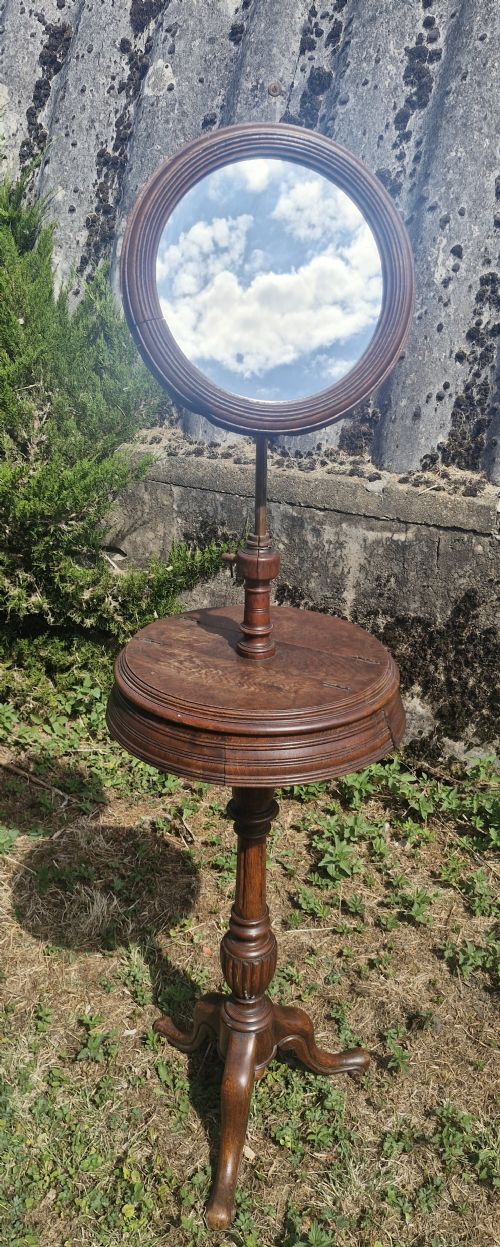
Joinery techniques involve sturdy drawer construction and pedestal framing designed to bear the weight of heavy timber tops and large adjustable mirrors. Many examples incorporate pivoted mirror frames supported on upright arms attached directly to the pedestals or table back.
What varies in quality
The selection of timber grain largely dictates the visual merit, with highly figured burr walnut and carefully matched mahogany veneers standing apart from plain or secondary woods. The intricacy of carved details, marquetry inlay, and original brass fittings further separates standard utility pieces from fine cabinet work.
Structural integrity and the survival of original components, particularly the attached or matching mirrors and stencilled decorations, influence the standing of an individual table. Maker attribution to known firms adds distinct archival weight to certain examples.
Heal and son·Edwards & Roberts
The Victorian Pedestal Dressing Table Glossary
- Pedestal
- A structural support column or bank of drawers placed beneath the work surface of a table. Twin pedestals form the dual supports characteristic of these dressing tables.
- Kneehole
- The central recessed space beneath a desk or dressing table designed to accommodate the user's legs. It is typically flanked by banks of small drawers.
- Burr walnut
- Timber taken from the warted excrescences of a walnut tree, yielding highly decorative swirling grain patterns. Cabinet makers utilised walnut veneers for high-status Victorian furniture.
- Satin birch
- A pale, lustrous hardwood with a fine grain resembling satin, popular during the mid-nineteenth century. It provides a lighter alternative to dark mahogany.
- Marquetry
- The art of applying pieces of veneer to a structure to form decorative patterns and pictures. Makers used various contrasting woods to create floral or geometric motifs.
Victorian Pedestal Dressing Table: Frequently Asked Questions
What is a pedestal dressing table?
A pedestal dressing table is a nineteenth-century bedroom furnishing featuring a central kneehole space flanked by two banks of drawers. A large mirror typically mounts to the upper surface.
These pieces served for morning grooming and personal preparation, offering ample storage for cosmetics, brushes, and accessories within the drawer pedestals.
How do I identify a Victorian dressing table?
Identification relies on observing characteristic nineteenth-century timber choices such as mahogany, burr walnut, and satin birch, alongside traditional joinery methods. Stylistic cues often point to Victorian, Aesthetic Movement, or Sheraton Revival influences.
Many pieces retain period hardware, hand-cut dovetails in the drawers, and original mirror assemblies that mark their era of manufacture.
Are the mirrors original to the tables?
Mirrors on these dressing tables frequently survive together with their base pedestals, secured by original upright support arms. Close inspection of the timber patina and mirror plate backing helps confirm whether the glass and frame belong to the piece.
Some surviving tables lost their detachable mirrors over time, while others retain their pivoting glass and small accessory drawers intact.
Where should I place a pedestal dressing table?
These substantial items suit bedrooms or dressing rooms where natural light falls across the mirror for daily use. Their finished backs and panelled pedestals also allow them to stand away from walls in spacious rooms.
Allow sufficient clearance around the pedestals and drawers to ensure smooth operation of all storage compartments.