
Victorian Pastoral Scene Painting
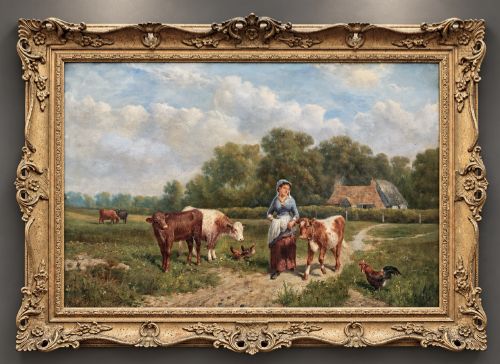
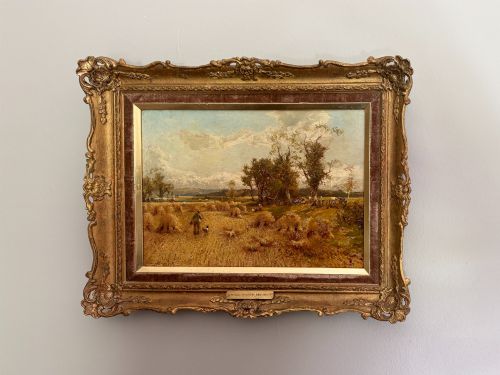
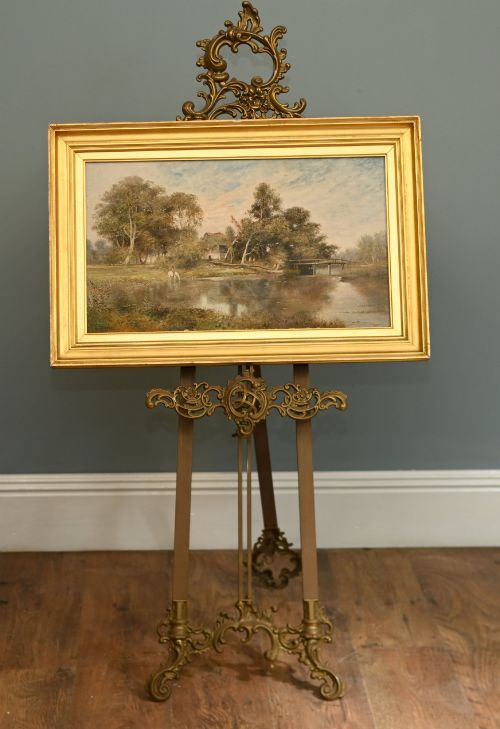
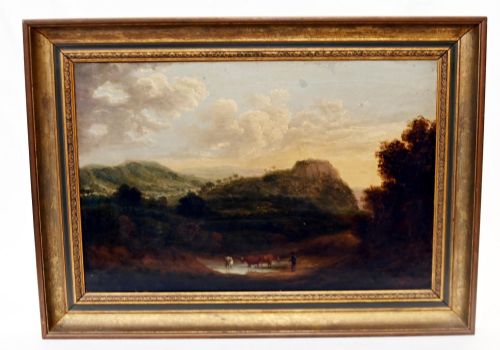
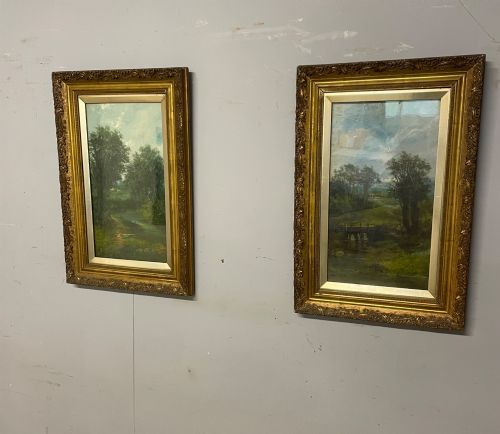
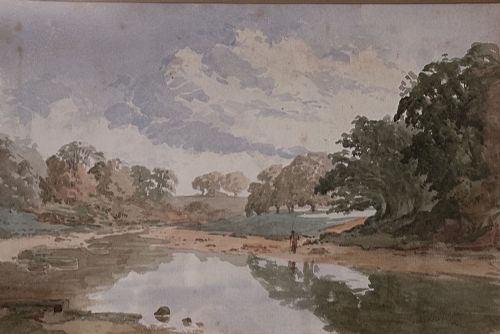
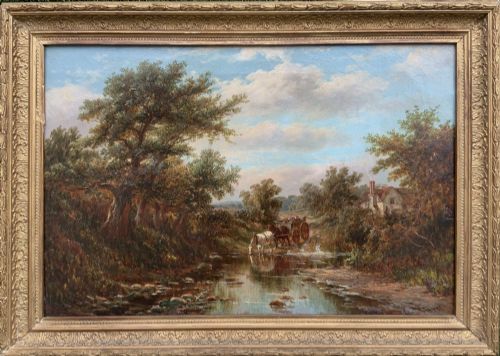
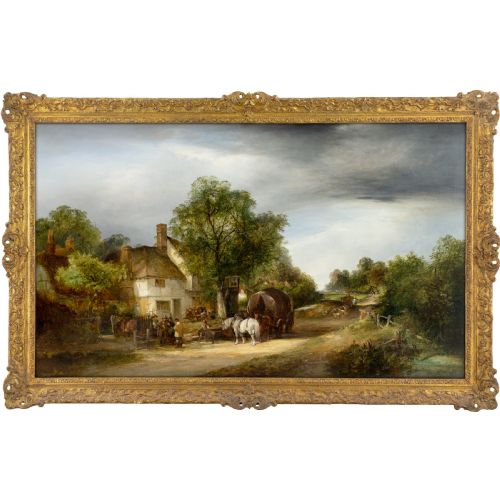
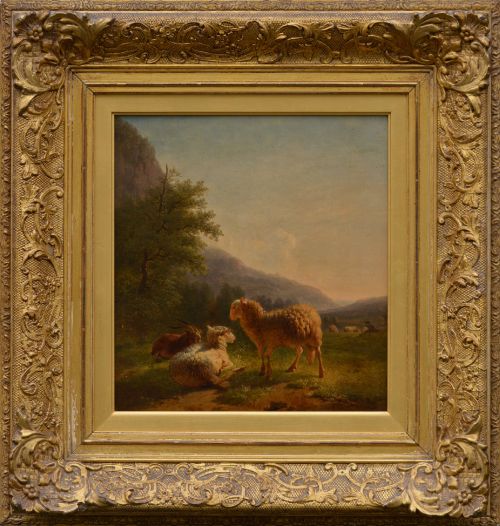
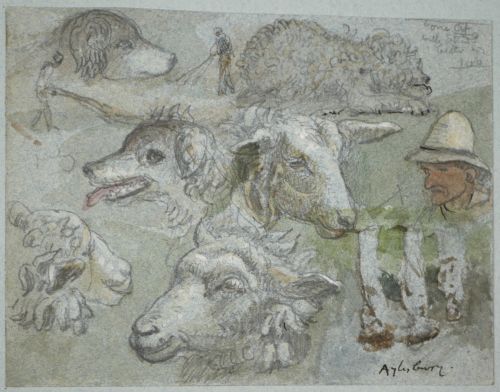
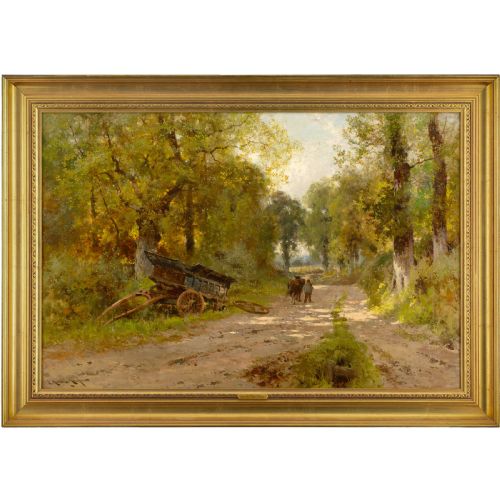
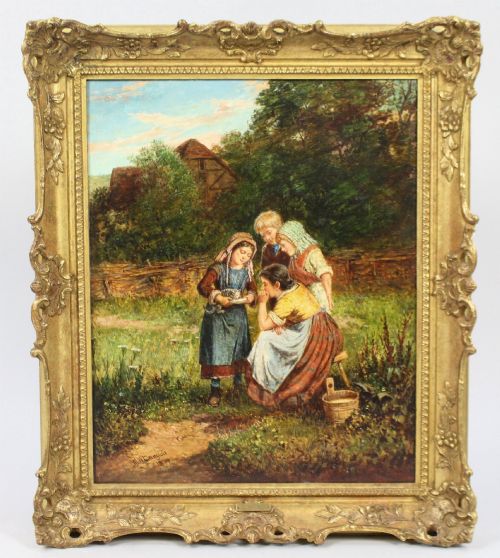
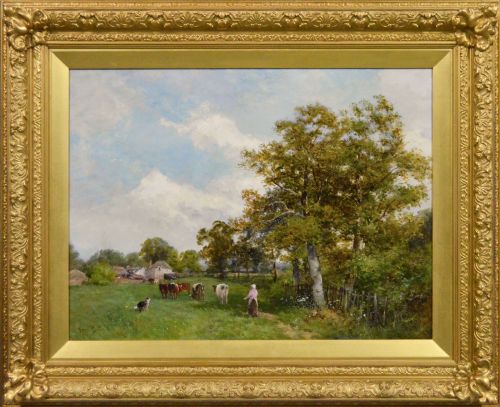
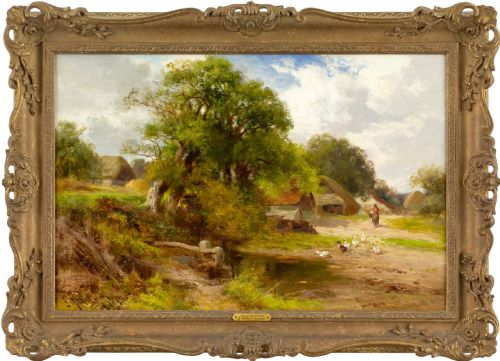
These pieces of victorian pastoral scene painting capture rural life through traditional oil and watercolour depictions of farmland, livestock, and country laborers.
Victorian Pastoral Scene Painting
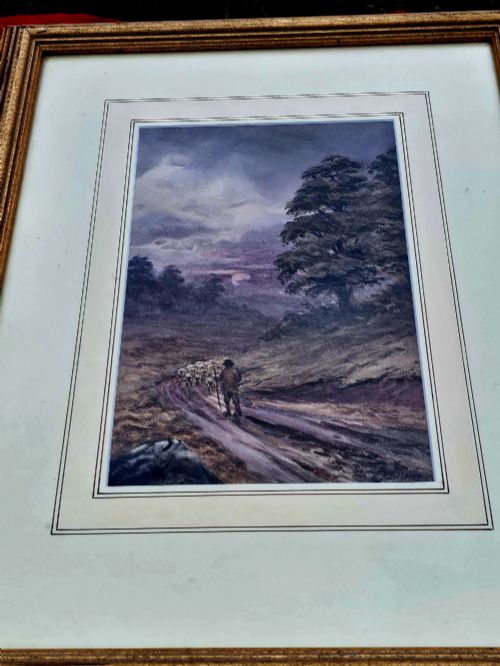
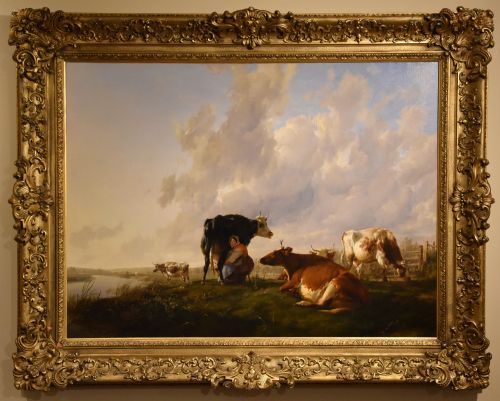
A victorian pastoral scene painting presents romanticised rural vistas, often incorporating figures, shepherds, herdsmen, and farm animals within river valleys or agricultural landscapes.
The selections available here predominantly originate from the nineteenth century, extending into the Edwardian era, spanning mediums such as oil on canvas, oil on board, and watercolour on paper.
Common motifs recorded in the listings include sheep grazing near Scottish lochs, milkmaids tending cattle, and haymakers working alongside rivers by English and continental artists.
Materials and Techniques
Paintings of this period rely primarily on oil paint applied to canvas or wood panels, alongside works executed in watercolour on paper.
Frames frequently utilise giltwood and gesso construction, providing heavy ornamental borders suited to nineteenth-century domestic interiors.
Listings span the nineteenth century and early twentieth century, featuring oil paintings, watercolours, and drawings by British and European artists.
Factors of Quality
Quality rests upon the artist's ability to render anatomical precision in animals and human figures, alongside atmospheric depth within the surrounding landscape.
Works by recognised exhibiting artists command attention through confident brushwork and balanced composition, distinguishing them from simpler decorative or follower pieces.
Eugène Verboeckhoven·Thomas Sidney Cooper·Henry Schouten·John Horace Hooper·David Bates
The Victorian Pastoral Scene Painting Glossary
- Oil on Canvas
- Pigment mixed with drying oil applied to a stretched woven fabric support. This surface allows for rich layering and varied texture.
- Watercolour
- Pigment suspended in a water-soluble binder applied to paper. It produces transparent washes of colour that rely on the white of the paper for luminosity.
- Giltwood
- Wood carved and coated with gold leaf or metal leaf gilding. It provides a reflective, ornate surround for framing fine art.
- Gesso
- A paint mixture consisting of a binder mixed with chalk, pigment, or plaster. It prepares wooden panels or frames for gilding and painting.
- Pastoral
- A genre of art depicting rural life and agricultural landscapes in an idealized manner. These scenes often focus on shepherds, livestock, and peaceful countryside vistas.
Victorian Pastoral Scene Painting: Frequently Asked Questions
What subjects appear in these paintings?
The works depict rural life, featuring shepherds with flocks of sheep, cattle near rivers, and agricultural laborers harvesting crops in various British and European country settings.
Compositions frequently centre on domestic animals integrated into river valleys, farmlands, and highland landscapes.
How do oils and watercolours differ?
Oil paintings utilise pigment bound in oil on canvas or wood boards, offering thick application and deep colour saturation. Watercolours employ water-soluble pigments on paper to achieve lighter, translucent effects.
Oils typically require heavier giltwood frames, whereas watercolours are mounted behind glass under paper mats.
Where were these artists active?
Many painters worked across English countryside locations such as the Thames, Berkshire, and Surrey, while others painted Scottish highlands and continental European landscapes.
Exhibiting artists often displayed their rural scenes at major institutions and galleries during the nineteenth and early twentieth centuries.
How should I display these artworks?
These paintings suit traditional interiors, libraries, and drawing rooms, often hung as focal points above furniture or paired as matching sets. They require placement away from direct sunlight to protect pigments and paper supports.
Original giltwood frames benefit from stable indoor humidity and minimal handling to preserve the gesso finish.