
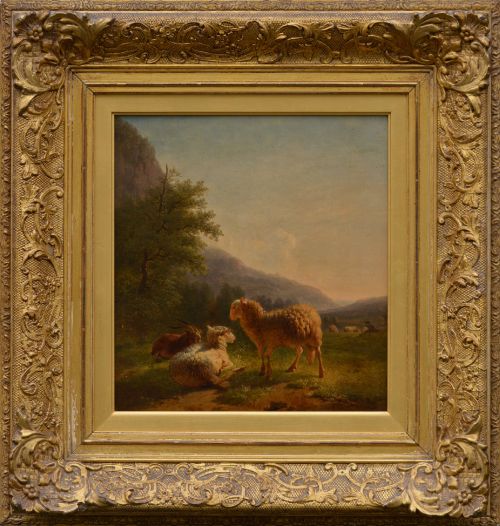
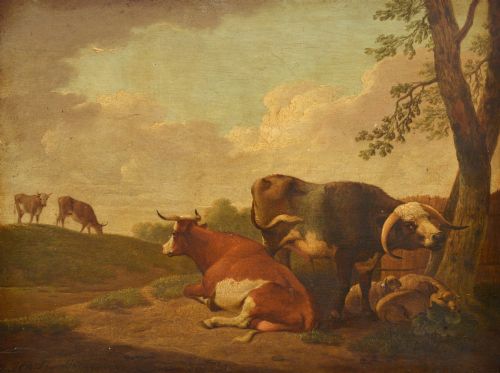
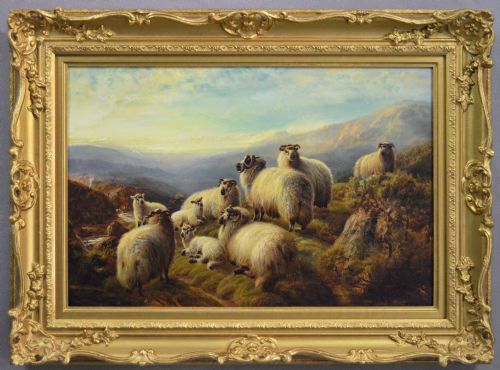
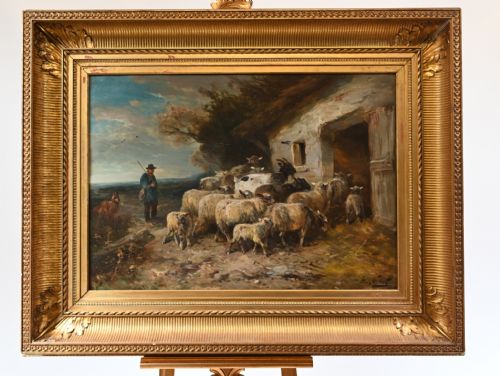


Fine Art Livestock Painting
These fine art livestock painting works capture rural life across the centuries, bringing pastoral character and pastoral realism directly into your home.
Fine Art Livestock Painting
A fine art livestock painting presents horses, cattle, sheep, and farm animals within expansive rural and coastal landscapes. These works reflect the agricultural focus of past centuries, capturing domestic animals with careful attention to anatomy and behaviour.
The pieces on this page span several distinct periods, reaching from the eighteenth century through the Victorian era and into the early twentieth century. You will encounter oil paintings on canvas alongside mixed-media works and watercolours depicting shepherds, herds, and flock animals.
Originating from British, Dutch, Belgian, French, and German hands, these paintings range from intimate cabinet pieces to large exhibition canvases. Pastoral scenes and animal portraits dominate the selection, showing beasts resting near cliffs, rivers, and pastures.
How They Were Made
Artists applied oil paint to stretched canvas, building up rich tones to render animal coats, natural light, and varied terrain. Some pieces utilise watercolour or mixed-media techniques on paper or board to achieve lighter atmospheric effects.
Surviving works frequently retain their original or period frames constructed from wood, gesso, and giltwood. Plaster embellishments on these frames provide decorative detail that complements the pastoral subjects within.
What Varies in Quality
The handling of anatomical detail and light separates accomplished works from simpler depictions. Master painters capture the texture of wool and muscle with confident brushwork that brings the livestock to life.
The integration of the animals into their surrounding landscape defines the strength of a composition. Stronger works balance the portrait of the beast with a coherent pastoral background, whereas lesser pieces treat the setting as a mere backdrop.
Eugène Verboeckhoven·Hendrik Willem Schweickhardt·Robert Watson·Henry Schouten·Thomas Sidney Cooper·Heinrich Harder·James de Rijk·C. Lainé·Claude Cardon·William Sidney Cooper·William Huggins·Charles Jones
The Fine Art Livestock Painting Glossary
- Pastoral realism
- A style of painting that depicts rural life and agricultural subjects with close attention to natural appearances. This approach grounds the animals and their handlers in believable countryside settings.
- Giltwood frame
- A wooden frame coated with gold leaf or a gold-coloured finish. These frames often incorporate moulded gesso details.
- Exhibition size
- A larger scale intended for public display in galleries or grand rooms. Such canvases allow artists to portray livestock and landscapes at or near life size.
- Mixed-media painting
- An artwork created using more than one medium on the support surface. Artists sometimes combined watercolour, bodycolour, and oil in these pieces.
Fine Art Livestock Painting: Frequently Asked Questions
How do I date a livestock painting?
Examine the materials, canvas preparation, and framing style alongside any artist signatures or dates inscribed on the reverse. Costume details on figures and the clothing of shepherds also offer clues to the decade of creation.
Compare the brushwork and subject matter to documented works by known painters from the eighteenth, nineteenth, and early twentieth centuries. Regional framing traits further help narrow down the period of production.
Where should I hang these paintings?
These works suit dining rooms, libraries, and living spaces where traditional or eclectic interior schemes benefit from rural warmth. Keep them away from direct sunlight and damp walls to protect the canvas and oil paint.
Pairing a landscape format canvas with antique wooden furniture creates a cohesive historic atmosphere. Ensure the wall space allows the piece to breathe without overcrowding.
How do I care for an oil painting?
Dust the surface and frame gently with a soft, dry brush or microfibre cloth without applying pressure. Avoid chemical cleaners or moisture, as these can damage the oil paint and varnish layers.
Maintain a stable room temperature and humidity level to prevent the canvas from slackening or the wooden stretcher from warping. Consult a professional conservator if cleaning or canvas tightening becomes necessary.
What subjects appear besides sheep and cattle?
Artists frequently included horses, ponies, goats, calves, and poultry within their wider pastoral and coastal landscapes. Human figures such as shepherds, farmers, and women tending animals also populate many of these scenes.
The inclusion of working dogs, rustic fences, and coastal cliffs adds narrative depth to the agricultural settings. These secondary elements provide context on rural industry and farm management.