
Victorian Pastoral Oil
These Victorian pastoral oil paintings capture rural fields, livestock and quiet country days on canvas.
Victorian Pastoral Oil
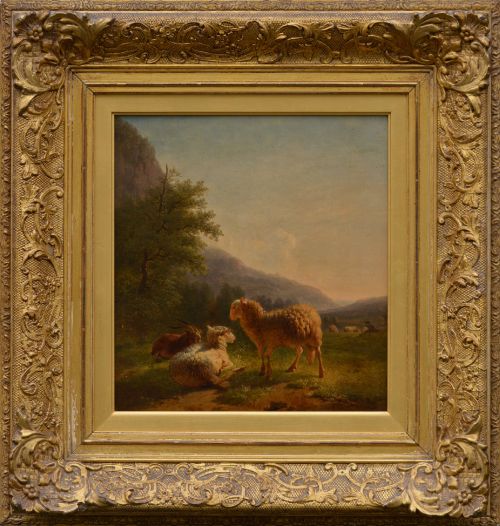
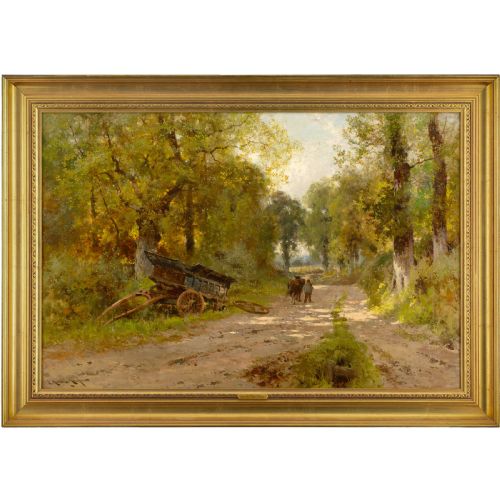
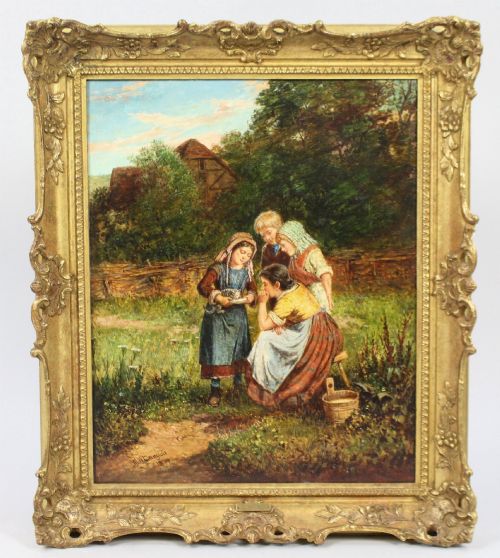
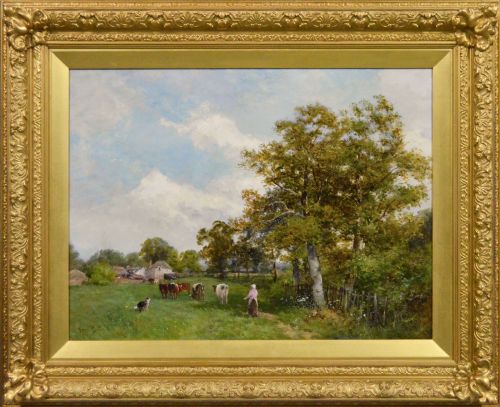
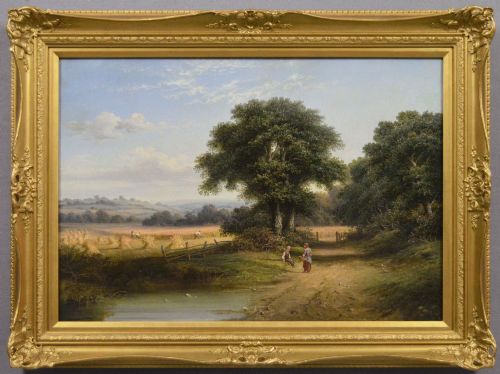
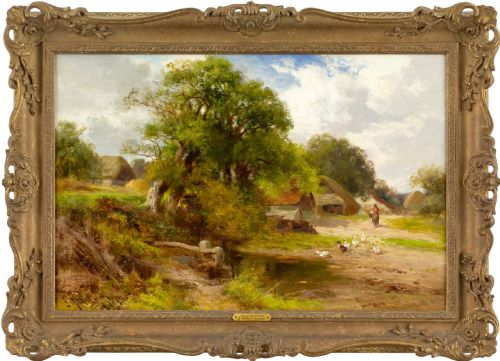
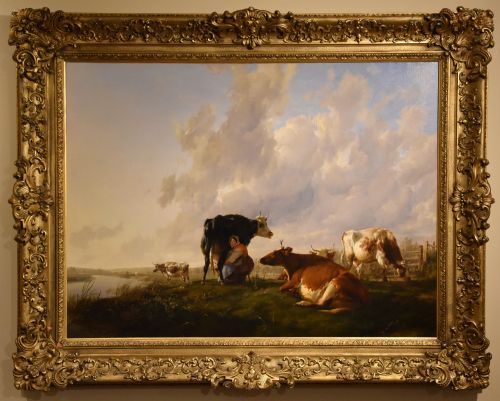
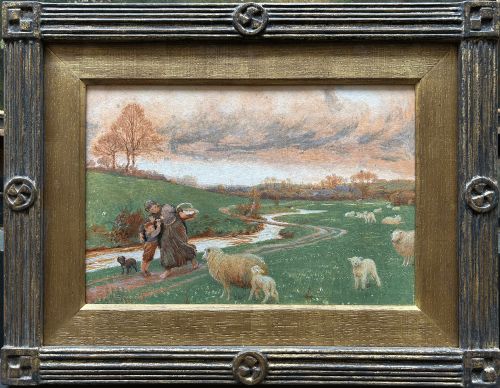
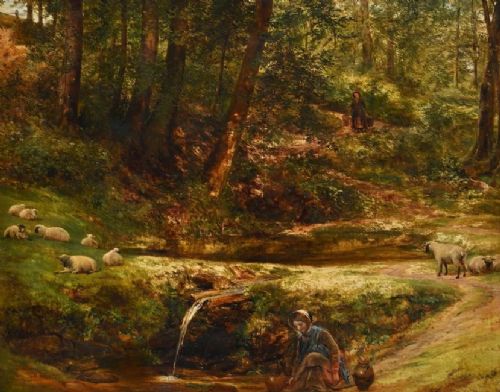
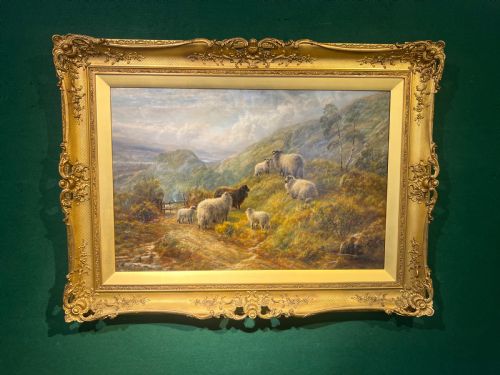
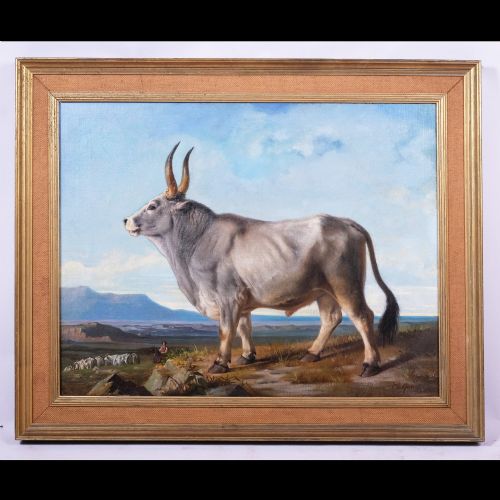
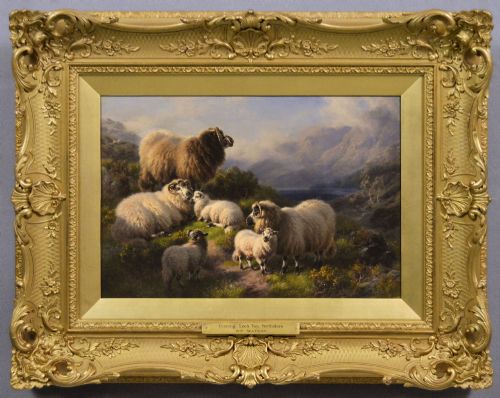
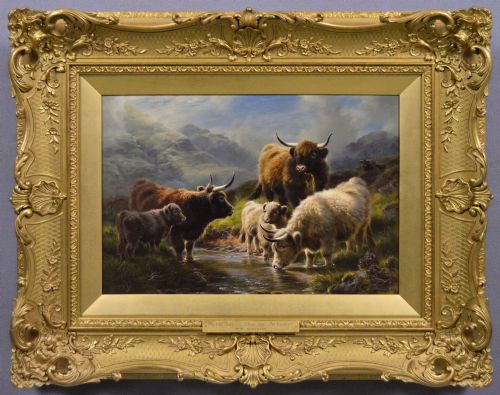
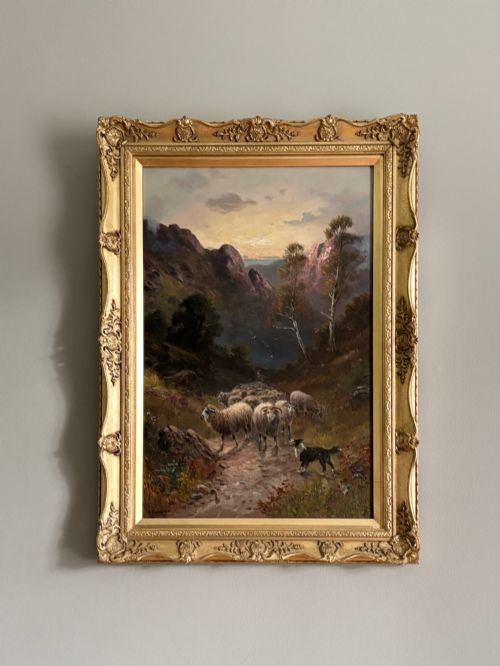
When you search for victorian pastoral oil, you encounter framed canvases depicting nineteenth-century rural life, agricultural landscapes and domestic animals. The majority of these works present herds of cattle, flocks of sheep, milkmaids and harvest scenes set in English, Scottish and continental countryside.
The aesthetic bridges several nineteenth-century movements including British Realism, Romanticism and the Idyllic School. Painters focused on idealized or naturalistic views of farm labour and pastoral quiet, often working within defined regional traditions.
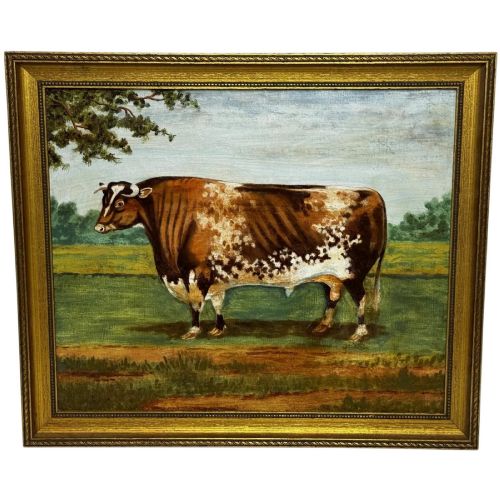
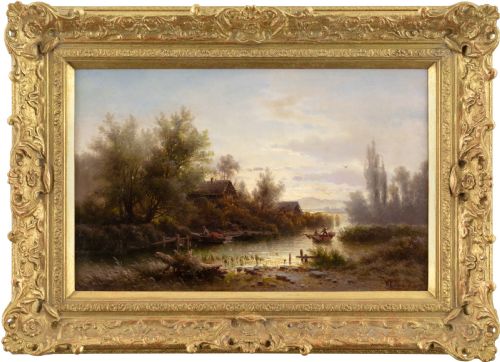
Subjects range from grand animal portraits of prizewinning bulls to gentle river landscapes with figures near locks and ponds. These compositions reflect a period when urban buyers sought a connection to the traditional agrarian landscape.
Materials and technique
Artists painted primarily with oil paint on stretched canvas, though examples on milk glass and wood panels also appear in the record. Canvas preparation involved priming layers that received layers of pigment applied with brushes ranging from fine detail tools to broader landscape brushes.
Frames play a significant role in the physical structure of these works, utilising giltwood, gesso and carved gilded wood. The ornate frames often feature moulded decoration that reflects the decorative standards of the nineteenth century.
Cattle and sheep dominate the livestock counts, though attentive viewers will occasionally spot a solitary observant kitten or farm dog watching from the corner.
Variations in quality
Quality in these pastoral works rests upon the artist's command of anatomy, light and atmospheric perspective. Superior paintings render animal forms and human figures with anatomical precision and natural integration into the surrounding landscape.
The handling of paint surface and the condition of the original giltwood and gesso frames contribute to the overall merit of a piece. Works by listed academic painters or prominent regional schools display greater refinement in brushwork and composition than follower pieces or anonymous copies.
Eugène Verboeckhoven·John Horace Hooper·Mark William Langlois·David Bates·Walter Heath Williams·Thomas Sidney Cooper·Frederick Walker·Richard Redgrave·Robert Watson·Albert Rieger·William Watson Jnr·Douglas Cameron·Johann Friedrich Voltz·Henry H Parker·Henry Schouten·Johannes de Haas·John Emms·A M Gauci·William Henry Mander·Thomas Baker·Franz van Severdonck·Alfred Augustus Glendening Jnr·William Sydney Cooper·Samuel Joseph Clark·George Vicat Cole
The Victorian Pastoral Oil Glossary
- Pastoral idyll
- A literary and artistic genre depicting rural life as peaceful, rustic and removed from industrial complexity. These scenes emphasise harmony between humans, animals and the natural landscape.
- Giltwood
- Wood that has been treated with a thin layer of gold leaf or gold paint. Frames utilising this material were standard for nineteenth-century fine art.
- Gesso
- A white paint mixture consisting of a binder mixed with chalk, gypsum or pigment. It served as a smooth preparation ground for wooden panels and frames before gilding.
- British School
- A loose categorization for artists trained or working within Britain during a specific era. It encompasses varied regional styles and academic traditions from the nineteenth century.
Victorian Pastoral Oil: Frequently Asked Questions
What subjects appear most often in these paintings?
The subjects focus primarily on rural agricultural life, featuring sheep, cattle, milkmaids and farm labourers at work or rest. Rivers, harvest fields and cottage landscapes provide the recurring backdrop for these domestic animal and human portraits.
Artists frequently depicted specific regional landscapes in England and Scotland, capturing the seasonal changes of the countryside during the nineteenth century.
How do I identify the period of a pastoral painting?
Period identification relies on stylistic indicators, costume details of the figures, and framing materials characteristic of the nineteenth century. Pigment application and canvas stretcher construction also offer clues to the era of production.
Many works carry signatures, dates or attribution notes on the canvas or reverse, while others connect to recorded exhibition histories of the period.
Where were these pastoral scenes usually painted?
Painters worked both plein air in the countryside and inside urban studios using field sketches and studies. Popular locations included rural counties in England, Highland regions in Scotland and continental farming districts.
These settings reflected the nineteenth-century artistic interest in documenting traditional rural practices before widespread industrialization altered the landscape.
How should I care for an oil painting on canvas?
Care involves maintaining stable indoor humidity and temperature away from direct sunlight and heat sources to prevent canvas slackening and paint cracking. Gentle dusting with a soft, dry brush keeps the surface clear without disturbing the pigment layer.
Original giltwood frames require careful handling, as the gesso and gold leaf layers are sensitive to moisture and physical impact.