
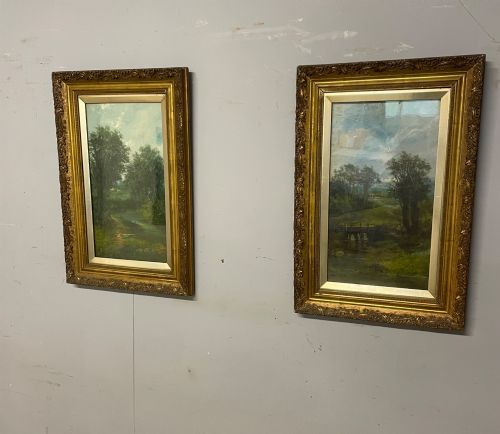
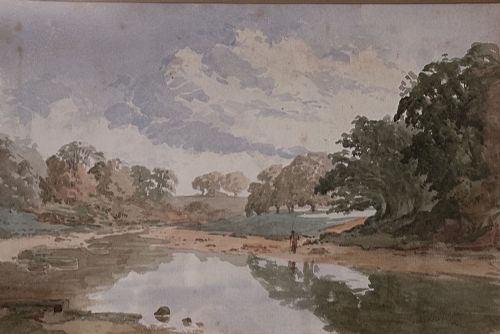
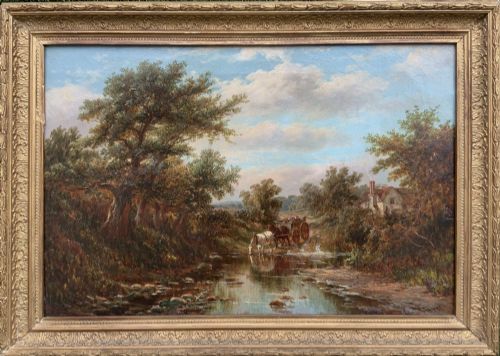
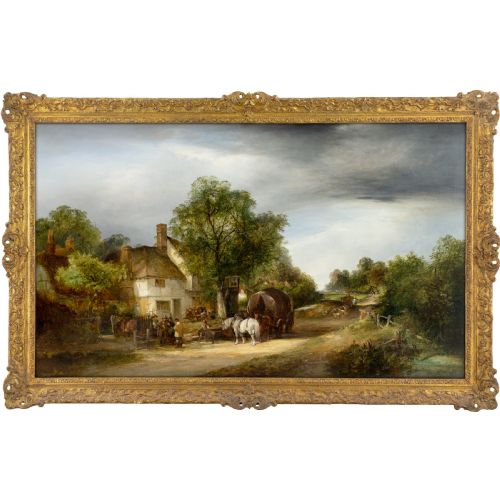


Victorian Pastoral Landscape Painting
These works capture quiet rural scenes of livestock and agricultural life, bringing the calm of the countryside indoors.
Victorian Pastoral Landscape Painting
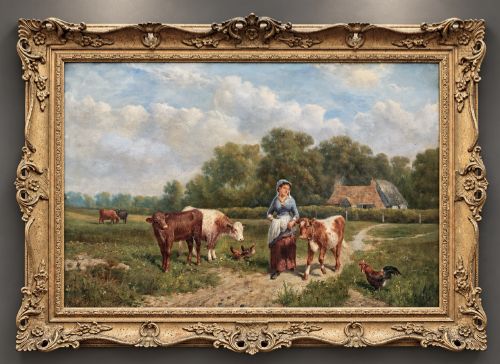
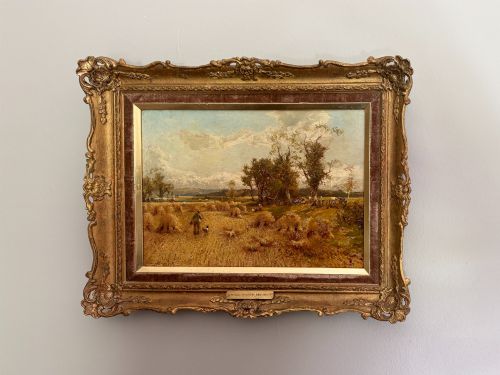
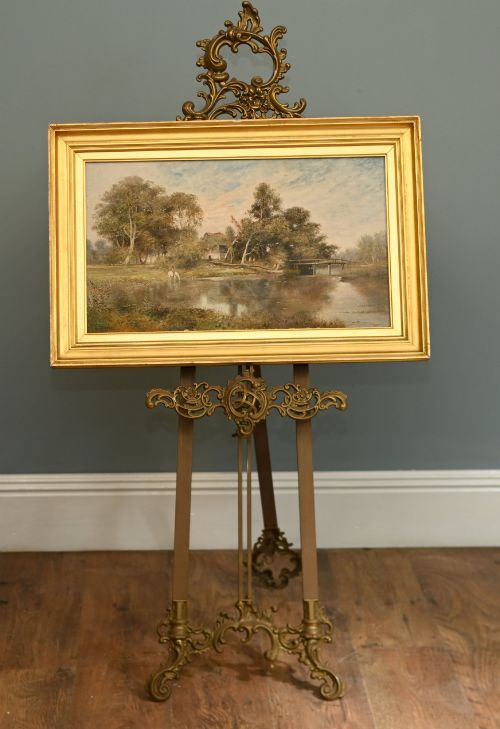
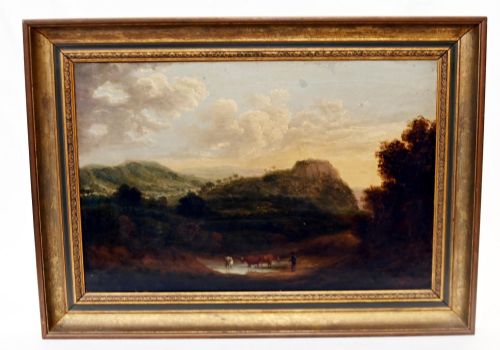
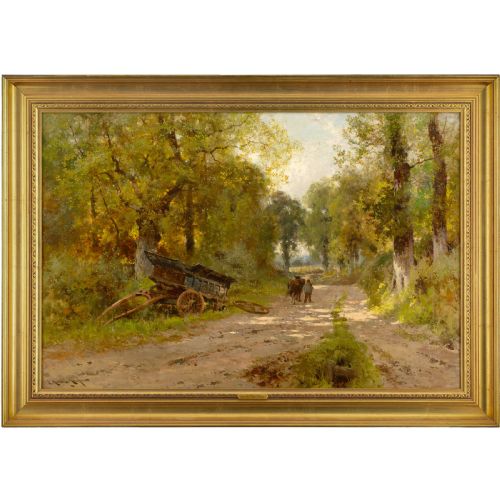
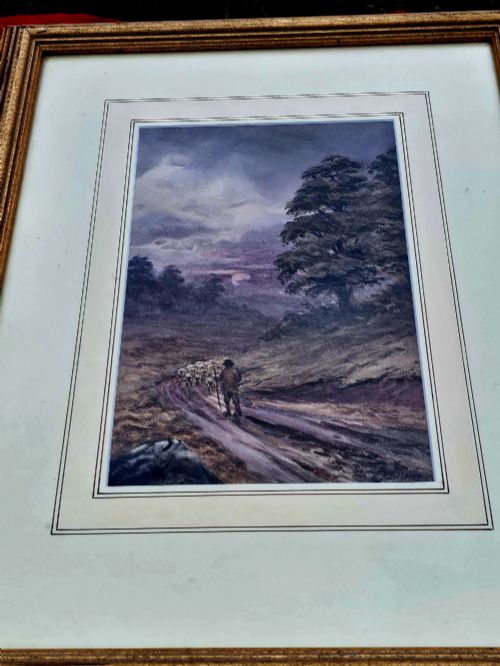
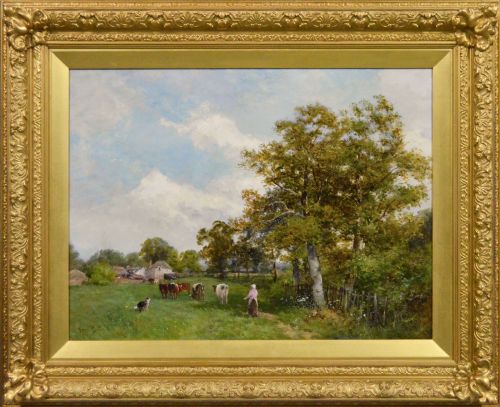
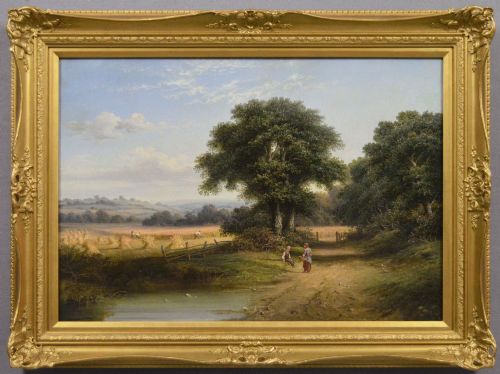
A victorian pastoral landscape painting typically depicts rural agricultural life, featuring shepherds with flocks, cattle by rivers, or harvest scenes in open countryside.
Most examples found here date from the nineteenth century, spanning decades from eighteen-fifty through to nineteen-ten, often tied to the Victorian and Edwardian eras.
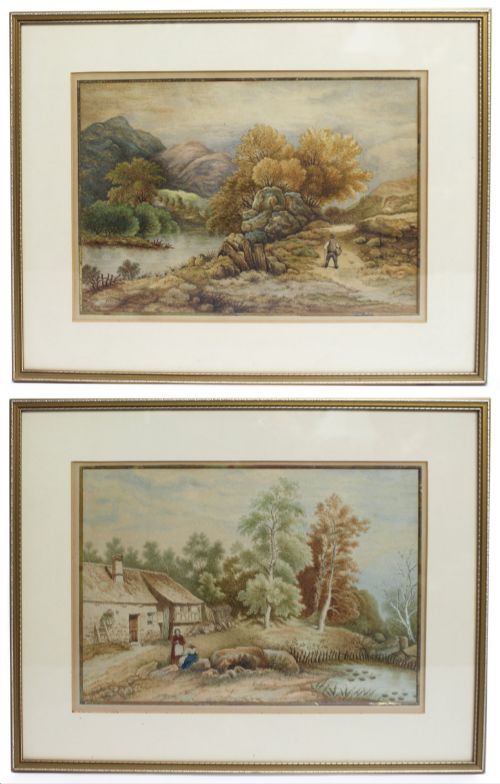
Common forms include framed oil paintings on canvas alongside watercolours on paper, capturing both British and continental rural settings.
Materials and methods
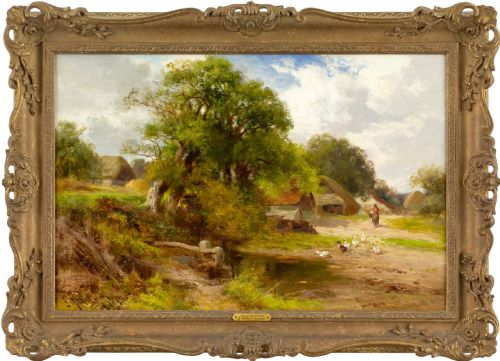
Artists relied primarily on oil paint applied to canvas or wood panels, alongside watercolours worked on paper.
Substantial giltwood and gesso frames frequently house these works, providing decorative borders that complement the painted scenes.
Prized shorthorn bulls and woolly sheep frequently steal the artistic focus from human figures in these pastoral scenes.
Factors of quality
Skill in rendering anatomical detail in animals and figures distinguishes finer works from simpler decorative pieces.
Subtlety in handling natural light, atmospheric conditions like morning mist, and the texture of the landscape determine the standing of each piece.
Eugène Verboeckhoven·John Horace Hooper·David Bates·Walter Heath Williams·Thomas Sidney Cooper·Frederick Walker·Richard Redgrave·Albert Rieger·William Watson Jnr·Johann Friedrich Voltz·Robert Watson·Henry H Parker·Miles Birkett Foster·Henry Schouten·Charles Edward Wilson·Frederick Hines·Johannes de Haas·John Emms·Philip Richard Morris·Cornelius Pearson·William Henry Mander·Thomas Baker·Franz van Severdonck·Henry John Kinnaird
The Victorian Pastoral Landscape Painting Glossary
- Oil on Canvas
- Pigments bound in drying oils applied to a woven fabric stretched across a wooden frame. This medium allowed artists to build rich layers and deep textures.
- Giltwood
- Wood carved and coated with gold leaf or a gold-coloured metallic finish. It forms the ornate frames typical of the period.
- Gesso
- A paint mixture consisting of a neutral binder mixed with chalk, pigment, or gypsum. It serves as a smooth base for gilding on frames.
- Watercolour
- Paint consisting of colour pigments suspended in a water-based solution applied to paper. It yields translucent washes of colour.
Victorian Pastoral Landscape Painting: Frequently Asked Questions
What subjects appear in these pastoral scenes?
These works primarily show rural life involving farm animals such as sheep, cattle, and bulls tended by shepherds or milkmaids.
Views frequently incorporate rivers, harvest fields, and distant cottages characteristic of nineteenth-century countryside life.
How do I care for nineteenth-century oil paintings?
Keep paintings away from direct sunlight and fluctuating humidity to protect the canvas and oil pigments.
Dust surfaces gently with a soft, dry brush without applying liquid cleaners to the paint or gilt frame.
Are watercolours framed differently from oils?
Watercolours on paper require glass protection and matting to prevent direct contact between the paper and the frame.
Oil paintings on canvas remain open to the air within their frames, needing only occasional varnish maintenance by a professional.
How can I distinguish an original from a reproduction?
Original works show visible brushstrokes, texture in the paint layers, and proper ageing on the canvas or paper reverse.
Reproductions or lithographs display uniform dot patterns or flat surfaces under close magnification.